You meet someone after work. Nothing dramatic happens. They remember how you take your tea, and when you get home you realize you have stopped rehearsing your answers. A week later, someone else makes you laugh so hard that you miss the last bus. You want to see them again before you have even said goodbye. Both encounters feel like beginnings. They do not feel like the same beginning.
That is a useful place to start with the Ace of Cups and the Ace of Wands. In contemporary tarot practice, the Ace of Cups often describes an opening in feeling: affection, receptivity, tenderness, a willingness to be moved. The Ace of Wands often describes an opening in desire: interest, initiative, attraction, the impulse to make something happen. Neither card promises that an opening will become a lasting relationship or a finished project.
An Ace gives you something to notice. What you do with it remains a separate question. This guide uses the Rider–Waite–Smith images and treats the examples as possible readings, not predictions about a stranger's private thoughts.
Look at what the hand is holding
Put the two cards side by side before consulting a list of keywords. Each shows a hand emerging from a cloud. In one, the hand offers a cup above water. In the other, it grips a living wand above a landscape. The cup receives and contains; the wand can be carried, pointed, planted, or used. Those are observations about objects before they are statements about your life.
The distinction becomes helpful when you are stuck. Ask what the situation needs you to receive, and then ask what it needs you to begin. An apology may ask you to listen before deciding whether trust is possible. An idea for a community event may ask you to book a room before inviting anyone. Both can stir emotion. Their immediate demands differ.
For the original illustrated descriptions, compare Waite's entries for the Ace of Cups and Ace of Wands. The everyday examples here are contemporary interpretations, rather than claims that every detail has one fixed meaning. Your own deck may change the imagery considerably. Look at the card you actually drew.
The Ace of Cups: allowing a feeling to exist
The Ace of Cups is often easier to recognize in an ordinary moment than in a romantic announcement. Someone asks how you are, and you almost give your usual brisk answer. Then you tell them the truth. Or you hear an old song while washing dishes and realize you miss a friend you have been too proud to call. A feeling becomes available to you.
It can describe warmth toward another person, but it can also describe receiving care, returning to art, grieving honestly, or finding an unexpectedly gentle response to yourself. If the question concerns dating, emotional openness is a reasonable theme to explore. It is not evidence that the other person has fallen in love. Your experience and their intentions are different pieces of information.
The broader Suit of Cups helps place this Ace in context. Cups concern the texture of feeling and relationship. An Ace has not yet shown how those feelings behave through disagreement, boredom, changed plans, or a difficult week. Let the beginning be small enough to observe without asking it to certify the next ten years.
The Ace of Wands: wanting to move
With the Ace of Wands, you may notice that your hand reaches for a notebook before you have worked out why. You want to sketch the shop window, learn a dance, send a proposal, kiss someone, or rearrange the spare room into a place where you can finally work. There is an urge to engage. Sometimes it is wonderfully clear. Sometimes it arrives at an inconvenient hour.
This is why the Ace of Wands is commonly associated with creative initiative and attraction. Desire can supply the first movement. It does not supply every skill or every hour the undertaking will need. A promising first conversation is not a completed business partnership. A night of chemistry is not an agreement about commitment. The excitement deserves attention without being promoted into proof.
Read it alongside the Suit of Wands if you tend to confuse enthusiasm with an obligation to act immediately. Wands can help you recognize what matters enough to attempt. You still get to consider consent, timing, cost, and whether you have already promised your Saturday to somebody else.
In love, warmth and chemistry can overlap
A common shortcut says Cups mean love and Wands mean sex. It is too narrow to be useful for long. Emotional closeness can be physically exciting. Sexual attraction can coexist with affection, awkwardness, genuine care, and uncertainty. A relationship also needs room for people whose experience of attraction does not fit that tidy division.
Suppose you ask, “What am I bringing to this new connection?” and draw the Ace of Cups. You might explore your readiness to be emotionally present. Are you listening, or are you trying to become whatever you think the other person wants? Have you allowed yourself to enjoy the meeting without demanding reassurance afterward? These questions stay within your own experience.
The Ace of Wands in that position could invite a different conversation. What excites you about this person? Are you curious about them, or about how alive you feel around them? Can you make a clear invitation and accept an honest response? Attraction does not excuse pressing for a faster pace. Nor does tenderness require offering more access than you want to give.
If your question concerns the other person's intentions, use the card as a prompt for conversation rather than a verdict. A direct invitation, a kept arrangement, and a respectful response to a boundary tell you things that a card cannot verify. It may feel less thrilling to wait for those details. It is also how a real person becomes more than a role in your reading.
A new beginning inside an existing relationship
An Ace does not always introduce someone new. Two people who have lived together for years can discover an unfamiliar way of speaking. One admits that they have been lonely. The other manages to listen without immediately defending the work schedule. The conversation is uncomfortable, and nobody says anything especially elegant. An Ace of Cups reading could begin there.
The Ace of Wands might describe a different kind of renewal: making plans together, trying something playful, or admitting a desire that has become buried beneath errands. It need not mean grand travel or expensive gestures. It could be deciding to spend an evening drawing each other badly and laughing at the results. The action gives a neglected interest somewhere to go.
Neither interpretation requires pretending that problems have vanished. A tender conversation can matter while an unequal division of work remains unresolved. A lovely evening can matter while trust still needs repair. If you draw both Aces, ask what feeling is available and what action could honor it. Avoid using one pleasant moment to cancel out months of information.
At work, interest has more than one voice
Imagine that you have been offered two projects. One involves mentoring a new colleague. You feel unexpectedly pleased when they understand something that used to confuse you. The other involves proposing a product nobody in the office has tried before. You keep thinking about it on the train and opening your notes app. These are different kinds of engagement, even if both could become meaningful work.
The Ace of Cups may help you examine connection, care, or the emotional appeal of a role. The Ace of Wands may help you examine initiative and creative appetite. Neither tells you whether the job pays fairly or whether the manager will keep their promises. Those questions need details from the workplace. Keep the symbolic reading and the practical investigation beside each other.
For a creative project, try translating each Ace into one modest experiment. Cups: spend twenty minutes making something about a feeling you have struggled to express. Wands: make a rough first version before researching another dozen tools. Afterward, ask which part held your attention. A beginning becomes more informative once you have actually spent some time inside it.
Spread positions change the sentence
If the Ace of Cups falls in a position called “available support,” it may suggest a receptive conversation or a chance to accept kindness. In “what makes this difficult,” the same card might point toward discomfort with vulnerability or a wish to keep every interaction emotionally pleasant. Do not decide which meaning applies before considering the position and the person's circumstances.
The Ace of Wands as advice can suggest taking an initial step. As an obstacle, it may describe constantly chasing the thrill of starting, leaving little energy for the second session. As a possible direction, it may indicate room for an experiment. None of these positions supplies a guaranteed event. The spread gives the card a job; the question keeps that job relevant.
Here is a useful language check. Finish the sentence “In this position, this Ace invites me to notice…” If you can only repeat “new beginning,” you probably need more context. Name the feeling, invitation, conversation, or attempt. If you cannot name it yet, leave the interpretation tentative. Uncertainty is better than an impressive paragraph that does not connect to anything.
Reversals without turning the promise sour
Some readers use reversals and some do not. If you use them, decide on your approach before drawing. For these Aces, one workable approach is to ask whether the beginning is difficult to express, difficult to receive, or being rushed. These are reading options, not universal definitions. A reversal does not establish that someone is emotionally dishonest or that your inspiration is doomed.
The Ace of Cups reversed might prompt you to consider a feeling you are keeping private. Perhaps you want support but answer every offer with “I'm fine.” It might instead describe too much emotional investment before enough is known. These possibilities call for different responses. Ask which one fits actual behavior, and allow the answer to be neither.
The Ace of Wands reversed might raise a question about hesitation, an unworkable start, or enthusiasm that has outrun your available time. A project abandoned after three evenings does not automatically mean you lack commitment. Perhaps the room was too noisy, the instructions were confusing, or you discovered that you did not enjoy the activity. Ordinary explanations deserve a place at the table.
When both Aces appear together
Both cards can make a spread feel promising. You may be emotionally engaged and eager to act. That combination can describe the appeal of a new relationship, the beginning of an artistic collaboration, or a renewed desire to participate in your own life after a dull stretch. It is still an interpretation of potential, not a signed promise from the future.
Notice whether the cards occupy compatible positions. Cups in “what I want” and Wands in “what is being offered” could suggest a question about pace or emphasis. Perhaps you hope for emotional closeness while the current invitation is mainly adventurous. That does not prove incompatibility. It gives you something specific to discuss before filling the silence with assumptions.
If both appear as resources, choose one action that respects both. You might invite someone to an activity you care about and leave them room to decline. You might share a draft with a trusted friend and ask for the kind of feedback you can use. The Lovers as a card of choice offers another useful angle: wanting something and choosing how to pursue it belong together.
A practice reading you can check later
Choose a beginning that is already present in your life. Write down the concrete facts: an invitation, a conversation, a half-finished sketch. Place the two Aces face up rather than drawing randomly. Under Cups, write what you feel and what you might receive. Under Wands, write what you want to attempt. Keep each list short enough that you can recognize your own situation in it.
Then choose one small action and a sensible time to review it. For a new friendship, you might suggest coffee next week. For a creative interest, you might try a single session with materials you already own. At the review, record what happened, including the dull details. Did you enjoy the actual activity, or only imagining the version of yourself who did it?
If nothing develops, resist turning the reading into a judgment on your intuition. You noticed a possibility and tried something. That is useful information even when the invitation goes unanswered or the class feels wrong. Aces are particularly good cards for learning to respect beginnings without demanding that every one of them justify itself through a permanent outcome.
Let the first step remain a first step
You do not have to decide whether this is the love of your life, your true vocation, or the start of an entirely different personality. Those questions can make a fragile interest feel like another exam. The immediate question may be much smaller: do you want to say yes to one conversation, one afternoon, one honest attempt?
The Ace of Cups gives you language for an opening in feeling. The Ace of Wands gives you language for an opening in desire and action. Watch how each develops in ordinary life. A beginning can be welcome, uncertain, badly timed, or quietly important. You are allowed to discover which it is after the cards have gone back into the box.
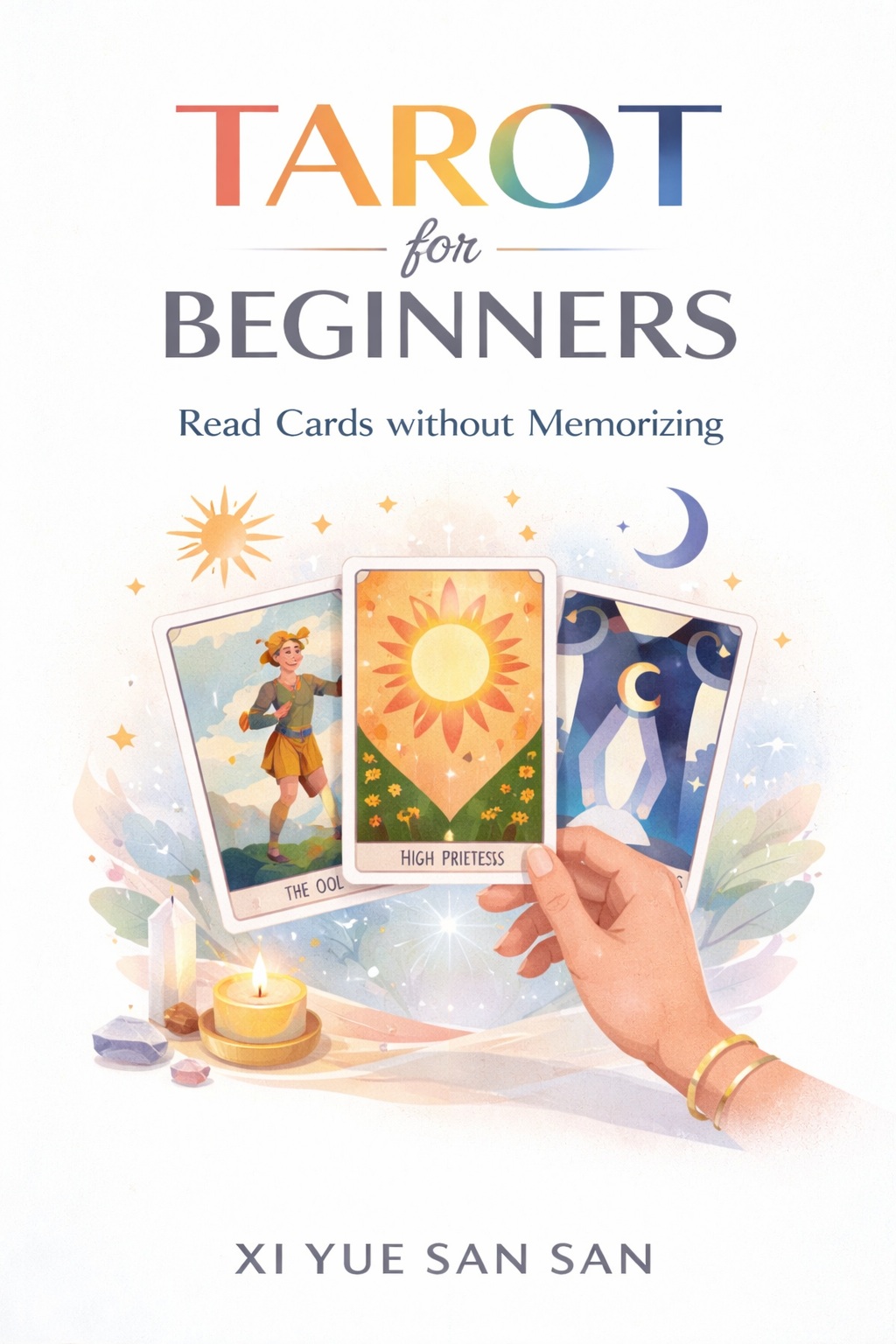
Book recommendation
Tarot for Beginners. Pairs well with this comparison because its approach to learning through intuition offers a way to notice the two images before memorizing a list of meanings.
Open the book page