Wheel of Fortune: How to Predict Luck, Destiny Shifts, and Timing is the kind of tarot topic that looks easy until somebody asks it with a real face. A person is not asking about Wheel of Fortune because they want a tidy paragraph. They are asking because something in their life has started to lean. Maybe it is love. Maybe it is work. Maybe it is that small private panic that shows up while brushing teeth or waiting for a bus.
I like to begin with the image, not the keyword. Keywords are useful, but they can become little cages. Wheel of Fortune carries luck, timing, cycles, sudden change, repeated patterns, and the strange feeling of life turning. That is already a lot. If you rush to one meaning, you will probably miss the part that is actually touching the question. Slow down. Let the card have a few minutes before you decide what it is saying.
Think of refreshing an inbox too many times, then getting the message after you have already made peace with not getting it. That is closer to tarot than a perfect definition. Tarot becomes useful when it enters ordinary life: unread messages, rent due soon, an awkward apology, the calendar reminder you keep moving to tomorrow, the bright little hope you do not want to admit you still have.
When Wheel of Fortune appears upright, I do not hear it as a guaranteed blessing. I hear it as a living condition. Something is available. Something wants to move, open, soften, decide, or reveal itself. But the card still asks for human behavior. Nobody gets to sit there beautifully while the card does all the work.
The first question I ask is simple: what job does this card have in the spread? In the past position, Wheel of Fortune may describe what shaped the situation. In the present, it shows the room you are standing in now. In advice, it becomes something you can do. In an obstacle position, it can become too much of itself. Same card. Different chair.
In love, Wheel of Fortune can point toward a shift in timing, a pattern returning, a chance meeting, or the uncomfortable truth that feelings can change before anyone has a neat explanation. That sounds neat written down, but real love readings rarely feel neat. They come with screenshots, silence, old hope, defensive jokes, and a friend saying, please stop checking if they watched your story. The card has to speak into that mess, not above it.
If you are asking about someone else, be careful. Wheel of Fortune may show attraction or movement, but it does not give you ownership over another person's inner life. Tarot can show weather. It cannot turn weather into a signed contract. If the card leans positive, still ask what would need to happen in real behavior for that positive sign to matter.
In career, this card often becomes more practical than people expect. It can describe opportunity, market changes, a delayed answer, a door opening through someone you almost forgot to email, and luck that still asks you to be ready. A spiritual card can still be about a salary conversation, a commute, a meeting agenda, a missed deadline, or the plain need to send the follow-up email before lunch instead of after another hour of thinking.
I have learned to distrust interpretations that float too far from the day. If your reading cannot survive contact with a calendar, a bank account, a tired body, or an actual conversation, it may sound beautiful and still be useless. Bring Wheel of Fortune down to the table. Ask what someone would do differently after hearing it.
The shadow side matters. For Wheel of Fortune, the shadow is calling everything fate so you do not have to admit where you keep repeating the same choice. This is not a moral failure. It is just the place where the card gets distorted by fear, hunger, pride, shame, or exhaustion. Every card has a way of behaving badly when a person is under pressure.
A reversed Wheel of Fortune does not automatically mean the opposite. Reversal can mean blocked, delayed, private, excessive, denied, or happening inside rather than outside. Sometimes the reversed card is not screaming no. Sometimes it is saying, not like this, not yet, not while you are pretending you do not know what you know.
One useful exercise is to read the card three ways: what it encourages, what it warns against, and what it looks like in a normal Tuesday. The normal Tuesday part matters most. That is where a beginner stops copying meanings and starts reading. You can see the card in dishes left in the sink, a half-written resignation letter, or the ache after a conversation that almost became honest.
Track what is actually repeating. The Wheel is not only surprise. It is also the receipt drawer of your own patterns. I would write that on the top of the journal page. Then I would pull one card, not five, and force myself to stay with it long enough to be annoyed. Annoyance can be useful. It means the card is not giving you instant permission to believe whatever you already wanted.
If this card appears with The Chariot Upright: Willpower, Travel, and Overcoming Obstacles, the reading may become more relational. You might be looking at how desire meets commitment, how care meets control, or how two people make a choice together when both are tired. Do not blend the cards into soup. Let each card keep its own voice, then listen to the argument between them.
If it appears with The Hermit Card Meaning: Solitude, Introspection, and Spiritual Guidance, the reading may turn inward. There may be silence, restraint, secrecy, patience, or the need to stop asking the same question in louder ways. Sometimes tarot does not give a new answer because the old answer has not been lived yet. That is irritating. It is also often true.
With The Lovers Card: Does It Always Mean Romantic Love or Just a Choice?, the tempo changes. Movement, timing, pressure, or a sudden turn may become part of the story. The question stops being only what does this mean and becomes when will it move, how fast, and what happens if I am not ready when it does.
For a beginner, the temptation is to memorize one sentence. Wheel of Fortune means this. I understand why. A single sentence feels safe. But a single sentence can make you deaf. Better to memorize a small range: emotional meaning, practical meaning, shadow meaning, advice meaning, and what the card might look like when someone is lying to themselves.
Here is an example. Imagine someone asks, will this relationship work out? Wheel of Fortune appears in the advice position. I would not say, yes, it works. I would ask what the card wants them to practice. It may be honesty, patience, courage, movement, space, timing, or choice. Advice is behavior. Outcome is not the same thing.
Now imagine the same card in the blockage position. Suddenly the pretty meaning can become too much. Love becomes indecision. Drive becomes pressure. Strength becomes swallowed anger. Solitude becomes hiding. Luck becomes passivity. The card has not changed. Its position has changed the job it is doing.
This is why tarot reading is not just knowing meanings. It is listening for proportion. How much of this card is helpful here? How much is too much? What is missing? What is being avoided? A card can be true and still be badly used. People do this all the time. I do this too, usually when I am tired and want the universe to make my harder decision for me.
If you read for yourself, write the interpretation before you start negotiating with it. Self-readings get slippery fast. You pull Wheel of Fortune, feel something in your stomach, and then begin editing the message until it becomes more comfortable. Put the first honest version on paper. You can soften the delivery later. Do not erase the truth before it has spoken.
There is also the problem of mood. A card read at midnight after too much coffee will not feel the same as a card read at ten in the morning after breakfast. Your body is part of the reading whether you admit it or not. Notice the body. Notice if you are hungry, defensive, hopeful, embarrassed, or already building a case.
When I teach this card, I ask people to describe it without using mystical words. No energy. No alignment. No vibration. Say what is happening. Someone chooses. Someone waits. Someone pushes. Someone holds back. Someone gets lucky. Someone loses patience. Someone finally tells the truth, but only after making themselves sick with silence. Plain language saves readings.
Plain language also protects the person asking. A vague reading can make somebody more anxious because they have to interpret your interpretation. If you say this card shows a shift, name the possible shift. If you say it shows love, say what kind of love. If you say it shows a warning, say what behavior would confirm the warning.
That does not mean pretending certainty. Good tarot language can be humble and still useful. Try saying, this leans toward, this suggests, I would watch for, or the card seems to ask. Those phrases leave room for reality. They do not turn the reading into a courtroom. They also keep you from performing confidence you do not actually have.
A strong interpretation of Wheel of Fortune includes a question. What choice is being postponed? What pressure is becoming too loud? What tenderness is being mistaken for weakness? What silence has become too comfortable? What pattern is coming around again? The best question depends on the card, but the habit is the same: make the meaning active.
If the question is about timing, Wheel of Fortune needs support. Some cards speak more clearly about timing than others, and even then, timing is rarely clean. Look at the suit, the spread position, the cards around it, and the actual life situation. A person waiting for a job offer is not in the same timing field as a person waiting for an apology from someone avoidant.
For yes-or-no readings, I would be careful with Wheel of Fortune. It may lean yes, no, maybe, or not yet depending on the question. The better answer is conditional. Yes, if the person acts honestly. No, if they keep repeating the same behavior. Not yet, because the situation is still turning. Tarot is more useful when it gives conditions than when it gives a stamp.
Try a three-line journal entry. First line: what I wanted the card to mean. Second line: what the card may actually be saying. Third line: what one small action would respect the card. This is uncomfortable in a good way. It shows the gap between fantasy and practice without making you feel like a terrible person.
In relationships, that small action might be asking a direct question instead of baiting someone with a vague text. In work, it might be opening the document you are afraid to edit. In family matters, it might be declining a request before resentment starts leaking through your face. The card becomes real through these little choices.
There is a tenderness in learning tarot badly at first. You will over-read. You will under-read. You will see your own story in cards that are trying to say something else. You will pull clarifiers because you dislike the first answer. Fine. Notice it. Laugh a little if you can. Then return to the card.
Do not pull five clarifiers when one would do. Before drawing a clarifier, name what you want clarified. Clarify the obstacle. Clarify the next step. Clarify the other person's likely behavior. Clarify what I am projecting. If you do not name the job, the extra card becomes another loose object on the table.
I also like comparing Wheel of Fortune with nearby cards in the major arcana. What comes before it? What comes after it? Tarot has a sequence, and the sequence teaches. The card is not floating alone in a velvet bag. It belongs to a story about becoming a person, losing certainty, gaining it back, and losing it again in a slightly wiser way.
Sometimes the message is embarrassingly ordinary. Drink water before the conversation. Read the contract. Stop checking their profile. Go to bed. Ask for the fee in writing. Admit you want the thing. Ordinary does not mean shallow. A lot of spiritual confusion improves when the body is fed and the inbox is answered.
When Wheel of Fortune appears in a spread for a friend, resist the urge to be impressive. Say what you see, then ask if it fits. The question, does that land anywhere, is not weakness. It is respect. A reading is not a monologue. The person across from you has the lived context. You have the cards. Both matter.
If they say no, listen. Maybe you are wrong. Maybe the card is pointing to a layer they are not ready to discuss. Maybe the language missed. Do not fight for your interpretation like it is your child. Adjust. Ask what part feels off. The best readers are not fragile when reality enters the room.
For daily practice, pull Wheel of Fortune intentionally from the deck and place two random cards beside it. Read the first as what helps the card, the second as what complicates it. Do this for a week. You will start to understand how combinations change tone without needing a giant chart of meanings.
Another practice: read the card for three imaginary people. One is exhausted from work. One is waiting for a text. One is trying to make a money decision. Give each person a different interpretation. This trains your mind to keep the card alive instead of turning it into a slogan.
The book recommendation I would pair with this lesson is Tarot for Beginners, listed on Books. Not because a book can replace practice, but because beginners need a calm companion while the meanings are still slippery. A good guide gives you enough structure to keep going without making you afraid of your own intuition.
At some point, you will get a reading wrong. Everyone does. The work is not to become flawless. The work is to become more honest, more specific, and less dramatic about your own uncertainty. A wrong reading can teach you if you write down what you saw, what happened, and where your wish got mixed into the answer.
What I appreciate about Wheel of Fortune is that it refuses to stay decorative. It wants to be lived. It asks something from the person holding the deck. Maybe a choice. Maybe restraint. Maybe movement. Maybe patience. Maybe surrender to timing. Maybe the humility to admit that the situation is not as simple as the question made it sound.
So when this card appears, do not rush. Look at the image. Look at the spread position. Look at the real-life question. Listen for the place where the meaning rubs against ordinary behavior. That rubbing place is usually the reading. Not the prettiest sentence. Not the most spiritual one. The one that changes what someone does after they stand up from the table.
And if you still do not know, say that. Sit with it. Come back later. Tarot can handle a little silence. In fact, some cards become clearer only after the room has stopped trying so hard. Wheel of Fortune is not asking you to perform wisdom. It is asking you to pay attention long enough for a more honest sentence to arrive.
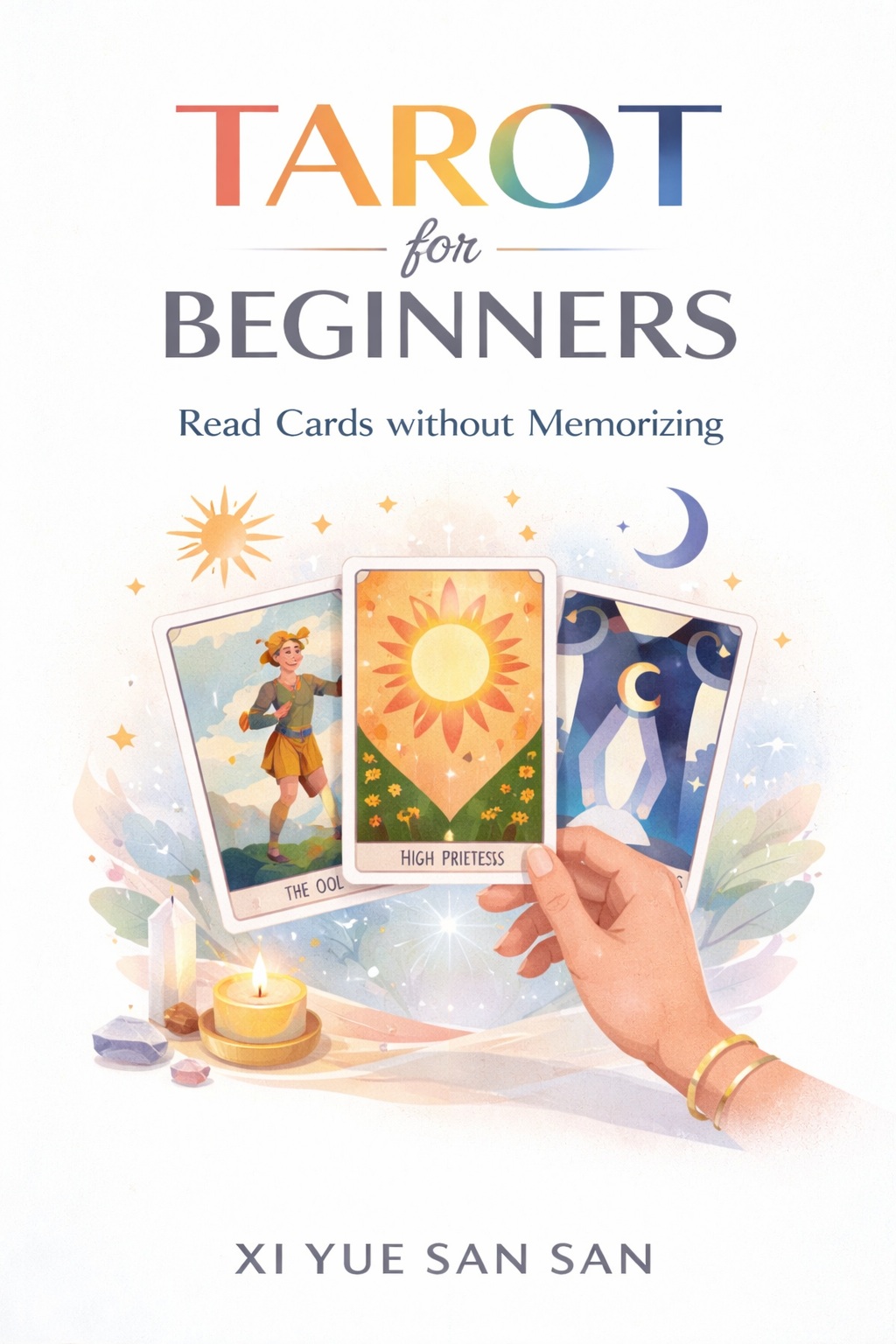
Book recommendation
Tarot for Beginners is a gentle companion for learning card meanings without turning the whole practice into memorization homework.
Open the book page