The freelancer in the photograph is working beside a swimming pool. Your own laptop is balanced between a half-eaten sandwich and a list of meetings you do not want to attend. For a moment, the choice seems obvious. Then you remember the last time you had to ask someone to pay you, and the photograph loses some of its persuasive power. Freedom is appealing. So is knowing what happens next month.
On another day, the comparison runs the other way. A friend describes the security of a corporate role, and you imagine a reliable routine after months of uncertain projects. Then they mention the approval process for a small decision, and you feel tired on their behalf. You may be drawn to parts of both arrangements and resistant to parts of both. That is a reasonable starting point.
When you ask which is aligned with your energy, try translating the phrase into ordinary questions. Which conditions help you do good work? Which demands drain you? What does your life need from employment now? Tarot can support that reflection. It cannot determine your employment status, predict earnings, or make one arrangement safe because its symbolism feels attractive.
Compare the work around the work
Start with a task you enjoy. Designing a page. Teaching a skill. Solving a technical problem. Helping someone understand a complicated choice. You may be able to do that task in more than one employment arrangement. The difference often lies in everything surrounding it: who finds the work, who defines it, who checks it, and who follows up when something goes wrong.
In an employed role, some of those activities may be handled by other people, though the arrangement varies greatly. Independent work may ask you to take responsibility for more of them yourself. Before deciding which suits you, describe the whole week you would be agreeing to. Include the conversations and administrative tasks you would rather leave out of the picture.
If you love making things but hate discussing them with potential clients, that does not automatically rule out freelance work. It identifies something you would need to learn, accommodate, or find appropriate help with. Equally, enjoying teamwork does not mean every corporate role will suit you. A large organization can contain a lonely job, and independent work can involve frequent collaboration.
Your energy changes with the rest of your life
The answer you gave five years ago may no longer fit. You might now be caring for someone, managing a health condition, raising children, recovering from an exhausting period, or simply wanting more predictable evenings. These circumstances are part of the decision. They are not inconvenient footnotes beneath the career you would choose if you were a more impressive person.
Ask what you need during this particular season. More control over when you work? A clearer separation between work and home? Regular contact with colleagues? Fewer decisions at the end of the day? Be specific about why. A desire for flexibility may mean the ability to attend appointments, which is different from a desire to travel while working.
Then investigate whether a real option provides that flexibility. A freelance client may expect availability that is difficult for you. An employed role may offer an arrangement that fits surprisingly well. Labels can hide these differences. Your life will be affected by the actual expectations, not by how independent or conventional the job sounds when you describe it at dinner.
What kind of uncertainty can you tolerate?
Uncertainty exists in both routes, but it can arrive in different forms. You may find it difficult not knowing which project comes next. Someone else may find it harder having limited say over team decisions. Another person can cope with variable work but struggles with the social ambiguity of finding clients. Notice the type of uncertainty that keeps you awake.
Think of a recent situation rather than answering from an idealized self-image. How did you respond when plans changed? What helped you recover? Did you ask useful questions, postpone everything, or spend hours checking messages? These observations do not assign you a permanent personality. They show where an arrangement may require more support than the attractive version suggests.
Avoid using a tarot spread to invent financial certainty. If a transition would change your income or obligations, work with accurate figures and guidance suited to your circumstances. This essay is about preferences and questions, not a financial plan. The King of Pentacles can prompt you to take practical responsibilities seriously; it cannot tell you that your next client will pay on time.
The appeal of having a place to belong
A corporate job can offer a team, familiar routines, and the relief of being part of something that continues when you stop for lunch. You may appreciate knowing whom to ask when a problem falls outside your role. You may enjoy learning from colleagues without having to arrange every conversation yourself. These are real preferences, not evidence that you lack independence.
The less comfortable side may include decisions made far from your desk, meetings that do not help your work, or a role that gives you too little room to exercise judgment. Think about which of these you have actually encountered and which you are assuming. One frustrating employer does not tell you what every employed role would be like.
The Hierophant can help you examine your relationship with established practices. Which shared methods support your work? Which rules make it harder? Instead of reading the card as "corporate employment is right for me," ask where you welcome guidance and where you need discretion. That answer can help you assess a specific team more accurately than a broad preference for or against organizations.
The appeal of choosing for yourself
Independent work can appeal because you want a greater say in the projects you take, the way you approach them, or the people you work with. You might enjoy building a professional identity around a particular skill. There can be satisfaction in negotiating a clear piece of work and seeing it through. These are substantial reasons to explore the option.
But having more decisions does not mean every decision will be pleasant. You may need to decline unsuitable work while wanting the income. You may have to explain a price without apologizing, clarify a request that keeps expanding, or ask a client for information again. Consider whether you are willing to develop those habits alongside the work you already know how to do.
The Magician can be a prompt to notice your available skills and initiative. Give equal attention to what is missing. You may be capable of producing an excellent result while still needing to learn how to describe the service clearly. Confidence becomes more useful when it can name both strengths and unfinished learning, without turning either into a dramatic statement about destiny.
A spread that compares demands, not identities
Use six cards, three for each route. For employment, ask what would support me, what would wear on me, and what I need to investigate. Ask the same three questions for freelance or contract work. Keep the questions identical so that you do not quietly give one path all the appealing positions and the other all the frightening ones.
If Three of Pentacles appears as support for employment, you might explore learning and collaboration. If Nine of Pentacles appears as support for independent work, you might explore satisfaction in directing your own efforts. Both can be attractive. The reading does not need to manufacture a winner immediately. It can show you why the choice has remained difficult.
For the investigation positions, convert each interpretation into something you can ask or observe. Two of Pentacles might lead you to ask how someone manages several projects. The Emperor might lead you to ask who sets priorities in a particular role. Then gather the information. A spread becomes less helpful if you keep rearranging the cards until they say the option you already wanted.
Ask people about their ordinary bad days
When speaking with someone who does the work, ask what happened on a recent difficult day. Which task took longer than expected? Who had to be contacted? What was annoying but unavoidable? People may give more useful detail when they describe one incident than when they summarize whether they love their career. Listen for demands you could live with and demands you would find especially hard.
Ask an employed person how decisions get made, how priorities change, and what support is available. Ask an independent worker how they find suitable work, explain scope, and handle quiet periods. Their circumstances will differ from yours. Treat the conversation as a source of questions and examples rather than as proof that you could reproduce their experience.
Notice who is missing from the stories you hear. The most visible people may be those with time and reason to talk publicly about their success. A private conversation with someone whose experience is mixed can be more useful. You are trying to understand the working life, including the unphotographed parts, before deciding how much of it you want.
Test a task before changing your whole life
There may be ways to learn about an alternative without making an immediate full transition. You could interview people, examine realistic project requirements, or create a private sample of the work. If you consider outside paid work while employed, first check the terms and restrictions that apply to your situation. Do not assume permission or use an employer's confidential information or resources.
A useful experiment answers a narrow question. Do I enjoy defining a project with someone? Can I explain what I provide in plain language? How do I feel working alone for a suitable period? Keep the experiment proportionate to your circumstances. It does not need to generate income or prove a complete business model to teach you something about a particular demand.
Record the less flattering details too. You enjoyed the creative task but kept avoiding the follow-up message. You liked working alone until the third day. You found that clear instructions gave you more freedom than an entirely open brief. These observations are worth keeping. They tell you more than whether the experiment made you feel briefly like a new kind of person.
Consider the options between the two labels
The choice may include more than a permanent corporate role and full-time freelancing. Depending on what is available and appropriate for you, there may be smaller employers, project-based roles, part-time work, or other arrangements. Each comes with its own terms. Do not assume that a middle option automatically combines all the benefits and none of the difficulties.
Look closely at what an actual role asks of you. Who controls the schedule? Who supplies the equipment? How are changes discussed? What happens when a task is complete? If the legal or financial implications of an arrangement are unclear, get qualified guidance relevant to your location. A job label alone is not enough information to understand what you would be agreeing to.
You may also choose one route for now while continuing to learn about another. That is different from telling yourself you will change someday and never examining it again. Set a concrete reason to revisit the question: after gaining a skill, after a caring responsibility changes, or after you have gathered specific information. Leave yourself a way to reconsider without making every week a new referendum.
The first answer may be about one bad boss
You might notice that every reason for becoming independent begins with your current manager's name. That deserves attention. Perhaps independent work would suit you; perhaps you mainly need a different employer. Try describing the employed role you would want if this particular person were no longer in the picture. Does the whole arrangement still feel wrong, or does the imagined week become much more appealing?
The reverse can happen after a difficult client. You begin wanting a corporate job because one project has become exhausting. Separate the features of that project from the demands of independent work generally. You may need different terms, a different kind of project, or a different arrangement entirely. A painful experience is information. Give yourself enough distance to learn what it says before asking it to speak for every possible future job.
Choose the compromise you can explain honestly
Write a short description of the option you currently favor. Include what it gives you, what it asks of you, and what remains uncertain. If you can only describe its advantages, keep looking. If you can only describe the other option's faults, ask whether you are choosing something you want or simply trying to escape a recent bad experience.
You do not have to feel equally comfortable with every part of the choice. Perhaps you accept more routine in exchange for a working week that suits your household. Perhaps you accept more responsibility for finding work because directing projects matters deeply to you. The compromise should be one you understand, with practical questions addressed as far as possible, rather than one disguised by an inspiring card.
When the reading is finished, imagine telling a trusted person why you are leaning this way in three ordinary sentences. No destiny language. No apology for being cautious or adventurous. Just the life you have, the work you want to do, and the demands you are prepared to take on. You may still need more information. That is a useful thing to know before the photograph by the pool makes the decision for you.
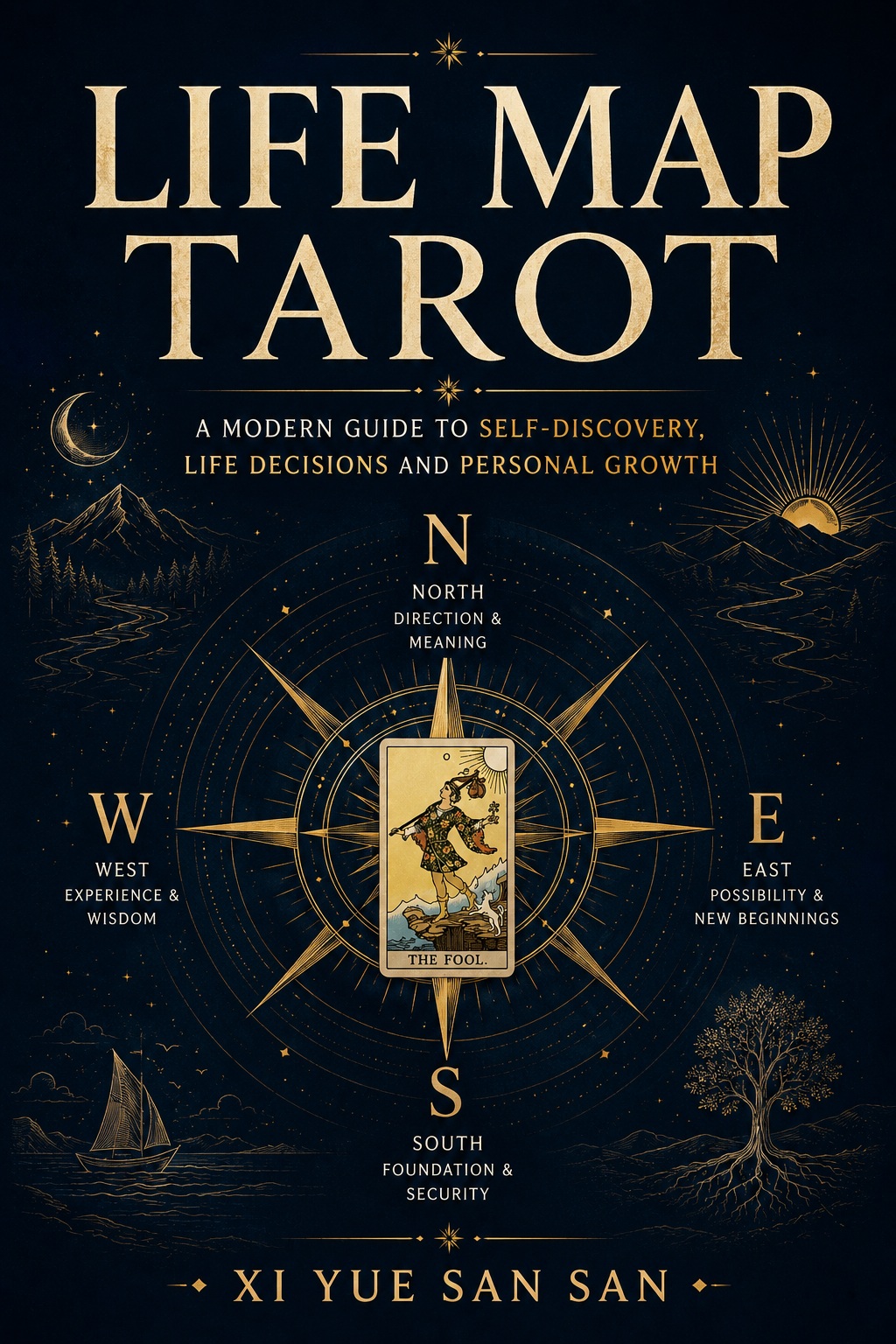
Book recommendation
Life Map Tarot
Books presents Life Map Tarot as a guide to better decisions through tarot and self-reflection. It fits a choice that depends on your current life as much as your ambitions. Use it to explore preferences while gathering concrete information about the roles, responsibilities, and arrangements you are considering.
Open the book page