Hidden talents are strange because they often do not feel hidden to you. They feel obvious, ordinary, not worth charging for. You think, "Anyone could do that," while someone else is quietly relieved because you just solved the thing they had been avoiding all week. This is why tarot can be useful. It does not only show what you want. It can show what you keep overlooking because it lives too close to your hands.
When you ask what your hidden professional talents and core strengths are, try not to turn the reading into a hunt for a glamorous identity. Not every gift arrives wearing a cape. Some gifts look like noticing the missing line in a contract. Some look like making nervous people feel safe enough to tell the truth. Some look like taking a vague mess and making a list. These gifts pay bills too.
A simple spread works well: one card for visible skill, one for hidden skill, one for the work environment where it grows, one for how you undervalue it, and one for how to use it more deliberately. That fourth card matters. Many people are not blocked because they lack talent. They are blocked because they keep discounting the talent that keeps saving everyone else.
Before the cards, there is usually fixing a messy spreadsheet in twenty minutes and assuming anyone could have done it.
There is also explaining a confusing process to a new hire with doodles on a sticky note.
And sometimes, if the day has already been long, there is being praised for something you barely count as work because it feels normal to you. By the time you sit with the deck, you are not asking from theory. You are asking from a nervous system that has been keeping receipts.
The Magician often points to resourcefulness. You can make something work with what is on the table. You connect tools, words, people, timing, and a little nerve. In a job setting, this may show presentation skill, sales ability, technical adaptability, or the knack for making a plan feel possible. You may not call it magic. You may call it "figuring it out again."
Queen of Pentacles is practical care. She remembers the budget, the room temperature, the deadline, the person who has not eaten, the detail that will matter later. In professional life, this can be operations, client care, project management, hospitality, finance, health work, teaching, or any role where comfort and competence meet. Her talent is not soft in the weak sense. It is soft like bread and strong like rent.
Page of Cups shows creative sensitivity. You notice tone. You hear what is not being said. You may be good at ideas, design, writing, counseling, brand voice, emotional translation, or gentle problem solving. The danger is that people may treat this as personality instead of skill. It is skill. Being able to sense the room is not nothing.
King of Swords points to clean thinking. You can name the issue, cut through rambling, organize arguments, explain decisions, or ask the question everyone avoided. This card is useful in law, strategy, research, editing, analysis, leadership, teaching, and any place where confusion is expensive. If this is your card, stop apologizing for needing things to make sense.
Strength is not loud confidence. It is steady presence under pressure. You may be the person who can stay kind without collapsing, firm without becoming cruel, patient without disappearing. This matters in management, care work, crisis work, entrepreneurship, parenting while working, and any role where people bring their fear into the room. Strength is a professional gift, even if nobody puts it in the job description.
Look at what people keep asking you to do. Not what they praise, necessarily. What do they return to you for? Explanations? Taste? Calm? Details? Negotiation? Emotional cleanup? Troubleshooting? Honest feedback? The repeated request often reveals the hidden talent before the resume does.
Also look at what irritates you because it seems easy. If you cannot understand why a team keeps making the same communication mistake, maybe clarity is your gift. If you wonder why nobody notices the customer is embarrassed, maybe emotional perception is your gift. If you keep silently rebuilding broken processes, maybe making work less chaotic is your gift.
If this question is tangled with whether to leave, read Should I quit my current job or stay and wait? beside this spread.
If money or status is part of the ache, keep Will I get promoted or receive a salary raise? nearby too.
And if the whole path feels uncertain, What does the future hold for my current career path? may give the wider weather.
I would also keep a small notebook beside the reading. Not a beautiful journal bought for a new personality. Just a cheap notebook, maybe with a bent corner, where you write what actually happened. The date. The sentence someone used. The number in the offer. The hour you woke up thinking about work. Tarot becomes more useful when it has to sit next to ordinary evidence.
That evidence does not need to be dramatic. It can be the third week you skipped lunch because the meeting ran over. It can be the way your hand hovered over the send button because one email felt heavier than it should. It can be the fact that you felt relief, not excitement, when a call got canceled. These little details are not side notes. They are the weather your career is happening inside.
If a card sounds noble but your body feels tight, write both things down. If a card sounds scary but your actual facts are calm, write that too. The point is not to make the cards win over reality. The point is to let the reading, the body, and the plain facts argue honestly at the same table until the next step is less blurry.
Sometimes your talent is buried under shame. Maybe you are good with money because you grew up without enough and learned to watch every dollar. Maybe you are good at reading people because childhood made you alert. Maybe you are good in crisis because life trained you too early. These origins can hurt. They can also become skill, if you are allowed to use them without staying trapped in the old fear.
A tarot reading about strengths should not become a compliment bath. The better question is: where does this strength belong? A brilliant communicator in a silent company may start to think she is too much. A careful analyst in a reckless startup may feel slow. A creative person in a rigid role may look inconsistent. Talent needs the right room.
Ask the deck how your current workplace uses your gift. Then ask how it misuses it. The Queen of Pentacles may be valued for care but exploited for unpaid caretaking. The King of Swords may be valued for clarity but punished for bluntness. The Magician may be praised for saving messes until management assumes messes are your natural habitat.
One painful sign of a hidden strength is resentment. You keep doing something well, nobody names it, and then you feel strangely angry when asked again. That anger may be saying, "This is valuable, and I have been treating it as free." The reading can help you decide whether to set a boundary, ask for pay, change roles, or put the skill on your resume in actual words.
Do not wait until you feel like an expert to claim a strength. Many people with real ability are waiting for a certificate from the sky. Meanwhile, less careful people are already charging, applying, pitching, leading. This does not mean fake confidence. It means stop pretending repeated evidence does not count because you were present for it.
If the cards show Cups, your gift may involve human feeling: support, design, story, beauty, belonging, intuition, healing, client trust. If they show Swords, words and decisions may be central. If Pentacles, look at craft, money, stability, making useful things real. If Wands, notice courage, visibility, teaching, performance, building heat around an idea.
Major arcana cards often point to bigger themes. The Hermit may be deep study. The Empress may be creation and nourishment. The Emperor may be authority and boundaries. The High Priestess may be pattern recognition and inner knowing. The Chariot may be drive. The Star may be hope-giving, which sounds sentimental until you work in a place where everyone is tired.
Now translate the card into workplace language. This is where people get stuck. "I am intuitive" becomes "I identify client concerns early." "I am nurturing" becomes "I improve team continuity and customer trust." "I am creative" becomes "I develop fresh concepts under vague briefs." The gift does not become less spiritual because you can put it in a sentence a hiring manager understands.
Ask someone trustworthy what they think you are good at, but choose carefully. Not everyone can see you. Some people only see what benefits them. Ask the colleague who notices details. Ask the friend who has watched you work under pressure. Ask the former manager who gave honest feedback. Then compare their answer with the cards. Notice what repeats.
There may be a talent you have been hiding because it would ask you to change. If you admit you are good at teaching, maybe you cannot keep saying you are only an assistant. If you admit you are good with clients, maybe you have to ask for a client-facing role. If you admit you are strategic, maybe the busywork is no longer enough. Hidden strengths can be inconvenient.
Sometimes the reading shows a talent you do not like. You may be good at conflict. Good at sales. Good at numbers. Good at leading people who are melting down. You may have built an identity around being gentle, artistic, invisible, or helpful, and the cards show a sharper gift. Let yourself be surprised. You do not have to become a different person overnight.
Make a small evidence list. Three moments when someone thanked you. Three problems you solved. Three things you learn faster than others. Three tasks that leave you tired but proud. Three tasks that drain you with no pride at all. This list is not a personality quiz. It is a lantern.
Then choose one strength to use on purpose this month. Put it in your bio. Ask for a project that uses it. Build a sample. Offer a paid version. Stop hiding it inside favors. Tarot is not useful if the insight stays pretty and unemployed. A strength becomes wealth only when it enters your choices.
Your hidden talent may not feel dramatic. It may feel like the thing you do while sighing, with a mug gone cold beside you, fixing what everyone else made too complicated. Still, notice it. Name it. Respect it. The cards may only be pointing to what your life has been saying for years: this is not nothing. This is part of how you survive, help, earn, and eventually build a life that fits better.
Maybe the most useful part is embarrassment. The gift you blush about may be the one that wants air. You might say, "I am just good with people," or "I only organize things," or "I just explain it simply." Listen to the word just. It is often where money, confidence, and future direction are being quietly hidden.
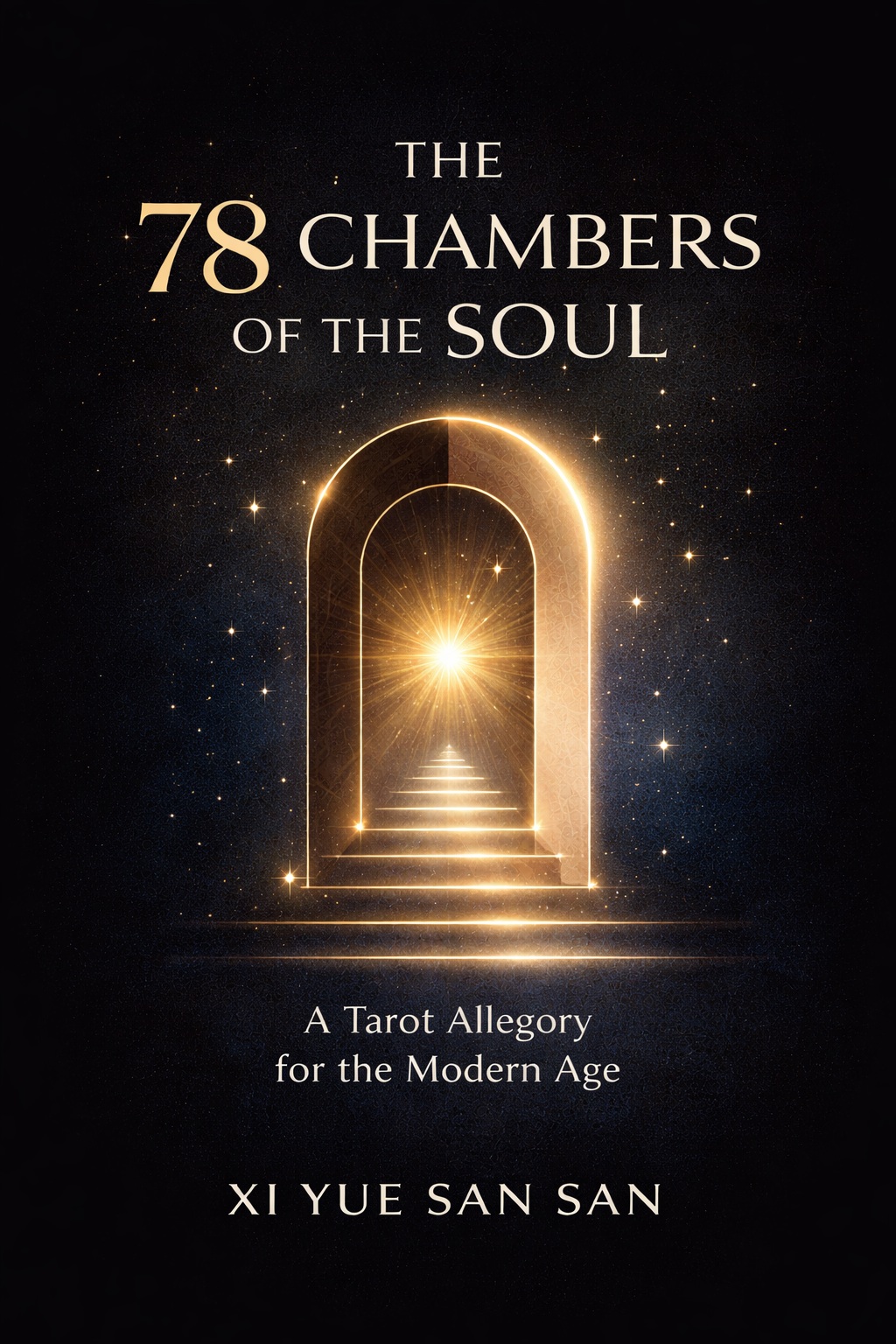
Book recommendation
78 Chambers of the Soul is a useful next companion when this question needs more than a quick card pull.
Open the book page