You draw the Queen of Swords and immediately think of your manager. Then you remember your sister, who has been unusually direct lately. Then you wonder whether the card is describing you, because you have spent all morning composing a message that begins “To be clear.” By the time you open the guidebook, three different people are sitting in the same chair.
Court cards can be difficult because they resemble people while also describing ways of behaving. A King may suggest someone with responsibility, an aspect of your own approach, or the kind of conduct a situation requires. A Page may suggest a learner, a message in some traditions, or a tentative beginning. None of those possibilities identifies a person automatically.
This guide offers a practical method for considering real people without turning tarot into a guessing game about appearance, gender, or secret intentions. It uses the familiar Page, Knight, Queen, and King ranks found in Rider–Waite–Smith-style decks. Other decks may rename or rearrange their courts, so begin with the deck you actually have.
First decide whether the position asks for a person
The question and spread position should do some of the work. If the position is “How can I approach this conversation?”, a court card is likely to be useful as a description of conduct. If it is “What role am I taking in this group?”, it can describe your role. You do not need to search your contacts for a matching person simply because a face appears on the card.
A position such as “Who can support me?” does invite consideration of people. Even then, start with the kind of support rather than a name. The Queen of Pentacles could suggest someone who understands practical care and available resources. That might be a friend, colleague, relative, or community contact. You identify a plausible person through your knowledge of their behavior, not through the card alone.
If you did not specify a position, return to the original question. Write one sentence explaining why you think the card refers to someone. If the sentence is only “It looks like a person,” keep other possibilities open. A court card may describe an interaction more accurately than either participant considered in isolation.
Read the suit as the area of attention
The suit provides a useful starting point. Cups commonly brings attention to feelings, relationships, receptivity, and care. Wands commonly brings attention to desire, initiative, creativity, and action. Swords commonly brings attention to language, thought, judgment, and boundaries. Pentacles commonly brings attention to resources, work, practical care, and the conditions of everyday life. These are interpretive themes, not personality tests.
Use the site's guides to the Suit of Cups, Suit of Wands, Suit of Swords, and Suit of Pentacles when you need more context. Do not assume that one person belongs permanently to a single suit. The same colleague may be practical about a deadline and deeply emotional about a departure.
Ask what area matters in this particular reading. If you are looking for help reviewing a proposal, Swords might direct attention toward careful language and clear reasoning. If you are organizing a gathering, Pentacles might direct attention toward someone who remembers access, transport, and food. The question makes the suit useful. Without it, you may end up with a flattering description that fits almost anyone.
Read the rank as a possible way of engaging
One approachable model treats Pages as learners and experimenters, Knights as active pursuers, Queens as attentive stewards, and Kings as responsible directors. This is a working method, not a universal rule. It gives you verbs to try against the situation: learning, pursuing, tending, deciding. Those verbs are often easier to use than a list of personality adjectives.
The ranks are not a ladder of human worth. A Page's willingness to ask a basic question may be exactly what a room full of experts needs. A King's authority may help when a decision is required and get in the way when listening is overdue. A Queen does not have to represent a woman, and a Knight does not have to represent a young man.
Age, gender, and job title can be relevant facts about a person, but they should not be used as automatic matching rules. A retired teacher can be a Page when learning a new skill. A teenager can show considerable practical responsibility. Describe the behavior you mean before assigning the card to someone. That keeps the person larger than the label.
The Pages: curiosity before competence
The Page of Cups can invite you to notice tentative emotional expression: a shy apology, a surprising creative idea, or someone learning to say what they feel. The Page of Wands can suggest exploratory enthusiasm: wanting to try, asking where to begin, or taking interest in an unfamiliar possibility. Neither card requires the person to be childish.
The Page of Swords may suggest questioning, observation, research, or an eagerness to understand what is being said. In a difficult expression, that questioning could become restless speculation. The Page of Pentacles may suggest practical learning: reading instructions, practicing a skill, or taking the first concrete steps toward a project. Consider the actual task before deciding what kind of learner you are seeing.
If a Page seems to describe a real person, ask whether they are new to this situation rather than new to life. A capable colleague starting in an unfamiliar role may need information, not condescension. When reading for someone else, avoid announcing that a Page proves emotional immaturity. That is a broad judgment, and the card does not provide enough evidence for it.
The Knights: watch the direction of movement
Knights can be useful when the reading concerns pursuit, effort, pace, and how someone acts on a desire. The Knight of Cups may invite attention to emotional pursuit or an offer shaped by feeling. The Knight of Wands may suggest energetic engagement, adventure, or a tendency to move quickly toward what interests them. Neither establishes reliability or unreliability by itself.
The Knight of Swords may describe decisive speech, rapid action, or a strong push toward a conclusion. The Knight of Pentacles may describe sustained effort, careful repetition, or a slower pace. If you are comparing actual people, look for behavior over time. Who follows through? Who checks details? Who changes direction? Do not treat speed as proof of sincerity or slowness as proof of commitment.
A Knight in a relationship reading can tempt readers into stories about a person who is “coming toward you.” Keep that language modest. If someone has made an invitation, you can discuss its pace and tone. If no one has, the card may be better read as a question about initiative. It cannot identify an approaching stranger or promise that an absent person will contact you.
The Queens: attention, care, and discernment
The Queen of Cups may invite attention to emotional listening and receptivity. The Queen of Wands may suggest confidence, creative presence, and the capacity to encourage participation. These themes can describe someone else, something you already do, or a way you might choose to act. The card does not tell you which without the question and context.
The Queen of Swords often offers a useful image for clear language, discernment, and boundaries. The Queen of Pentacles can direct attention toward practical care and the resources that make life manageable. Either quality may be expressed warmly or poorly. A person who sets a boundary is not automatically cold. A person who provides practical help is not automatically controlling.
When a Queen appears as advice, try making the interpretation a sentence you could act on. “Ask the question clearly” is more useful than “Become the Queen of Swords.” “Check what the person actually needs before offering help” makes a practical-care reading concrete. You do not need to adopt an entire imagined personality to borrow one helpful behavior for an afternoon.
The Kings: responsibility has consequences
Kings can be read through the use of authority and responsibility. The King of Cups may invite consideration of steadiness in an emotional situation. The King of Wands may suggest direction, vision, and the willingness to initiate. In a real-person reading, ask whether the person actually demonstrates those qualities. A title or confident manner does not establish that they do.
The King of Swords may direct attention toward judgment, standards, and clear decisions. The King of Pentacles may direct attention toward stewardship of practical resources and established responsibilities. In a challenging position, either can raise questions about rigidity or control. These are questions to explore, not verdicts to deliver about someone's character after one card draw.
A King can also refer to you when you would rather someone else decide. Perhaps a group is waiting for an answer you are responsible for giving. Perhaps you keep asking for another opinion because owning the choice feels uncomfortable. In that context, looking for an impressive person who will rescue the situation may distract from the action the reading actually invites you to consider.
Match behavior before matching identity
Use a simple three-part note: the behavior, the context, and the evidence. For the Queen of Swords, you might write “clear questions,” “reviewing the agreement,” and “my colleague has previously helped me notice unclear wording.” That is a reasonable basis for considering the colleague as possible support. It remains a practical inference from your knowledge, not a revelation delivered by the card.
Now write an alternative. Could the same card invite you to ask the questions yourself? Could another person provide the same kind of help? Alternatives matter because the first name that occurs to you may be the person you most want to hear about. A crush, an ex, or a difficult manager can occupy every card if you let emotional salience do all the interpreting.
Avoid using hair color, skin color, or gender to narrow the match. Those shortcuts can reinforce stereotypes while adding little useful information. Zodiac correspondences also vary between systems and should not be treated as proof of identity. If astrology is part of your practice, keep its associations separate from the evidence about what a real person has actually done.
A worked example: three courts at work
Imagine a fictional reading about a team presentation. The positions are “my current approach,” “help I can ask for,” and “what the group needs next.” The cards are Page of Swords, Queen of Pentacles, and King of Wands. There is no need to invent three new people. The first card already has a role tied to the querent.
The Page of Swords might describe gathering information and asking questions, perhaps with a tendency to keep researching after enough material is available. For support, the Queen of Pentacles might prompt the querent to think of a colleague who understands the practical constraints. That colleague could help check the room, timing, or equipment. The identification rests on known experience.
The King of Wands in the final position could suggest that the group needs a clear direction and someone willing to communicate it. That may be the querent's responsibility, an existing team lead's role, or a task to assign openly. The reading is successful if it clarifies the work. It does not need to reveal a hidden hierarchy of personalities to feel meaningful.
Reversed courts are not villain cards
A reversal may lead you to consider a blocked, excessive, private, or poorly expressed version of the card's theme, depending on your method. The Queen of Cups reversed might prompt a question about emotional boundaries. The King of Swords reversed might prompt a question about how authority or language is being used. Neither card proves manipulation, a personality disorder, or malicious intent.
Ask what behavior is causing difficulty and who has observed it. “They interrupt me before I finish explaining” is something you can discuss. “They are a reversed King of Swords” is a label that may make the discussion less precise. Tarot language should help you notice a pattern without replacing the ordinary words needed to address it.
Apply the same care to self-readings. A reversed Page does not make you foolish. A reversed King does not make you a failed adult. You may be inexperienced in one situation, overly forceful in another, and thoughtful elsewhere. A useful reading identifies something you can reconsider. It leaves your whole identity out of the verdict.
Practice without assigning cards to unsuspecting people
Try using fictional characters or your own recorded behavior for practice. Choose a scene and describe what the person does before selecting a court card. Someone offers a careful apology; someone takes charge too quickly; someone patiently learns a difficult task. Compare two possible cards and explain the difference in plain language.
For a week of self-observation, note one court-like behavior each day without drawing cards first. You may notice Page curiosity while learning software, Knight urgency while sending a message, Queen attentiveness while listening, or King responsibility while making a decision. This exercise helps loosen the idea that you must discover one card that permanently defines you.
When you return to an actual spread, keep the same modest approach. Identify the position, consider suit and rank, describe the behavior, and check your interpretation against context. If the card could fit several people, say so. You have not failed to read it. You have reached the point where a symbolic image needs real information, and where another person's complexity deserves more room than a single card can hold.
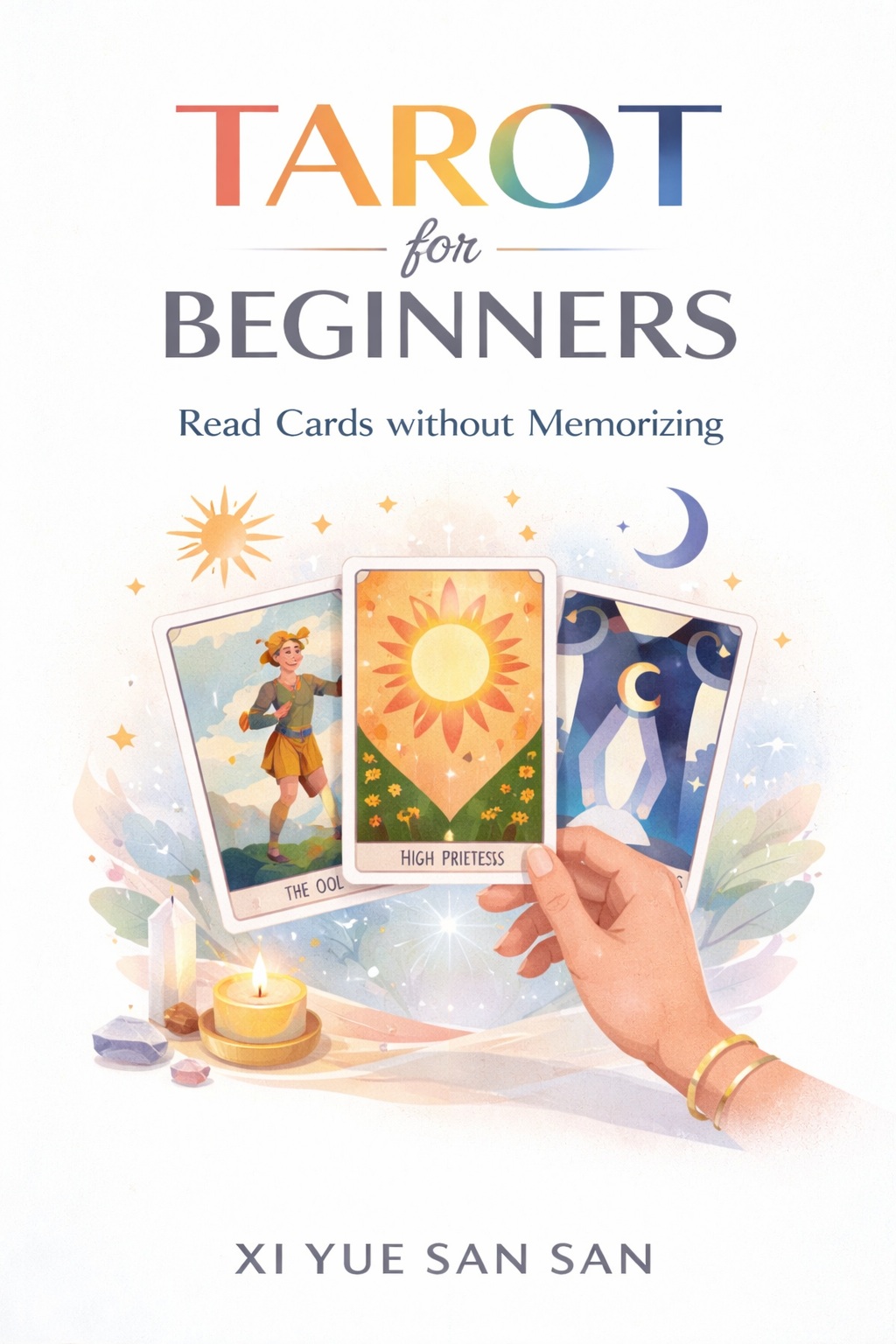
Book recommendation
Tarot for Beginners. Its learn-through-intuition approach fits practicing with court-card images and observed behavior before trying to memorize sixteen fixed personality descriptions.
Open the book page