You have already written the reply. It is excellent, in the narrow sense that every sentence lands exactly where you intend it to hurt. Your thumb is above the send button. Then you notice that you have misunderstood the original message: the meeting was moved by the client, not by the colleague you are about to accuse. Nothing has been sent yet. For a moment, the room feels very quiet.
The Knight of Swords reversed is useful to read at precisely this kind of junction. It can direct attention toward haste, forceful language, scattered effort, or action that has lost contact with its purpose. In another context, it can suggest stalled momentum and the frustration of being unable to say or do what seems necessary. The question determines which possibility deserves attention.
It is not a reliable announcement that an aggressive person is approaching or that a sudden disaster will occur. Treat the card as a prompt to examine pace, direction, and the use of words. Those are already substantial subjects. An ordinary email can carry enough trouble without asking a card to forecast an entire crisis.
Begin with motion, then ask where it goes
The familiar Rider–Waite–Smith Knight of Swords depicts a rider charging forward with a raised sword. For a visual exercise, notice what your eye does: perhaps it follows the horse, moves toward the blade, or feels the rush before attending to anything else. The image gives you movement to work with. A reversal invites you to question how that movement is being expressed.
Avoid reading the upside-down image as a literal accident. Picture direction is symbolic material, not a report about physical events. You can ask whether effort is misdirected, whether someone is moving before checking facts, or whether the desire to act has become disconnected from an achievable next step.
The Suit of Swords guide offers a wider context of thought, language, judgment, and conflict. Here, the Knight adds the urge to pursue or act. Reversed, that urge might become excessive, frustrated, or poorly aimed. Start with one of those possibilities and see whether the situation supports it.
Haste has ordinary disguises
Impulsiveness does not always look dramatic. Sometimes it looks responsible. You reply to every message immediately because you do not want anybody waiting. You volunteer before checking your calendar. You correct a small error in front of a group because accuracy matters, then realize the way you corrected it has made the next conversation harder.
In a reading about an overloaded day, the reversed Knight might prompt a simple question: which actions am I taking because they are needed, and which because unfinished business makes me uncomfortable? The distinction is awkward. Answering a message gives you the brief satisfaction of doing something, even when the answer creates three new obligations.
Imagine agreeing to prepare a report by tomorrow. You know the material, so the promise feels safe. Later you remember the appointment, the school pickup, and the missing figures that somebody else must provide. Your confidence was real, but incomplete. The useful response is to revise the commitment promptly, rather than defend it until other people are forced to deal with the delay.
Read impulsiveness through decisions and consequences. “I accepted before checking” gives you something to change. “I have chaotic energy” may feel expressive, but it leaves the calendar exactly as crowded as before. Tarot becomes more helpful when its language eventually leads back to ordinary verbs.
When being correct becomes the whole conversation
Aggression in a Knight of Swords reading can concern how a point is delivered. You might have accurate information and still use it to humiliate someone. You might ask a valid question with a tone that makes an answer almost impossible. The reversal can invite you to consider what you want the exchange to accomplish beyond establishing that you noticed the mistake.
Suppose a housemate has forgotten an agreed chore again. There is a real problem. Opening with “You never think about anybody else” expands that problem into a judgment of their entire character. Now the conversation concerns the word never, their memory of last Tuesday, and whether you are being fair. The dishes remain in the sink.
A more useful opening names the event and the request: the kitchen was left unfinished after the agreed evening; you need a clear arrangement for tonight. This does not require you to sound cheerful. You can be angry and specific. You can also decide to pause if you are too angry to say the sentence you actually mean.
For questions about fairness and accountability, the Justice card guide makes a useful companion. The point is to distinguish a legitimate concern from every forceful tactic used in its name. Being wronged does not automatically make every possible response effective.
A reversal can describe stalled action too
Some readers use reversals to explore blocked expression. Under that method, the Knight of Swords reversed might suggest an argument you cannot begin, an answer caught in drafts, or a decision repeatedly postponed. There is urgency inside, but very little movement outside. This can feel just as exhausting as rushing.
Choose this interpretation because it fits the question and the facts, not because the first interpretation failed to flatter you. If you ask why you cannot raise a concern at work, blocked speech may be relevant. If you ask why your rapid replies keep causing misunderstandings, excessive speed is a more direct place to begin.
Consider what is preventing action. Perhaps the missing information is real. Perhaps a senior colleague interrupts you. Perhaps you are trying to produce a perfect sentence that cannot possibly be challenged. These situations require different responses. A card can help you notice hesitation, but the reason still has to be investigated in the actual circumstances.
A first step may be very small: ask for a time to talk, write the question in one sentence, or request the document you need. You do not have to leap from silence into a speech. If the card seems to describe pent-up movement, give that movement a clear and manageable destination.
Swift changes are a question of preparedness
The Knight's speed can tempt a reader to announce that everything is about to change. A reversed card does not supply a timetable, a specific event, or a guarantee of disruption. If the situation is already changing quickly, however, it can be a useful image for examining your response to that pace.
Imagine your team receives a revised deadline. Your first impulse is to cancel everything, rewrite the plan, and send a flurry of instructions. Before doing that, check what actually changed. Is the whole project due earlier, or only an outline? Who confirmed the date? Which parts depend on other people? You may still need to move quickly after checking. The pause serves the movement.
At home, sudden changes can produce a similar rush. A visitor cancels, transport fails, or a family arrangement shifts. Ask which decision is needed now and which can wait until you have more information. Trying to settle every consequence immediately may make you feel in control while leaving you with a collection of unnecessary commitments.
This is a reading about how you meet change, rather than evidence that a particular change is destined. The distinction matters when you are already braced for bad news. You deserve an interpretation that leaves room for an ordinary uneventful day.
Love readings: examine the exchange you actually have
In a relationship question, the reversed Knight may suggest hurried conversations, defensive answers, interrupted listening, or pressure to decide. Picture two people arguing through messages while both are at work. Each reply is short because they are busy. Each person reads the other's brevity as contempt. By lunchtime, they are discussing the future of the relationship through fragments typed beside unrelated tasks.
The card might prompt a change in the conditions of the conversation. Agree on a time to speak. Say what needs an answer now and what can wait. If messages keep escalating, stop composing increasingly elaborate rebuttals and return to the original concern. A useful reading may result in fewer words, spoken in a setting where someone can hear them.
When asking about an absent person, avoid assigning motives from the reversal. Silence might mean many things; the card cannot establish that they are furious, afraid, preparing a confrontation, or secretly eager to return. If you need a boundary around waiting, set it around your own needs and the information available.
Also, a reading should not make you reinterpret repeated disrespect as evidence of hidden passion. If someone routinely insults you or pressures you, those behaviors deserve attention in ordinary language. You do not need a dramatic tarot explanation to decide that a conversation is unacceptable or that you do not wish to continue it.
Career readings: urgency needs a named task
At work, this Knight can bring attention to speed without coordination. People are responding, editing, correcting, and sending, yet nobody is sure which version is current. The person who sounds most decisive may simply be the person who spoke first. In a reading about your contribution, consider whether you are helping a decision happen or adding another urgent instruction.
Try naming the task before interpreting the card. “Prepare for Thursday's presentation” gives you something concrete. “Fix my career” asks one card to carry too much. With the smaller question, a reversed Knight might invite you to stop rewriting the introduction and check whether the figures are correct, the audience is clear, and the requested decision appears on the final slide.
If you are waiting to speak up, the same card may suggest preparing a concise contribution. Write the issue, the consequence, and the question you need answered. Leave out the five paragraphs proving that you have thought about everything. Precision can make a hesitant voice easier to hear without requiring it to become the loudest voice in the room.
The Chariot guide offers another way to consider direction and effort. Comparing the two can help you distinguish sustained movement toward a purpose from the satisfaction of moving quickly whenever tension rises.
A worked reading about a difficult reply
Consider a fictional example. Omar receives criticism of a shared project and asks, “How should I respond in a way I can stand behind tomorrow?” He chooses three positions: my first impulse, what needs checking, and a useful next action. The cards are Knight of Swords reversed, Justice, and Page of Pentacles.
In the first position, Omar recognizes the urge to respond before he has read the feedback carefully. He is already writing against a tone he imagines, rather than against the actual points raised. The reversal is useful because it names a behavior he can observe. He deletes nothing yet; he saves the reply as a draft and opens the original message again.
Justice in the second position leads him to compare the criticism with the agreed scope. Some of it is fair. One point rests on an outdated file. The Page of Pentacles, as an action prompt, suggests doing the practical homework: locate the current version and answer the specific questions. His eventual reply is shorter and less satisfying as a performance of indignation. It is also easier to use.
Another reader might emphasize different aspects of these cards. The example is meant to show how positions constrain an interpretation. It does not mean this combination always refers to workplace criticism, or that every angry draft should be followed by the same response. The evidence in Omar's situation is doing essential work.
Build a pause that is short enough to use
A pause does not have to become an elaborate ritual. Before a consequential message, read it once for facts and once for purpose. Have you attributed an intention you cannot know? Is the request visible? Would you understand the message if you received it without hearing the voice in your head? If it contains a claim you have not checked, check it.
When a response is time-sensitive, say what you know and what you still need. You can acknowledge receipt without pretending to have a complete answer. You can ask for a short interval to verify a detail. You can state a clear boundary without explaining your entire emotional history. None of these choices requires endless deliberation.
For practice, keep one example of a response you changed after pausing. Record what you removed, what you added, and whether the revised version better served your purpose. Do not judge the outcome only by whether the other person liked it. A clear and appropriate answer may still disappoint someone.
The reversed Knight of Swords becomes easier to read when you stop treating speed itself as either a virtue or a flaw. Sometimes you need to act promptly. Sometimes you need one missing fact. Sometimes the difficult task is saying the plain thing without sharpening it first. The card can help you notice that choice before your thumb reaches the button.
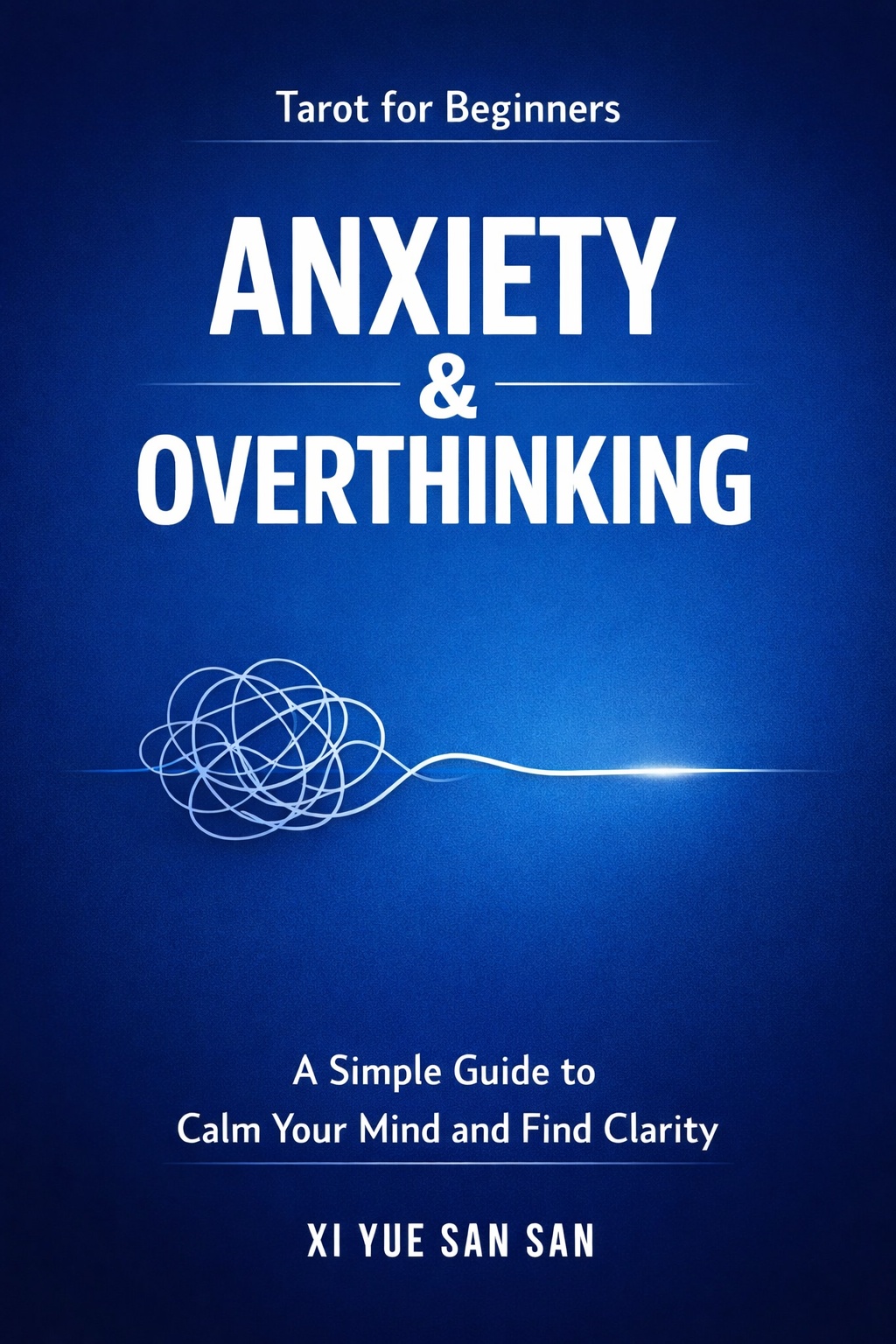
Book recommendation
Anxiety & Overthinking. A relevant companion to the moments in this essay when a draft reply grows longer with every imagined argument. Browse its preview if overthinking is part of your reading practice.
Open the book page