At the workshop, somebody has to go first. There is a small silence, the scrape of a chair, a person pretending to look for a pen. Then one participant raises a hand and offers an unfinished idea. It is not brilliant yet. It is simply there, spoken aloud, which changes the room. Now other people have something to answer.
That is one useful way to approach the Queen of Wands: the capacity to participate with visible interest, to give an idea warmth and presence, and sometimes to make it easier for others to join in. Charisma may be part of the picture, but the card does not require a dazzling entrance or a personality that fills every available space.
In a reflective reading, the Queen can invite questions about confidence, creative engagement, independence, and the way you use influence. She can represent a person, a behavior, or a quality the situation calls for. The court title does not restrict the card to women, a particular age, or a particular appearance. A quiet person can show its qualities. A loud person can fail to.
Look at presence before writing a personality profile
In the familiar Rider–Waite–Smith picture, the Queen is seated with a wand and a sunflower; a black cat appears near her feet. You can begin by noticing the contrast between the still figure and the associations of warmth or activity you bring to Wands. For this reading exercise, being seated can suggest that presence does not always depend on constant motion.
The sunflower might draw your attention toward pleasure, visibility, or what you want to tend. The cat may suggest independence to you, or watchfulness, or something much more personal. These are possible associations. You do not need to claim that every detail has one secret definition before allowing it to help you think.
If your deck depicts another scene, ask what seems engaged, what seems assured, and where the figure's attention goes. Then describe a behavior. “She looks confident” is a beginning. “She appears able to remain present without asking permission every few seconds” is more specific. Specific observations give you something to test against the question.
Charisma can be attention rather than performance
When people hear charisma, they often imagine effortless charm. In everyday life, a compelling presence can be much less polished. Someone remembers your idea from last week. Someone asks a question and waits through the pause while you answer. Someone enjoys their work openly enough that you begin to notice what is interesting about it.
The Queen of Wands can be read through that kind of engagement. She may invite you to show interest without apologizing for it. If you are presenting a proposal, explain why you care. If you are hosting, greet the person standing awkwardly near the doorway. If you are making something, let the work carry a little of your actual taste.
This does not mean you are responsible for making every room comfortable. The person who creates warmth can become the person everyone expects to perform it on demand. You are allowed to be tired, distracted, or simply less available on a particular day. A court card is a way to examine a quality, not a contract to provide that quality indefinitely.
The Suit of Wands guide gives the broader context of desire, initiative, and creative effort. With this Queen, consider how those themes become a sustained way of showing up, rather than a single burst of enthusiasm that leaves everybody else to finish the task.
Independence includes choosing what to share
Independence can sound like never needing anybody. That is a demanding interpretation to attach to one card, and usually an unhelpful one. A more practical reading asks whether you can make choices you recognize as yours while remaining capable of cooperation, help, affection, and ordinary dependence.
Imagine you want to take a Saturday class. The first obstacle is not the fee or the schedule. It is the speech you are preparing to justify wanting it. You anticipate every raised eyebrow before anyone has raised one. The Queen may prompt you to state your interest plainly, then discuss the actual arrangements without putting your desire itself on trial.
There may be shared responsibilities to negotiate. Independence does not erase those. You still need to discuss childcare, transport, or a commitment already made. The distinction is between arranging the practical details and asking others to certify that your interest is worthy enough to exist. Sometimes those conversations become tangled together.
A helpful question is, “What decision can I own, and what agreement do I need?” That gives both autonomy and connection somewhere to stand. You do not have to turn every preference into a rebellion. Sometimes you can simply choose the class, put the date in the calendar, and see how the first session feels.
Career power begins with something you can point to
In career readings, the Queen of Wands often invites reflection on visibility and confidence. Those words become useful when attached to evidence. What have you made? Which problem have you helped solve? What do you want responsibility for next? It is easier to discuss your contribution when you can name the work rather than trying to radiate an abstract sense of deserving more.
Suppose you have quietly improved a recurring process at work. People benefit from it, but nobody knows who did what. A Queen reading might encourage you to explain the change in the next meeting, including the contributions of others. You can say, “I put together the new handover notes, and Maya tested them with the afternoon team.” That is visible ownership without taking all the credit.
The card can also bring attention to avoidance disguised as modesty. You keep declining the opportunity to demonstrate a skill because you say you are not ready. Sometimes that is accurate. Sometimes you are ready enough to begin and afraid of being watched while learning the rest. Ask what preparation is genuinely missing and what standard of perfection you have quietly added.
Confidence does not determine how an employer will respond. The reading cannot promise promotion, recognition, or a successful application. It can help you choose a clearer action: gather examples, ask for a conversation, make a proposal, or find out what the role actually requires. The outcome still involves other people and real conditions.
Leadership that leaves space around it
The Queen can suggest a person who encourages participation, but encouragement needs to be responsive. A lively leader may assume everyone wants to speak spontaneously. A quieter colleague may need the agenda in advance. Someone with a strong idea may still prefer to send notes afterward. Warmth becomes more useful when it notices these differences.
Picture a meeting in which the same two people answer every question. A Queen of Wands approach might involve inviting contributions through another route rather than insisting that everybody become equally outgoing. The person leading could leave a minute for writing or ask for comments before the meeting. The aim is a fuller conversation, not a room full of matching personalities.
Influence also includes how you handle another person's good idea. Can you support it when it is better than yours? Can you acknowledge the person who raised it before the group began calling it a shared discovery? A card associated with charisma is worth reading alongside the less glamorous questions of credit and attention.
If the Queen refers to someone you admire, notice these behaviors rather than simply admiring their confidence. The court cards guide can help you describe what a person actually does before assigning them a role in the reading. That keeps admiration from doing all the interpretive work.
In love, attraction needs room for a whole person
In a relationship reading, the Queen may bring desire, self-possession, playfulness, or the wish to be met as an individual into focus. Perhaps you have been arranging every evening around someone else's preferences. Perhaps you have stopped mentioning your own interests because their response is lukewarm. The question is what space remains for your life inside the relationship.
Reclaiming that space might be simple. Make plans with a friend. Wear something because you enjoy it. Tell your partner what you would like to do together, rather than asking only what they prefer. These actions are not techniques for making someone jealous or securing a reaction. Their value should not depend entirely on whether another person suddenly pays more attention.
If the Queen appears when you ask whether someone is attracted to you, keep the reading modest. The image can help you examine attraction as a theme, including your own wishes, but it cannot verify their private feelings. An invitation, an answer, and behavior over time will tell you more about the relationship than a flattering interpretation repeated until it feels certain.
Likewise, do not turn another court card into an automatic rival. A Queen in a spread is not proof of a third person. She may describe you, a quality, a situation, or someone already relevant to the question. Sensational interpretations can feel convincing because they create a story quickly. Speed is not the same as support for that story.
Reversed: find the behavior behind the discomfort
With reversals, choose a method before deciding what this Queen means. If you explore blocked expression, she may suggest confidence held back or creative interest kept private. If you explore excess, she may invite questions about dominating a room, needing constant recognition, or trying to control how others see you. Context should narrow the choice.
Jealousy is sometimes associated with a difficult expression of this card, but it is more useful to examine a particular moment than label a person jealous. You hear about a colleague's success and immediately explain why they had advantages. You may have a valid point about those advantages. You may also be avoiding the sting of wanting something similar for yourself.
Try separating the feeling from the action. Envy can tell you that recognition matters to you. It does not require you to diminish the other person's work. You can feel disappointed, congratulate them honestly, and later consider what you want to pursue. That is less dramatic than pretending you are above comparison, and probably more workable.
A reversed Queen may also resonate when you have been performing confidence for too long. Every invitation becomes another chance to prove you are lively and capable. You return home irritated by the sound of your own voice. The next useful act could be declining something, preparing less spectacle, or admitting you do not have an opinion ready.
A fictional reading before a presentation
Imagine Jo, a designer preparing to present an unfinished proposal. Jo asks, “How can I contribute clearly without pretending the work is more complete than it is?” The chosen positions are what I already bring, what could interfere, and what will support the next step. The cards are Queen of Wands, Seven of Cups, and Three of Pentacles.
The Queen in the first position suggests engagement and willingness to stand beside the idea. Jo does not need to impersonate somebody with a louder voice. The useful action is explaining what interests them about the proposal and showing the strongest example. That is enough material for a beginning.
The Seven of Cups, as an obstacle, prompts Jo to notice the temptation to present every possible direction. There are too many mockups, and some contradict each other. The Three of Pentacles, as support, points toward asking colleagues for specific input. Jo chooses two options and prepares a clear question about each. The reading results in a more usable meeting, not a prediction that everybody will love the design.
Compare this with the Strength card guide. Strength can help you think about staying with discomfort while the Queen helps you think about visible engagement. You might borrow both ideas without deciding that you must feel fearless before entering the room.
Practice being visible at a manageable size
Choose one small action this week that makes a real preference or contribution visible. Recommend a book you actually enjoyed. Explain one thing you changed in a project. Ask a question you have been withholding because it might seem basic. Keep the action small enough that you can complete it without turning it into a test of your entire personality.
Afterward, record what happened rather than only how exposed you felt. Did someone answer? Did the work become clearer? Did you survive a neutral response? A lukewarm reception can be disappointing without proving that you should never speak again. Some rooms are distracted. Some ideas need work. Sometimes your timing is simply inconvenient.
You may also discover that a quieter form of visibility suits you. A thoughtful written contribution, a carefully prepared example, or an invitation offered to one person can carry considerable presence. The Queen of Wands need not ask you to become somebody else. She can ask whether the parts of you already interested and capable are being given any room to participate.
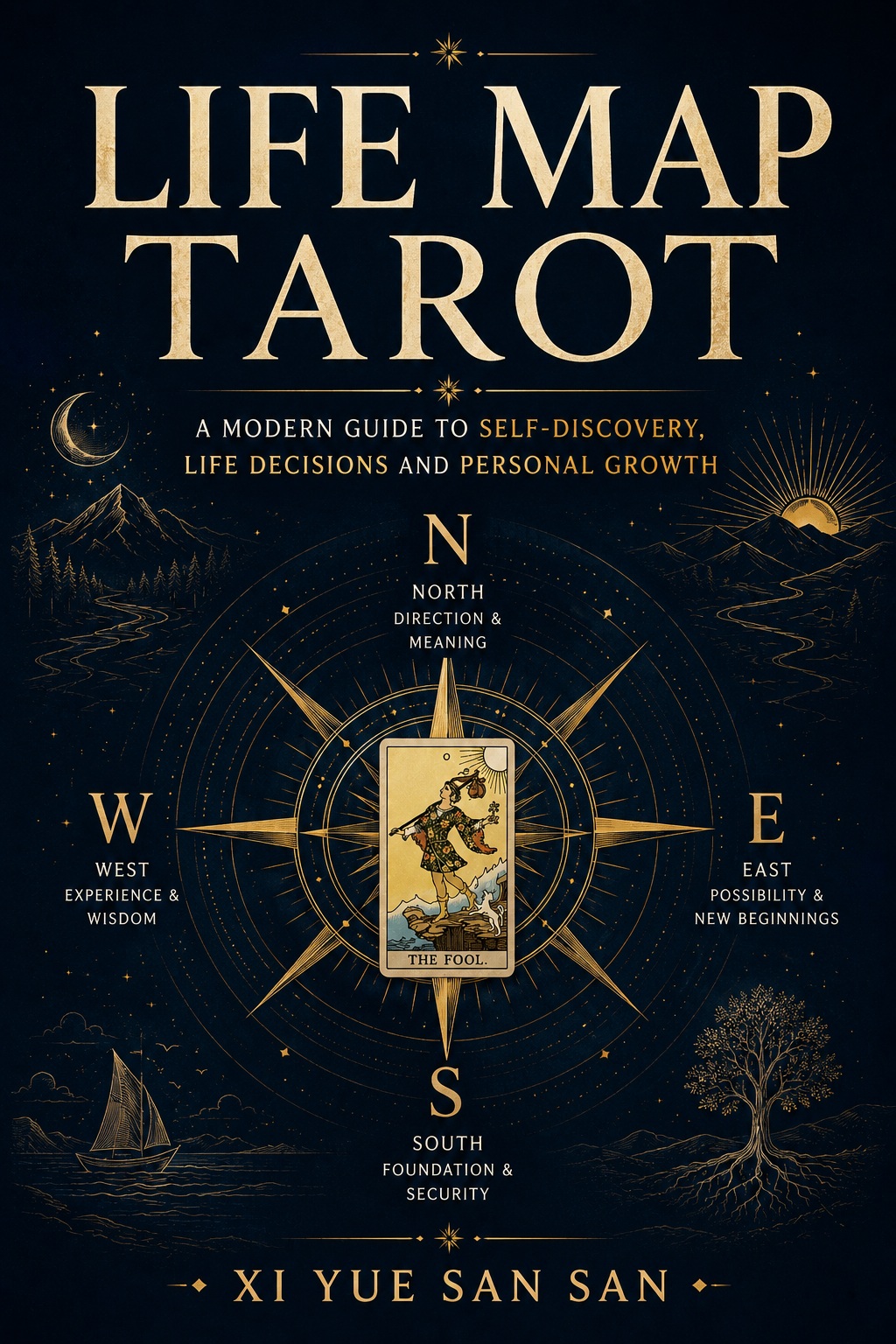
Book recommendation
Life Map Tarot. Its focus on decisions and self-reflection pairs with the Queen's questions about choosing your own interests and deciding how you want to participate at work.
Open the book page