They remember the spare key. That is the detail you keep returning to. When the plan changes and everybody is talking at once, they know where the key is, who has the address, and whether there is enough food for one more person. Nothing about it looks especially romantic. Later, when the evening has settled, you realize how much easier their attention made everything.
The King of Pentacles often brings these ordinary forms of reliability into a tarot reading. Wealth, established resources, practical competence, and security are familiar associations, but they become more useful when you ask how a person handles what they have. A full account and an impressive job title do not tell you whether someone is generous, dependable, or willing to share decisions.
This guide approaches the King as a symbolic description of conduct. He may represent a real person, your own responsibilities, or a quality needed in the situation. The card does not identify a wealthy future partner or certify somebody's character. It can help you look more closely at the evidence already present, including the little details you might otherwise overlook.
Read the abundance, then ask who can use it
The familiar Rider–Waite–Smith King sits amid imagery associated with material plenty, including vines and grapes, and holds a pentacle. Begin with the sense of established resources. For this exercise, the important question is not how much the image appears to contain, but what responsibility might come with having enough to affect other people's lives.
An abundant setting can suggest comfort and provision. It can also prompt questions about access: who feels welcome, who makes the decisions, and whether what is available can actually be used when needed. Those questions are interpretive extensions of the picture. They are not proof that a person in your life is either generous or controlling.
The Suit of Pentacles guide gives a useful grounding in money, work, time, practical care, and material conditions. With the King, consider how somebody takes responsibility for those things over time. A court card becomes clearer when you can turn an impressive adjective into a repeated action.
As a person, start with follow-through
A person showing a constructive King of Pentacles quality may be reliable in practical ways. They keep agreements, understand the work involved, and take consequences seriously. When they cannot do what they promised, they tell you rather than disappearing. Their reliability is visible across ordinary situations, not only during an impressive first encounter.
Imagine two people offering to help you move. One enthusiastically promises everything and sends photographs of a large vehicle. The other asks what time the keys become available, how many flights of stairs there are, and whether somebody has booked the vehicle. The second person may sound less exciting. Their questions may also be the reason the afternoon does not fall apart.
Do not confuse steadiness with an absence of mistakes. Reliable people forget things. They misjudge time. They can be tired and irritable. The useful evidence lies partly in what happens afterward: do they acknowledge the problem, help repair it, and adjust the next arrangement? Perfection is a poor test because nobody passes it for very long.
If several people could fit the card, leave the identification open. The court cards guide explains why behavior and the spread position matter more than age, gender, appearance, or status. You can recognize a helpful quality without deciding that one person permanently embodies the King.
Wealth is not a character reference
The association with wealth can make this card especially vulnerable to wishful reading. A person owns a business, wears expensive clothes, or speaks confidently about money, and the interpretation becomes “successful and secure.” But wealth, competence, kindness, and emotional availability are separate questions. One answer does not supply the others.
If the reading concerns a person you know, ask what you actually know about their conduct. Are they clear about shared costs? Do they respect agreements? Can they hear a practical concern without treating it as an insult? Are they generous in a way that leaves the recipient free, or does every favor return later as an unpaid debt of gratitude?
Conversely, limited means do not make someone an unreliable partner or a failed expression of Pentacles. A person can have little money and still be careful, honest, and considerate with available resources. They may face circumstances that steadiness alone cannot fix. Avoid letting a card's abundant scenery become a moral ranking of people's bank balances.
In a reflective reading, the King can ask what responsible care looks like at the scale of the life you actually have. That might be a clear arrangement about a shared bill, maintenance completed before a small problem grows, or honest notice that a promised contribution is no longer possible. It need not look luxurious.
What a reliable partner does on an unremarkable day
As a relationship symbol, the King of Pentacles can invite attention to dependable care. Somebody brings the item you asked for rather than an elaborate substitute they prefer. They notice that you have an early start and keep the evening manageable. They participate in the unglamorous tasks that make a shared life possible.
These details matter, but practical help is not the whole relationship. A partner may arrange transport efficiently and still avoid listening when you are upset. Another may be deeply affectionate but leave every practical responsibility to you. The card helps you examine one area; it should not erase needs that fall outside that area.
Suppose your partner responds to a difficult day by fixing something in the house. You appreciate the effort and still wanted ten minutes of conversation. You can acknowledge the help while asking for what was missing. “Thank you for dealing with that. Could you sit with me for a bit?” is a more useful response than deciding that practical people simply cannot understand feelings.
The Ten of Cups and Ten of Pentacles comparison develops this difference between emotional belonging and practical continuity. Reading them together can help you name several kinds of fulfillment without expecting one card, or one caring gesture, to contain all of them.
Security should leave room for choice
A difficult expression of this King may appear when provision becomes a reason to control. Someone pays for an arrangement and assumes that settles every decision about it. Someone repeatedly reminds you of what they have provided whenever you disagree. The practical help is real, but so is the pressure attached to it.
Describe that pressure through specific behavior. Who is allowed to ask questions? Can arrangements be discussed? Does a person respond to a different preference by withdrawing help as punishment? These observations matter more than whether a reading labels them a “shadow King.” Tarot language should make the concern easier to describe, not hide it inside an impressive term.
The card alone cannot tell you whether control is occurring. You may be reading about an ordinary disagreement over a shared purchase, or about a much more restrictive pattern. Start with what has happened and what choices are available. A generous interpretation of symbolism should never require you to ignore your own experience of a relationship.
A useful version of security includes predictability, clear agreements, and some room to act. If every ordinary choice requires permission from the person holding the resources, the word secure may describe the arrangement less well than you first hoped. You are allowed to ask what kind of security is being offered and what it costs you.
When the King describes your own work
In a career reading, this court can point toward responsibility for a practical result. You might be the person who knows how a process works, keeps an established project running, or has to make a decision affecting other people's time. The question becomes how you use that competence rather than whether you look authoritative enough.
Experienced people can forget how much they know. You solve a recurring problem in five minutes because you have met it a hundred times. A new colleague spends an hour on it. A constructive King response might be to explain the steps and the reason behind them, instead of treating their difficulty as proof that they lack common sense.
The card may also bring attention to the limits of being indispensable. If everything depends on your memory and availability, a day off becomes difficult for everyone. Write down the process. Share the information. Agree on who can decide when you are absent. Practical responsibility sometimes means making it possible for the work to continue without your constant presence.
If the King appears as advice, choose one responsibility you can actually carry. Finish the handover. Confirm the delivery. Explain the constraint early. You do not need to announce that you are becoming a more powerful person. Somebody being able to rely on a clear answer by Thursday may be a better measure of what changed.
Reversed: examine rigidity, neglect, or status
A reversed King can be read through excessive control, neglected responsibilities, or insecurity about material standing, depending on the question and your reversal method. Avoid treating those meanings as interchangeable. A person refusing to delegate is facing a different issue from a person repeatedly ignoring an agreed task.
For rigidity, consider whether an established method has become an unquestionable rule. “This is how we have always done it” may contain useful experience, or it may be avoiding a reasonable suggestion. Ask what the old method protects and whether the new proposal addresses the same need. You can respect competence while still examining its habits.
For neglect, look at the missing action. Perhaps maintenance has been postponed, records have become unclear, or promises keep outrunning available time. The reading might prompt an inventory of responsibilities and a realistic conversation about what can be completed. It does not need to become a verdict that somebody is fundamentally irresponsible.
For status anxiety, notice the pressure to appear established. You may feel embarrassed admitting that an outing is beyond your budget or that you do not understand a practical detail. The reversed King can invite a more honest sentence. “That does not work for me this month” may be uncomfortable to say, but it gives other people accurate information instead of a performance you have to sustain.
A fictional reading about sharing a home
Imagine Ari considering a move into a partner's apartment. Ari asks, “What do we need to discuss before deciding?” The spread positions are what currently feels supportive, what needs clarification, and what will help us make the arrangement workable. The cards are King of Pentacles, Justice, and Two of Cups.
The King in the first position fits the practical comfort Ari already sees: the apartment is settled, transport is convenient, and the partner usually follows through. This is evidence from the relationship, not evidence supplied by the card. Naming it helps Ari understand why the idea feels appealing without assuming that every detail has already been solved.
Justice in the second position prompts discussion of responsibilities and expectations. Who handles which tasks? What happens when schedules change? How will both people raise concerns? The Two of Cups, as a helpful approach, invites mutual conversation rather than treating the move as a favor offered by one person and gratefully accepted by the other.
The reading does not decide whether Ari should move. It helps produce a conversation that can inform that decision. Ari may leave the discussion feeling more confident, less certain, or aware of a detail that needs time. All three outcomes can be useful. A comforting court card does not require a comforting conclusion.
Keep a record of reliability without keeping score
For practice, write down three recent examples of practical care, including one you offered yourself. Make each example concrete: an appointment remembered, an agreement clarified, a meal prepared when the day went wrong. Then ask what made the act helpful. Was it timing, consistency, accuracy, or the fact that someone noticed a need without making you explain it repeatedly?
The purpose is not to build a ledger of who owes whom. It is to learn the difference between a flattering description and behavior you can recognize. You may also notice a form of care you have been discounting because it lacks drama. Quiet effort can become almost invisible when it works well.
Leave room for what is missing. Someone may be dependable in one area and unavailable in another. You may be excellent at keeping practical promises and reluctant to say when you need help. The King of Pentacles is most useful when it makes those details easier to discuss. Security grows more believable when it can withstand an ordinary question, an honest limitation, and the occasional admission that nobody remembered the spare key this time.
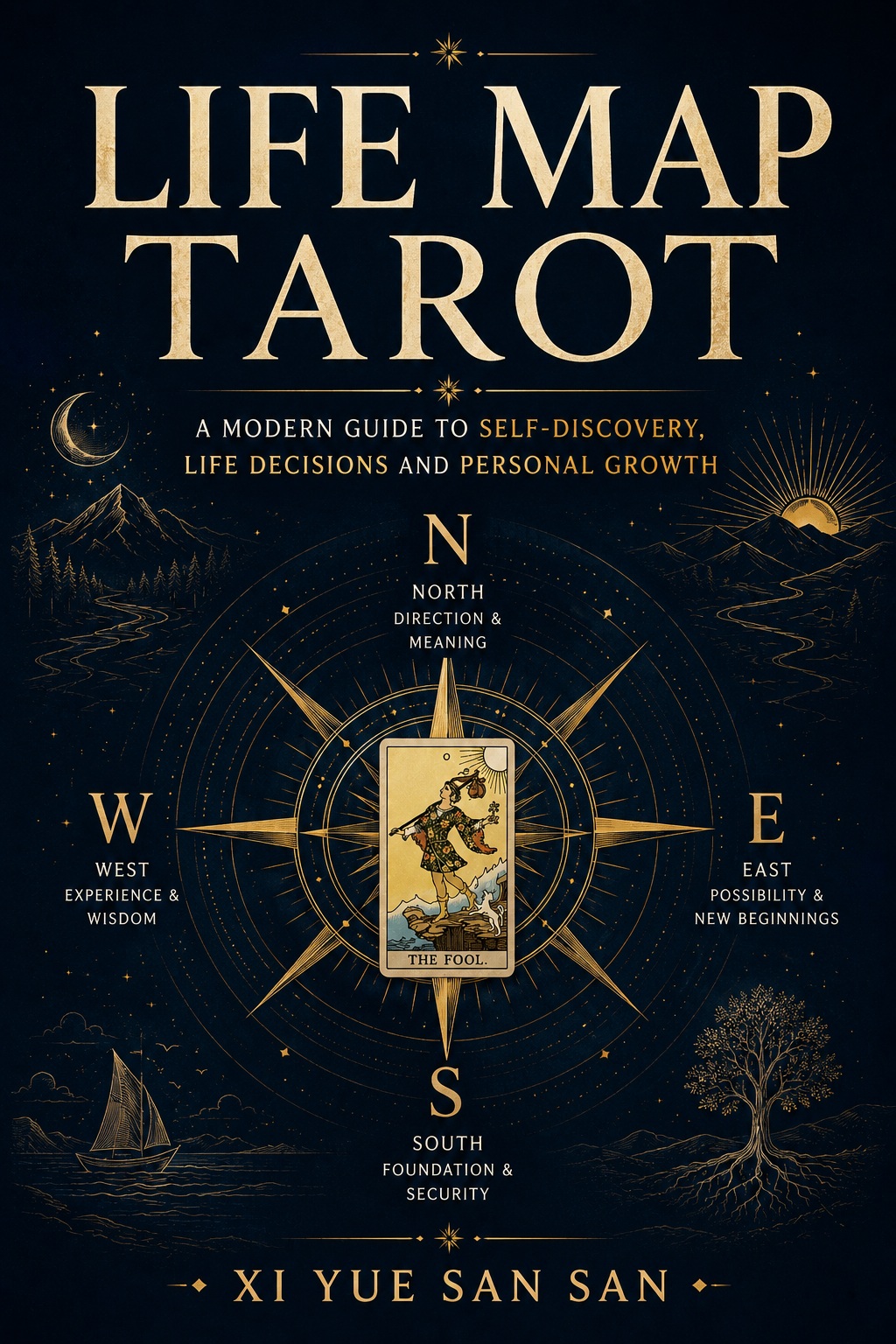
Book recommendation
Life Map Tarot. A useful next read for reflecting on the practical arrangements behind a life decision, including the shared-home conversation explored in this essay.
Open the book page