You ask whether to send the message and draw The Sun. That seems straightforward. Then you remember that the message contains a sentence you wrote while annoyed, so you pull a second card. The second card looks less encouraging. By the fifth card, you are no closer to pressing send, and you have almost forgotten what the first question was.
Yes-or-no tarot promises a small answer to a question that may not feel small at all. There is an understandable appeal in it. When you have been circling a decision for hours, one clear word sounds restful. The difficulty is that no tarot card provides an absolute, reliable yes or no about an external event. Readers assign meanings within a chosen method, and the question still needs context.
You can use a yes-or-no approach as a reflective exercise if you make its limits visible. This guide offers a simple three-category method, examples of cards that might lean toward yes, no, or pause within that method, and ways to turn the result into a useful question. The categories are reading choices, not measured probabilities or promises about what will happen.
First check whether yes or no is enough
Some questions are already answerable through ordinary information. “Is the office open tomorrow?” needs the office's hours. “Did my application arrive?” needs a confirmation or a direct inquiry. Drawing a card may tell you something about your impatience, but it cannot verify the fact. Check the source that can actually answer before making an interpretive exercise out of the uncertainty.
Other questions contain several decisions disguised as one. “Should I move?” may involve where, when, with whom, under what arrangement, and for what reason. A single favorable card cannot compare all of that. Break the question down. “What needs clarification before I decide?” may be more useful than forcing a large choice into a binary format simply because you are tired of considering it.
For low-stakes reflection, a bounded yes-or-no question can be manageable. “Would trying a short writing session this weekend support the project I have been avoiding?” concerns an experiment you can evaluate. Even there, the result is a prompt. You can still decide that you need sleep, that the project no longer interests you, or that Sunday afternoon is a better time than Saturday morning.
Use three categories instead of pretending uncertainty vanished
For the method in this article, Yes means an invitation to explore or proceed with the named action, subject to ordinary checks. No means an invitation to decline, stop, or reconsider that action in its current form. Pause means the question needs more information, a different time, or a clearer definition. These are proposed directions for reflection, not instructions from an authority outside your life.
The third category matters because uncertainty is often the honest answer. A deck does not become more useful when you make every card choose a side. If your question depends on another person's response, a missing detail, or conditions you have not checked, record that. You can dislike the pause and still allow it. The reading need not reward urgency with invented certainty.
Write the categories before drawing. Also decide how you will treat reversals and cards that do not fit easily. You might read upright only for this exercise and place ambiguous cards in Pause. Do not decide afterward that every reversal means yes because the upright result was disappointing. A consistent method cannot make prediction reliable, but it can make your own interpretation easier to examine.
Cards that can lean toward yes in this exercise
The Sun can be read as an encouraging prompt when the question concerns visibility, clarity, or enjoyment. Asked about sharing a small creative project with a willing friend, it might invite openness. It does not promise praise or confirm that the friend is available. The practical question becomes, “What would sharing this clearly and comfortably look like?” You still need to ask whether they would like to see it.
The Magician can lean toward yes for an action involving skills or resources you already have. Its useful condition is participation. You might consider making the first draft, practicing the demonstration, or using the tools sitting unused on your desk. It does not mean that every idea you have today is workable. The Magician guide offers more detail about will, skill, and the difference between intention and doing something.
The Fool can lean toward yes for a modest beginning where experimentation is appropriate. Ace of Wands can suggest interest in starting; Ace of Cups can prompt openness to an emotional or creative experience. These are not interchangeable approvals. The nature of the beginning matters. An invitation to try a beginner's sketching exercise should not become a blanket endorsement of every risk you have considered this month.
Six of Wands can encourage showing completed work or acknowledging effort, while The World may fit bringing a task to completion. But a completion card could also lean toward no when the question is whether to reopen something finished. Context changes the sentence. A card's pleasant reputation does not remove the need to read the actual words of the question.
Cards that can lean toward no, or ask for a serious rethink
Five of Swords may lean toward no when the proposed action is an argument whose main purpose is to win. The useful reflection concerns the likely cost of the approach: what would this exchange achieve, and what would it damage? The card does not identify the other person as dishonest. It may simply help you notice that the reply you are composing contains three insults disguised as clarifications.
Ten of Wands can suggest no to adding another commitment when you are already carrying too much. The context is essential. If your question is whether to delegate part of that burden, the same card could support doing so. Write down the exact action. “Should I take on the extra task?” and “Should I ask for help with my existing tasks?” are different questions even though both concern workload.
The Devil can prompt reconsideration when an action seems driven by compulsion, pressure, or an attachment you find difficult to question. The Tower may invite a serious look at assumptions that appear unstable. Neither card predicts catastrophe. For an everyday reading, you might translate their discomfort into a direct inquiry: “What am I overlooking because I want this answer?” Then examine something real before deciding.
Three of Swords can bring pain or a difficult truth into the discussion, but it does not automatically mean no to every action. A necessary, uncomfortable conversation may still be worth having. This is why a fixed list of supposedly absolute answers soon becomes misleading. The emotional tone of a card and the usefulness of a proposed choice are not the same thing.
Cards that often fit pause in this method
The Hanged Man is a useful Pause card when the question calls for a different view or a period of waiting. Four of Swords can invite rest before another attempt. Two of Swords may point toward a decision you have not yet faced clearly. None of them sets a universal waiting period. You choose what information, conversation, or practical condition would make it sensible to revisit the question.
The Moon can place uncertainty itself in view. A Pause reading here might be, “I do not have enough reliable information to turn this impression into a conclusion.” The High Priestess can also invite attention before action, though its meaning will depend on your deck and question. Be careful not to turn quietness into a claim that you already know someone else's secret answer deep down.
Temperance may suggest adjustment rather than a simple vote. Wheel of Fortune can remind you that circumstances are changing, which makes a firm binary answer especially awkward. Courts can also be difficult to classify without context. In this exercise, you can place them in Pause and ask which approach or behavior they invite you to consider. You do not need to force every card into a confident verdict.
A compact reference, with the question kept visible
| Card | Provisional category | Follow-up question |
|---|---|---|
| The Sun | Yes, conditionally | What can I make clearer? |
| The Magician | Yes, with participation | Which available skill can I use? |
| The Fool | Yes to a suitable experiment | How can I begin on a manageable scale? |
| Five of Swords | No or rethink | Am I trying to resolve this or win? |
| Ten of Wands | No to added burden | What would this add to my current workload? |
| The Devil | Reconsider the pull | What pressure is shaping this choice? |
| The Hanged Man | Pause | What would a different view reveal? |
| Four of Swords | Pause | Would rest change how I approach this? |
| The Moon | Pause for information | What do I know, and what am I assuming? |
| Temperance | Adjust before deciding | What part of this plan needs changing? |
Use the table as a record of this article's proposed method, not a universal dictionary. It is deliberately incomplete. A full deck contains too many possible relationships between card, question, and position for a short chart to settle them all. If you use another reader's method, record that method instead of switching between lists until one gives the answer you hoped for.
The most valuable column is the follow-up question. It gives the interpretation somewhere to go. A bare yes can end thought prematurely; a bare no can make you abandon something worth examining. A question about resources, timing, workload, or missing information brings you back to the actual decision. You can then discover whether the card's theme is useful or merely an attractive association.
A one-card procedure you can review later
Write the exact question, the action under consideration, and the time or situation it concerns. Choose your categories and reversal rule. Shuffle, draw one card, and record it before interpreting. Give your provisional category and explain why in one or two sentences. Then write one ordinary check or next step that follows. Stop after that rather than treating dissatisfaction as a reason to redraw.
For example, “Should I invite my friend to the small reading group next Thursday?” followed by Ace of Cups could lean toward an open invitation. The next step is to ask without pressure. It is not to announce that the friend will love the group. Their response may be yes, no, or not this week. The reading concerns your willingness to invite; it cannot supply their consent.
If the result is Pause, name a condition for revisiting. Perhaps you need the actual date, a reply to a practical question, or time to read the instructions. “Draw again when I feel anxious” is not a useful condition because the feeling can recur without any new information. “Reconsider when I know whether the venue is available” is clearer and keeps the exercise connected to something outside the deck.
A worked example: the message you want to send
Imagine an invented reader, Sam, asking, “Would sending this reply tonight help me clear up the disagreement?” Sam draws Five of Swords and assigns it a provisional No within this method. On rereading the message, Sam notices that the final paragraph is mostly an attempt to make the other person feel foolish. That observation supports reconsidering the draft. The card has prompted attention; the actual words provide the evidence.
Sam saves the draft, removes the personal remarks the next morning, and asks one direct question instead. There is no guarantee that the exchange will improve. The other person may remain defensive or may not reply. Sam's useful conclusion is narrower: the original message was poorly suited to the stated aim of clearing things up. That is something a person can review without claiming the deck predicted the conversation.
Now imagine the card had been The Sun. Sam would still need to reread the message. An encouraging category does not excuse a mismatch between intention and wording. This check is important precisely when the card seems to agree with you. The Sun card essay can help you explore clarity without turning the image into permission to act carelessly.
When two cards appear to disagree
If you planned a two-card method, give the cards different jobs, such as What Supports This Action and What Complicates It. A bright card and a difficult card can then describe different aspects of the choice. They do not need to fight until one wins. The card combinations guide offers ways to connect those ideas in a sentence rather than counting positive and negative pictures.
If you did not plan a second card but drew one because the first was unwelcome, record that honestly. You do not need to scold yourself. Wanting reassurance is ordinary. The useful question is whether the additional draw gave you a clearer task or simply a different feeling. If it created more confusion, return to the original question and the facts you can check.
Avoid turning several draws into a percentage. Three encouraging cards out of five do not establish a sixty percent chance of an event. They are five symbols interpreted within your chosen exercise. Numerical language can make an uncertain reading sound more exact than it is. Use words that match what you actually did: “I found several themes that encourage this experiment, and one concern I want to examine.”
Let the answer lead out of the reading
Review your notes after you act or receive new information. Did the interpretation help you notice something specific? Did you ignore an inconvenient fact because the card felt reassuring? Did Pause give you room to ask a better question? Preserve the original wording so the reading does not become more precise in memory than it was on the page.
The point of a small yes-or-no exercise is to make a decision easier to examine, not to make the deck responsible for your life. Sometimes you will proceed. Sometimes you will change the question. Sometimes the most useful result will be admitting that you cannot know yet. You can put the cards away at that point. The unsent message will still be there, and now you may be able to read it as a message again.
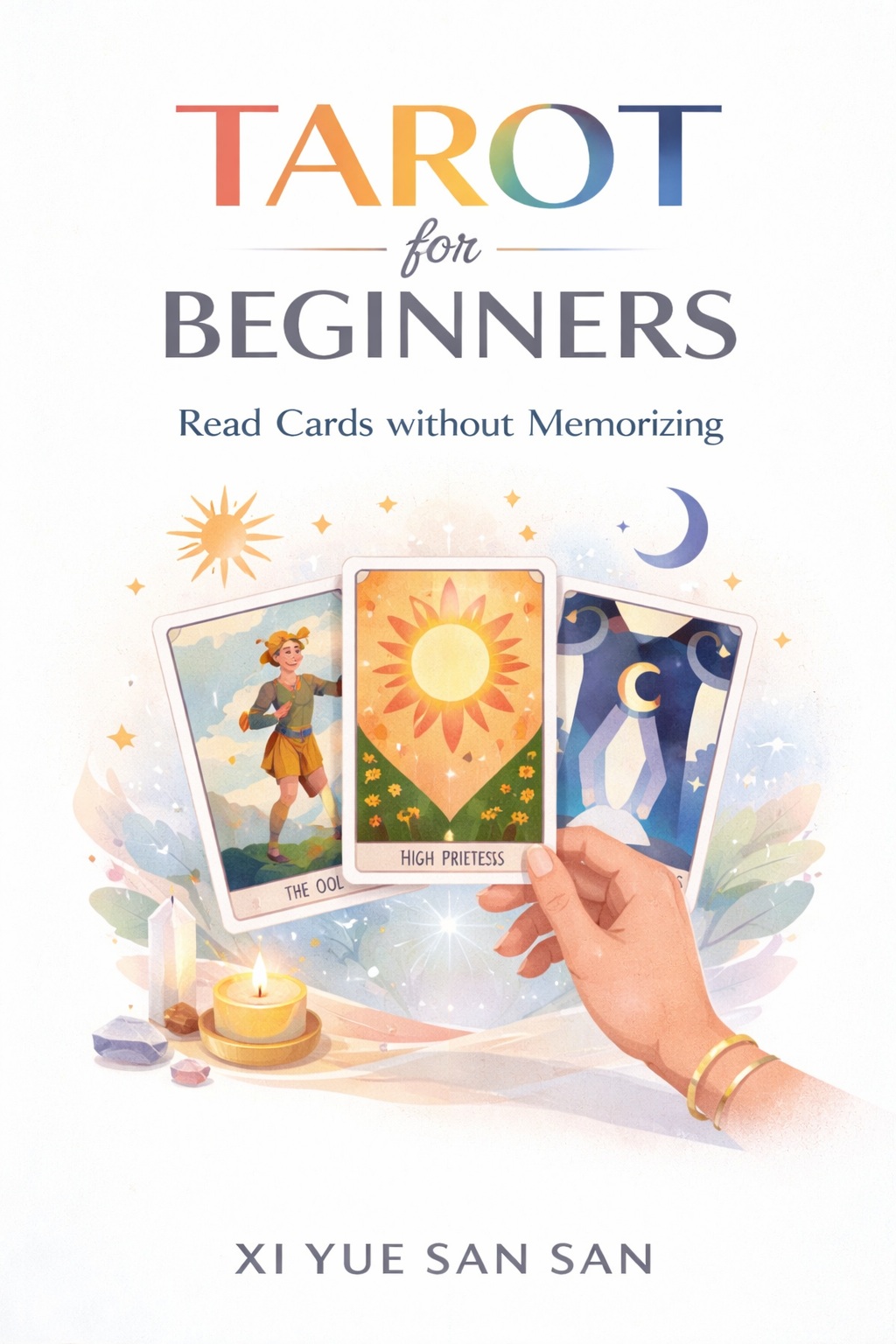
Book recommendation
Tarot for Beginners. Its emphasis on reading without memorizing fits this guide's invitation to understand a card in context instead of treating a fixed yes-or-no list as an unquestionable answer.
Open the book page