The interview is over, but your mind is still in the room. You remember one answer that sounded confident and another that seemed to go on forever. The interviewer said they would be in touch. They probably say that to everyone. By evening, you are considering a tarot spread because waiting without a verdict feels harder than preparing did.
Career readings can help you prepare, compare choices, and notice what matters to you. They cannot reliably predict a hiring decision or reveal what an interviewer thought while smiling politely. A useful spread gives you something to examine or do. It does not require you to suspend other applications because a promising card appeared beside your laptop.
The best layout depends on the task in front of you. Preparing for an interview is different from deciding between two offers, and both differ from sitting with uncertainty after a meeting. This guide offers three original layouts for those situations. The worked examples are fictional, using familiar Rider–Waite–Smith-style meanings as reflective prompts. Keep the job description, your notes, and any written terms within reach.
Decide what the reading is supposed to help with
Before shuffling, finish this sentence: “At the end of this reading, I want to be better able to…” You might say explain your experience, compare two working arrangements, or decide what to ask at a follow-up meeting. These aims are easier to assess than a broad demand to discover whether your entire career is on the right path.
Write down what is already known. For an interview, that includes the role, format, participants, and any instructions. For an offer, it includes the actual terms you have received. For an uncertain possibility, mark what remains an assumption. A role described as flexible in an advertisement may still have specific attendance requirements. A card associated with freedom cannot clarify those requirements; a question to the employer can.
Then choose the smallest spread that addresses the task. A large layout can feel productive when it is actually delaying the uncomfortable practical work. If the interview is tomorrow and you have not read the job description closely, do that first. The cards will be more useful when they meet a real question than when they are asked to replace the preparation you already know is needed.
Spread one: prepare for an interview in five cards
Lay five cards in a row and label them before drawing: Relevant Strength, Evidence to Prepare, Likely Difficulty for Me, Question to Ask, and Final Preparation Step. The third position concerns your own anticipated difficulty. It does not claim to predict the exact question an interviewer will ask. That distinction keeps the reading focused on material you can work with.
For Relevant Strength, name a quality and then connect it to experience. Queen of Wands might prompt confidence in presenting an idea, but “I am charismatic” is not yet an interview answer. When have you persuaded a group to try something? What did you contribute? What happened afterward? If you cannot find an example, consider whether another aspect of the card is more relevant.
Evidence to Prepare asks for a story, work sample, or specific example. Eight of Pentacles could prompt attention to a skill you have practiced. Three of Pentacles might suggest a collaboration. Justice might draw your attention to a decision you can explain clearly. The cards do not supply accomplishments. They help you decide which real experiences deserve a little preparation before someone asks you about them.
Turn a strength into an answer someone can follow
Imagine you draw Three of Pentacles for evidence and remember helping a team complete a delayed handover. Write what was happening, what you personally did, and what changed. You do not need to make yourself the hero of everyone else's work. “I noticed we were using two versions of the checklist and asked us to agree on one” may be a stronger answer than a vague claim that you improved collaboration.
Practice saying the example aloud. This is where you discover the sentence that looks fine in your notebook but collapses halfway through. Remove background details the listener does not need. Keep enough context that your action makes sense. If there was a mistake, you can explain what you learned without turning the answer into either a confession or a performance of impossible competence.
The Queen of Wands essay can help you think about visibility and contribution. In interview preparation, that means being able to say what you did without apologizing for taking up the time you were invited to use. You can be nervous and still speak clearly about work you know. Confidence does not have to arrive before you begin rehearsing.
Read the remaining preparation cards practically
For Likely Difficulty for Me, look for a habit you recognize. Knight of Swords might prompt a check on rushing, interrupting, or answering before the question is finished. Four of Cups could raise the possibility that you sound less interested than you feel. Do not accept an unflattering interpretation merely because it is uncomfortable. Compare it with feedback or your own experience of previous interviews.
Question to Ask should become an actual question about the role. With Two of Pentacles, you might ask how priorities are handled when several tasks arrive at once. With The Emperor, you might ask how responsibilities and decisions are assigned. These are examples of using a theme to prepare. The employer's answer, including whether it is clear or evasive, gives you information the card does not contain.
Final Preparation Step should be small and concrete. Check the meeting link. Choose one example to shorten. Read your notes on the role. Leave time to arrive. If the card appears to suggest rest, consider whether stopping the rehearsal is sensible after adequate preparation. You do not need to interpret every final card as permission to do more. Sometimes the extra hour produces only a more exhausted version of the same answer.
A fictional preparation reading
Consider Noor, who is interviewing for a coordinator role. Her five cards are Queen of Wands, Three of Pentacles, Knight of Swords, Two of Pentacles, and Four of Swords. She reads the first as a prompt to speak more directly about an event she helped organize. The second reminds her to prepare an example showing how she worked with others, including the part she actually handled.
The Knight makes sense because Noor tends to fill silence quickly. She writes “pause, then answer” at the top of her notes. Two of Pentacles becomes a question about competing deadlines. Four of Swords prompts her to stop rehearsing after one final practice and set out what she needs for the morning. This is a plan she can follow regardless of whether the employer ultimately chooses her.
During the interview, she still gives one rambling answer. A spread has not removed the ordinary awkwardness of being evaluated by strangers. But she pauses before the next question and asks about workload near the end. Her review focuses on those choices. She does not decide that a good feeling afterward means an offer is certain, nor that one imperfect answer means the opportunity is gone.
Spread two: compare career options without choosing by card mood
When you have two realistic options, use seven cards. Position 1 is My Main Priority. Positions 2 and 3 are Option A's Potential Appeal and Option A's Demand or Tradeoff. Positions 4 and 5 ask the same questions about Option B. Position 6 is Information Still Needed. Position 7 is A Useful Next Step. Write the option names clearly before shuffling so you cannot swap them after seeing the cards.
Give each option equal attention. One bright card beside A and one difficult card beside B do not settle the choice. A may offer something appealing while demanding a compromise you cannot accept. B may look less exciting while meeting a need that matters more right now. The layout is meant to expose the questions behind your preference, not turn the preference into a score based on cheerful pictures.
Keep a separate factual comparison. Record the terms, schedule, commute, responsibilities, and anything else relevant to your circumstances. Mark uncertain items as uncertain. If the reading suggests support but you have not met the manager, note a question about support. Do not quietly enter “supportive manager” as though the interview or written offer had established it. That small distinction can prevent an attractive story from filling an important gap.
A comparison where the appealing answer is incomplete
Imagine Ellis is choosing between staying in a familiar role and accepting a new one with different responsibilities. The main-priority card is Four of Swords, which Ellis connects with wanting a more sustainable week. Option A receives Six of Cups for appeal and Eight of Swords for its demand. Option B receives Page of Wands for appeal and Two of Pentacles for its demand.
Ellis reads A as familiar and comfortable in some ways, though possibly limiting. B looks interesting but may require more juggling than the advertisement suggests. Those are hypotheses to compare with known conditions. The reading has not shown which employer is better. It has made Ellis notice a conflict: the excitement of a new role may be competing with the wish for a less crowded schedule.
For missing information, The Emperor prompts questions about who assigns priorities and how decisions are made. For the next step, Page of Swords suggests gathering details. Ellis writes to clarify the schedule and reporting arrangement before deciding. The eventual answer may support the move or weaken its appeal. Either way, the useful outcome is a better informed choice rather than obedience to whichever card looked most encouraging.
Let the Pentacles bring you back to the actual arrangement
In career readings, it is easy to make every Pentacle mean a higher salary or every Wand mean a perfect calling. The suits can be more useful as areas of attention. Pentacles may prompt questions about practical conditions, Wands about interest and initiative, Swords about decisions and communication, and Cups about the human experience of the work. Your deck may frame them differently; use its meanings consistently.
The Suit of Pentacles guide is a companion for examining the ordinary details that sustain work. Those details include how a week is organized and what resources are available. A role can have an appealing title while remaining unclear about the day itself. Ask about the day. Ask what the first few months would involve. Let the answers matter more than the symbolism.
Court cards also deserve care. A King does not establish that a manager is trustworthy, and a Queen does not identify the gender of a helpful colleague. You can read a court as a style of participation or a quality to consider. If you connect it to someone, use observed behavior rather than appearance or rank. A confident introduction is not enough information to fill a whole personality profile.
Spread three: after the interview, use three cards for the waiting period
For the days after an interview, try What I Can Review, What Remains Outside My Knowledge, and What I Can Do Next. The middle position is unusual on purpose. It gives uncertainty a place in the spread instead of requiring every card to provide an answer. You may know how you prepared and what you said. You may not know the employer's priorities, other applicants, or an internal change in the role.
For the first card, review one useful point without replaying the entire conversation as a trial. Perhaps you need a clearer example for a future interview. Perhaps you answered a difficult question reasonably well. For the second, name the missing information directly. A card associated with waiting can remind you that some answers belong to a process you do not control. It does not reveal the date when an email will arrive.
The final card should lead to a sensible action within the actual situation: check the stated timeline, prepare another application, or record a question for a planned follow-up. The essay on The Hanged Man may help you reflect on a pause without making the pause sound comfortable. Waiting can remain irritating even when you have decided what to do with the rest of the afternoon.
What if the outcome-looking card seems negative?
You may draw Five of Pentacles and feel the rejection before any message exists. Pause and name what has happened: you drew a card whose imagery you associate with exclusion. That is an emotional response to a symbol, not a hiring decision. It may prompt you to notice how much this opportunity has come to represent belonging, security, or proof that your efforts matter.
Use that observation carefully. Perhaps you want to speak with someone supportive or continue a task that does not depend on this employer. Do not withdraw an application, confront an interviewer, or rewrite the meeting as a failure on the strength of the card. Equally, a Sun or World card does not justify announcing an offer you have not received. Let the employer's actual communication answer the factual question.
Keep your original notes and review them when something changes. Which prompts improved your preparation? Which interpretations merely repeated what you wanted or feared? A career reading earns its place when it helps you ask clearer questions and participate more thoughtfully. You may still refresh your inbox once too often. At least the next useful task is written down beside it, ready when you are.
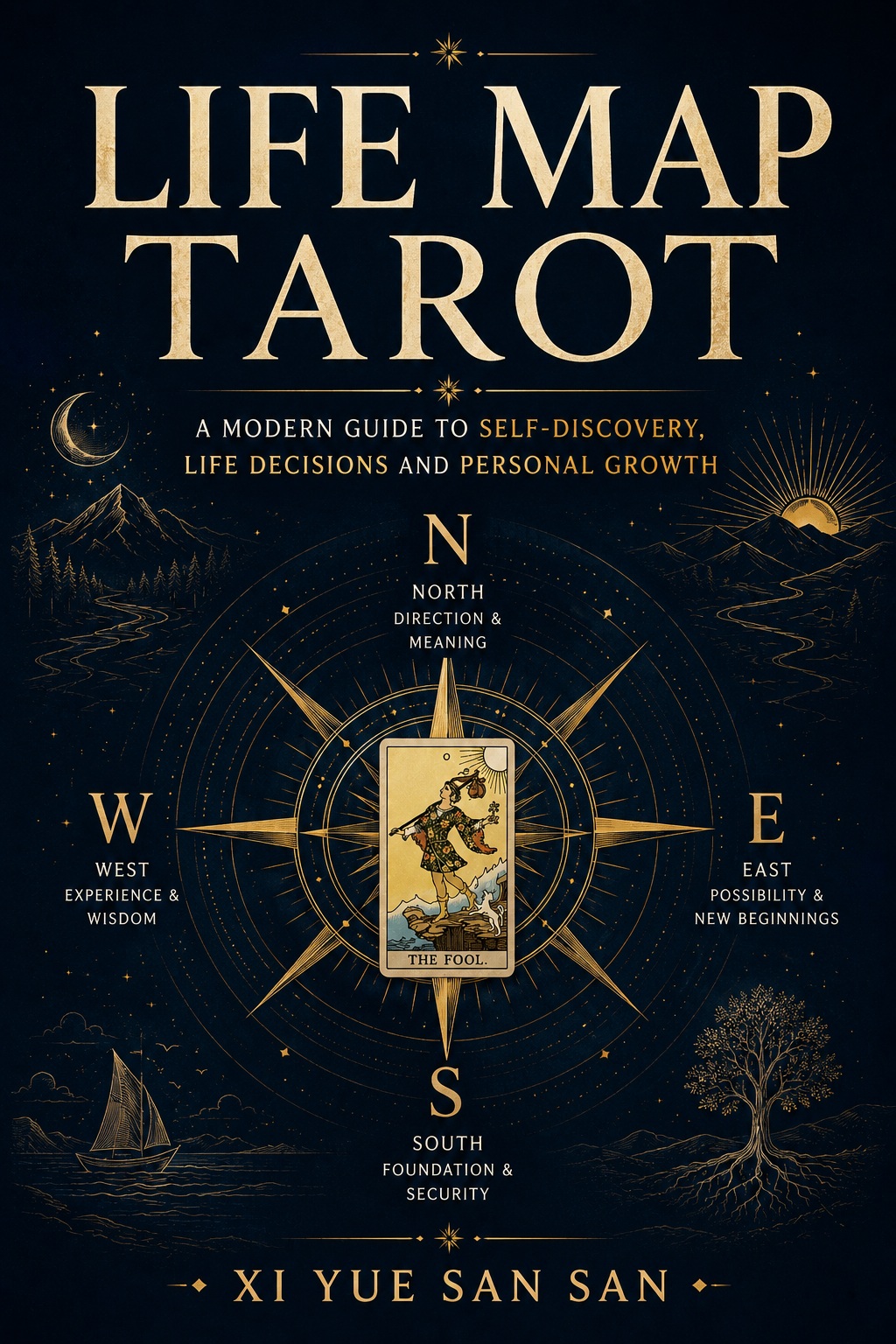
Book recommendation
Life Map Tarot. The book catalog emphasizes decisions and self-reflection, making it a relevant companion to comparing work options and deciding which questions to ask before choosing.
Open the book page