The Hanged Man is the card I distrust when I am impatient, which is probably why I need it. It does not arrive with a trumpet. It arrives like a delayed train, a message left on read, a project stuck in review, a body too tired to keep pretending that force is the same as progress. The card is quiet, but not passive. That distinction matters.
There is a particular kind of waiting that makes a person ridiculous. You tidy the same corner of the desk three times. You check the tracking number. You open the chat, close it, open it again. You tell yourself you are relaxed, then immediately ask the cards whether anything has changed in the last forty minutes. The Hanged Man sees all of that and says, gently but annoyingly, stop wriggling.
Before reading The Hanged Man, pause over the picture before you reach for the keyword list. What is held still? What is moving? Who has power? Who seems trapped, careful, exposed, stubborn, relieved, or tired? Beginners often skip this part because they want the answer quickly. I get it. But the image usually tells you the tone before the textbook meaning does.
The card also changes depending on where it lands. In the past position, The Hanged Man may describe what shaped the situation. In the present position, it shows the room you are standing in now. In advice, it becomes behavior. In the obstacle position, it may show excess, avoidance, or distortion. Same card, different job. This is where real reading begins.
In love readings, The Hanged Man can show a pause, a change in perspective, emotional suspension, or the need to stop forcing clarity out of someone who is not ready to speak. It can also show sacrifice. Not romantic martyrdom. The ordinary sacrifice of pride, speed, fantasy, or the need to win the argument before you have understood it.
If the question is about another person, stay careful. A tarot card can suggest a pattern, mood, or likely behavior, but it does not give you a private ownership deed to someone's mind. I know that sounds obvious. Still, love readings can make people hungry for certainty. Say what the card suggests, then bring it back to observable behavior: texts, timing, consistency, repair, silence, choice.
In career readings, this card can be a stalled process, a hiring delay, a project waiting on approval, or a period when your old method no longer works. It may ask you to look at the same problem from the other side of the table. What does your boss see? What does the client fear? What is the deadline hiding?
I like career readings because they expose vague tarot language very quickly. If an interpretation cannot touch a calendar, a contract, a bank balance, a meeting, an inbox, or a tired body, it may be pretty but useless. Ask what The Hanged Man would change on an ordinary workday. Would someone ask for clarification? Stop overpromising? Read the terms? Wait? Leave? Repair?
Reversed, The Hanged Man can become resentment dressed as patience. It can show someone waiting but not learning, sacrificing but keeping score, or calling themselves surrendered while secretly trying to control every outcome. I have done that. It looks spiritual from a distance and sour up close.
Do not treat a reversal as a cartoon opposite. Reversed can mean blocked, excessive, private, delayed, denied, internalized, or misused. Sometimes the reversed card is the same meaning, but tangled. Sometimes it is the truth trying to come through a person who has spent years learning how not to say it out loud.
As advice, this card asks for a pause with purpose. Do not simply freeze. Reframe the question. Change the angle. Stop pulling clarifiers. Take a walk. Let one day pass without poking the situation.
Here is a simple spread for this card: one card for what is true, one card for what I am avoiding, and one card for the next honest action. Keep it small. Large spreads can become a hiding place when the question is already painful enough. Three cards read well are better than ten cards read nervously.
Ask the card to speak in plain language. No "high vibration" for a moment. No "alignment." Say what a person would actually do. They sign the paper. They stop replying. They apologize without adding a speech. They wait one more week. They delete the draft. They admit the thing is over. They pay the bill. Plain language is not less spiritual. It is often kinder.
For yes-or-no readings, I would not force The Hanged Man into a single stamp unless the spread was designed for that. The better answer usually has conditions. Yes, if the person follows through. No, if the same pattern continues. Not yet, because the situation is still ripening. Tarot becomes more useful when it tells you what would make the answer change.
If The Hanged Man appears with The Lovers, look at choice and desire. The reading may be asking whether the heart and the behavior are telling the same story. If it appears with Wheel of Fortune, timing and repeated cycles matter. If it appears with The Hermit, someone may need silence before they can tell the truth.
Card combinations are not math. Do not mash two meanings together until they become a foggy sentence. Let the cards argue a little. One card may want speed, another may want patience. One card may show desire, another may show consequence. The useful interpretation often lives in that disagreement.
A beginner's journal can help, but only if it includes what happened later. Write the question, the card, your first interpretation, your mood, and the real outcome when you know it. The mood matters. A reading done after two coffees and no lunch has a different flavor from a reading done after a decent meal and a walk around the block.
You will notice your own habits. Maybe you make every difficult card gentler than it is because you hate disappointing people. Maybe you turn every warning into catastrophe because anxiety feels like preparation. Maybe you read love cards too romantically when you are lonely. The journal will not flatter you. That is why it works.
Try reading The Hanged Man for three ordinary people. One is waiting for a text. One is deciding whether to stay in a job. One is embarrassed about money. Give each person a different interpretation. This keeps the card alive. It teaches you not to recite one memorized paragraph to every human situation.
There is also the question of tone. Some cards need a firm voice. Some need softness. The Hanged Man usually needs both. Too much softness and the message disappears. Too much firmness and the reader starts performing authority. The goal is not to sound impressive. The goal is to be useful without making the person smaller.
When you read for yourself, watch the negotiation that begins after the first honest sentence. You pull the card, feel the truth, then start sanding the edges. Maybe it means something else. Maybe it is about them, not me. Maybe I should pull one more card. Sometimes that is intuition. Sometimes it is bargaining. Learn the difference slowly.
A good clarifier needs a job. Clarify the obstacle. Clarify the next step. Clarify what I am projecting. Clarify the other person's likely behavior. If you do not name the job before drawing, the clarifier becomes another object to manage. That is how a three-card reading turns into a messy table and a headache.
The body has a vote in tarot. Notice the stomach, shoulders, throat, and hands. A card can land and make the body tell on you before the mind has arranged its explanation. This does not mean every sensation is prophecy. It means your nervous system is part of the reading environment, especially when the question touches love, money, shame, or fear.
If you are reading for a friend, leave room for correction. Say, this is what I am seeing; does it land anywhere? That question is not weak. It respects the fact that your friend has the lived context and you have the cards. A reading is not a lecture. It is a careful conversation with images on the table.
If they say no, do not fight for the interpretation. Maybe you missed. Maybe the language was wrong. Maybe the card points to a layer they cannot speak about yet. Stay curious. Fragile readers make people perform agreement. Steady readers can adjust without losing the thread.
The book I would keep nearby for this lesson is Tarot for Beginners, listed on Books. Not because a book can replace practice. It cannot. But a calm guide helps when meanings feel slippery and you are tempted to turn every card into either a blessing or a disaster.
A useful practice is to write two sentences after every reading. First: what did the card make clearer? Second: what still feels unresolved? Leave the second sentence unresolved if you need to. Not every reading deserves a tidy ending. Some cards only open the honest question.
One more small practice: before you close the reading, name the least glamorous next step. Not the spiritual lesson, not the beautiful insight, not the sentence you would put on a notebook cover. The least glamorous step. Wash the cup. Send the boring confirmation email. Stop drafting the clever reply. Put the card back in the box and call the person directly. Tarot gets stronger when it can survive these ordinary instructions.
I also like asking, what would this card look like at 8:30 on a Tuesday morning? That question saves a lot of readings. It brings tarot back to shoes by the door, coffee gone cold, unread emails, a car that needs gas, a bill on the counter, a person rereading one sentence from last night. The card should be able to live there.
For timing, be modest. The Hanged Man may suggest a stage of the process more than a date. Look at nearby suits, spread position, and real-life constraints. A legal answer, an apology, a breakup, a job offer, or a healing process all move at different speeds. Tarot can show the weather, but the calendar still belongs to life.
At some point, this card will not mean what you wanted. That is not a failure of tarot. It is the part where tarot becomes useful. A reading that only confirms your preferred story is a mirror with flattering lighting. A reading that makes you sit quietly for five minutes may be doing more honest work.
So when The Hanged Man appears, do not rush to make it grand. Look at the card. Look at the position. Look at the actual question. Ask what behavior would respect the message. Ask what fantasy would misuse it. Then say the clearest sentence you can without pretending to know more than you do.
That is enough for one reading. Truly. You do not need to become theatrical. You do not need to solve the whole life. Let the card name the next honest thing. Sometimes that is a conversation. Sometimes it is a pause. Sometimes it is an ending. Sometimes it is lunch, sleep, and reading the document again with a steadier hand.
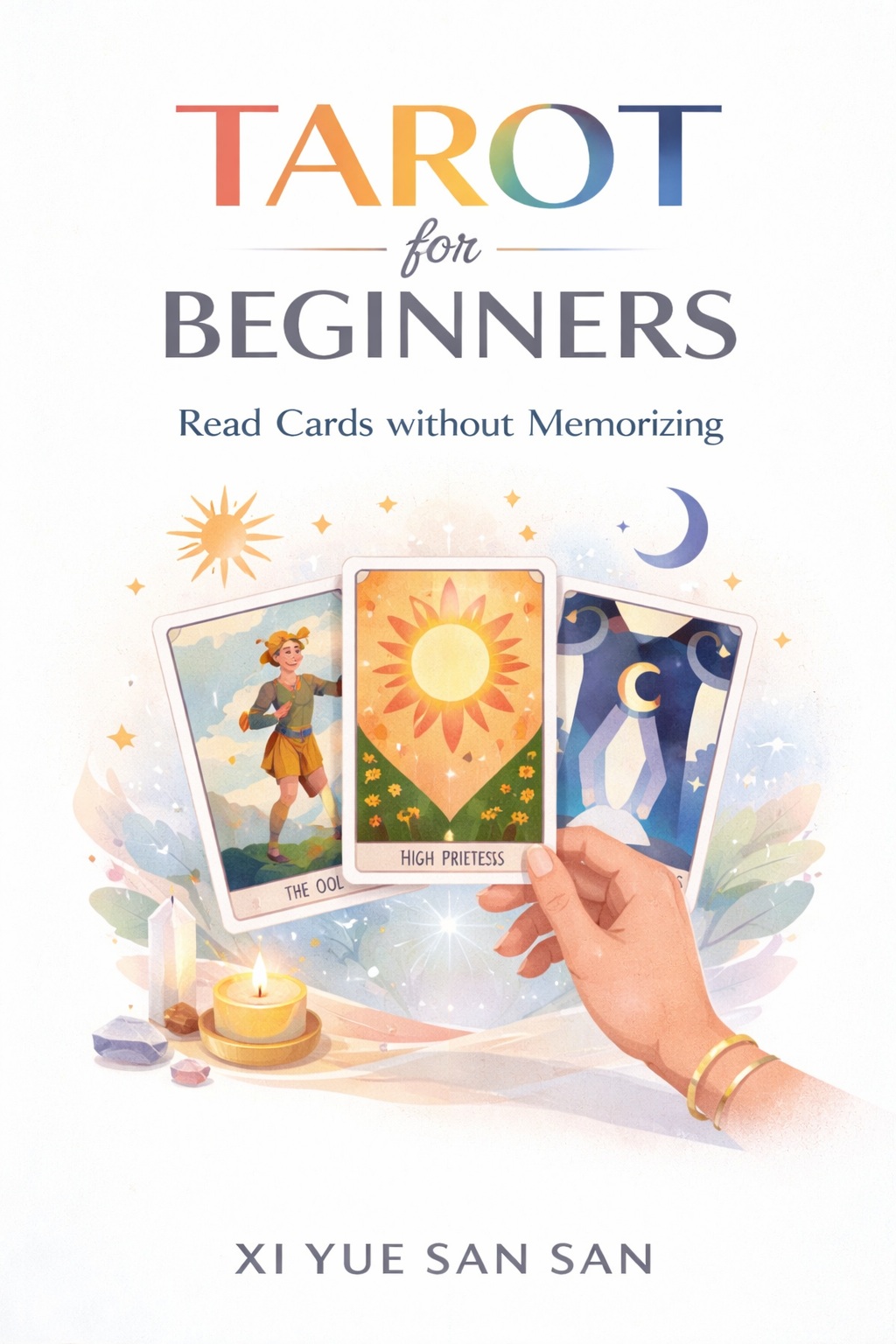
Book recommendation
Tarot for Beginners is a gentle companion for learning card meanings without turning the whole practice into memorization homework.
Open the book page