The headline is about job losses somewhere else. You do not work for that company. You may not even work in that industry. Still, you read the number twice, then open your work calendar and notice a meeting with an unusually vague title. By lunchtime, the two things feel connected. Nothing has been announced at your workplace. Your mind has already rehearsed carrying a cardboard box to the lift.
Economic uncertainty makes ordinary work events harder to interpret. A delayed reply can feel ominous. A canceled project can become evidence that every project is about to disappear. Sometimes there are real reasons for concern. Sometimes several unrelated details have gathered around a fear you were already carrying. Tarot can help you notice the difference between what you know and what you imagine. It cannot forecast layoffs or certify that your job is safe.
This reading does not offer a current economic forecast for every country or industry. Those conditions need to be checked using current, relevant information. The narrower question here is how to live and work while the wider picture feels unsettled. You can take uncertainty seriously without treating every headline as a personal announcement. Start with what has actually changed at your workplace, and leave room on the page for what remains unknown.
Separate three kinds of information
On a sheet of paper, make three headings: wider conditions, employer information, and my own role. Under the first, put relevant economic or industry reporting with its date and location. Under the second, put confirmed company announcements. Under the third, put facts about your responsibilities, contract, hours, and feedback. This is not a scoring system. It is a way to keep a national headline from silently becoming a fact about your manager's plans.
For example, an article about weaker hiring in another region belongs under wider conditions. An official announcement that your employer is closing a division belongs under employer information. A change to your scheduled hours belongs under your own role. The items may be related, but that relationship needs evidence. Writing them separately can interrupt the habit of treating every new piece of information as confirmation of the same feared outcome.
If you use United States unemployment figures, the Bureau of Labor Statistics explanation of unemployment measurement describes them as survey-based measures of employment status. They are not predictions about an individual employer. For other locations, consult the relevant official statistics agency and check the date and scope of the release. A useful source should help you understand what its numbers measure before you decide what they mean for your situation.
Ask what the cards can reasonably help with
A question such as "Will the economy make me lose my job?" asks the deck to combine economic analysis, confidential company plans, and future decisions. It cannot do that. Try asking, "What fear is affecting my judgment? What information do I need? What preparation would help even if my job continues?" These questions give the reading a useful role without asking it to provide evidence it cannot possess.
The Moon might prompt you to notice missing information. Five of Pentacles might reflect the fear of losing security or belonging. Neither card is a layoff notice. The Tower can bring up the possibility of disruption without specifying an event. If seeing it makes you panic, put the card down and return to the facts you wrote. A powerful image can describe a feeling vividly while telling you nothing new about your employer.
Reassuring cards need the same care. Ten of Pentacles does not guarantee continued employment, and the Sun does not make a company immune to change. You might read them as prompts to notice support, experience, or useful resources already present. Let reassurance help you breathe and think. Do not let it persuade you to ignore an actual announcement or postpone a practical conversation you know you need to have.
A spread for useful preparation
Use four cards: the worry taking up the most space, the fact to clarify, the support already available, and the next proportionate action. Before you turn the last card, write down that the action must be helpful in more than one possible future. Updating a resume can help if you stay or leave. Sending a furious resignation email because you fear being dismissed usually narrows your choices before you have enough information.
Imagine Nine of Swords appears first. You might recognize the late-night rehearsals that are leaving you tired before work. Justice in the second position could prompt you to read your current terms or ask for clarification about a proposed change. Three of Pentacles in the third might suggest professional relationships and shared skills. The Page of Pentacles in the fourth could point toward learning one relevant skill. These are interpretations you can test through ordinary actions.
Keep the spread somewhere you can revisit once, rather than pulling a new answer whenever a message arrives. Write what you decided to do and when you will check the result. If the cards repeatedly become a way to ask for certainty, take a break from prediction questions. You are allowed to use tarot for reflection and stop when it becomes another source of alarm. More readings do not necessarily produce more useful information.
Ask your manager a question they can answer
"Is everything going to be okay?" is understandable but difficult to answer honestly. A manager may not know what senior leaders will decide. They may also be unable to share some information. Ask about what affects your work now: "Have the priorities for our team changed?" "Should I expect this project to continue next quarter?" "Is there anything confirmed about changes to my role or hours?" The answers may still be limited, but the questions are clearer.
Notice the difference between no information and reassuring information. "I haven't heard anything" may mean exactly that. It does not guarantee safety, and it does not prove someone is hiding a decision. Record what was actually said if it matters to your planning. Avoid filling the silence with either complete trust or complete suspicion. Both can feel easier than uncertainty, but neither becomes evidence because it reduces the discomfort.
If an employer announces a change, use the appropriate written documents and official channels to understand it. Employment rights, notice, benefits, and eligibility for support vary by location and arrangement. A general tarot essay cannot determine those for you. Seek qualified local guidance when needed. The practical next step is to find the rule or person relevant to your circumstances, not to interpret a court card as a promise about the outcome.
Prepare your work story while you still remember it
Open your resume and update one recent responsibility. You do not have to complete a full job search tonight. Write what you did, what skill it required, and what result you can accurately describe. Keep company and client information confidential. Use examples you are permitted to share. A clear account of your experience can be useful for an internal conversation as well as an external application.
An anxious mind may tell you that preparation will somehow invite the outcome you fear. Updating a resume does not cause redundancy. Nor does deciding to stay positive prevent it. Preparation is a response to uncertainty, not a prediction. You can keep doing your current work with care while making it easier to explain that work elsewhere. These activities do not cancel each other out.
Think about professional contacts you value. You might reconnect with a former colleague because you would like to hear how they are doing, not only because you need a lead. Keep the conversation honest. If you are exploring options, say what kind. There is no need to pretend you have an offer or invent urgency. A relationship is more useful when it can contain an ordinary exchange rather than a performance of success.
Make the household conversation manageable
Job insecurity often becomes a private burden because you do not want to worry anyone else. Then the worry appears sideways: irritability over a purchase, silence at dinner, snapping when someone asks about plans. If another person shares the practical effects of your work situation, consider telling them what is known and what is uncertain. "Nothing has been announced, but I am concerned and want us to understand our commitments" is different from announcing a crisis that has not happened.
You can list upcoming obligations and the questions you would need answered if income changed. Keep this descriptive rather than dramatic. What dates matter? Which documents would you need? Who could explain available support? Avoid making major financial decisions because of a card or a frightening headline. If substantial choices arise, get advice suited to your actual circumstances. The purpose of this conversation is shared understanding, not a complete emergency plan built in one exhausted evening.
You may not have another person who can share the burden. That can make the uncertainty feel louder. Consider one trusted friend or appropriate support service you could contact if needed. Knowing whom you would ask is a small form of preparation. It does not solve the whole problem, and it does not need to. Sometimes the first useful sentence is simply, "I am worried about work, and I could use someone to talk to."
Do not try to become impossible to dismiss
You may respond to uncertainty by accepting every assignment, checking messages late at night, and refusing to take time away. The hope is that enough usefulness will make you untouchable. Good work matters, but no employee can guarantee a company's decisions through personal effort. Making yourself permanently available can exhaust you without providing the certainty you wanted. Ask what is actually expected before deciding that your fear has become a new job description.
The Seven of Wands can be read as protecting your position, but protection does not have to mean constant defensiveness. It could mean clarifying priorities, making your contribution visible, and keeping reasonable boundaries so you can continue working well. If demands increase, ask which tasks matter most. "I can finish these two this week; which one should come first?" gives your manager a decision instead of quietly absorbing every conflict yourself.
Do not turn colleagues into rivals because the atmosphere feels uncertain. Sharing useful information and working reliably may still be the right thing to do. You can be careful about confidentiality and office gossip without becoming isolated. A frightened workplace can make every interaction feel strategic. Try to preserve a few ordinary human exchanges. Asking how someone's weekend went does not have to be part of a plan to protect your career.
Give news a time and a purpose
Checking headlines can feel like preparation even when you are reading the same story in five places. Decide what you are trying to learn before opening another article. Is there a confirmed development in your industry? A company announcement? A change relevant to your location? If you cannot name the question, you may be looking for reassurance that the news cannot provide. Close the tab for a while and do something with a clear ending.
Choose a reasonable time to review relevant information rather than checking every notification. The right amount will depend on your situation. Someone facing an announced workplace change may need closer attention than someone reacting to general headlines. The aim is to stay informed enough to act without letting uncertainty occupy every spare minute. You still need to sleep, cook, answer a friend's message, and have a life outside monitoring possible bad news.
If worry keeps disrupting sleep or daily functioning, seek appropriate support. You do not need to wait until a job loss occurs to deserve help with distress. Tarot can be part of a reflective routine if it is calming and useful, but it does not replace care. Notice the effect of a reading afterward. Do you understand your next step more clearly, or are you searching for another card to cancel the last one?
Plan for more than one possible month
Consider three ordinary possibilities: your role continues, your responsibilities change, or you need to look for other work. For each, write one thing you would want available. Continued employment might call for clearer priorities. A changed role might call for written expectations or training. A job search might call for an updated resume and a few relevant contacts. Several useful actions will overlap. Start with those rather than attempting to solve every scenario in full.
You do not need to assign invented probabilities to these possibilities. A tarot spread cannot tell you there is a seventy percent chance of redundancy. If reliable information is missing, say it is missing. The exercise helps you prepare for different outcomes; it does not measure their likelihood. That distinction matters because a confident-looking number can make a guess feel more authoritative than it is.
At the end of the week, return to your three columns. Add confirmed information, correct anything that turned out to be a rumor, and notice what you completed. Your job may still be uncertain. You may still dislike the waiting. But you can point to the questions you asked, the documents you checked, and the people you can contact. The cards can sit beside that work. They do not have to carry the impossible responsibility of telling you what happens next.
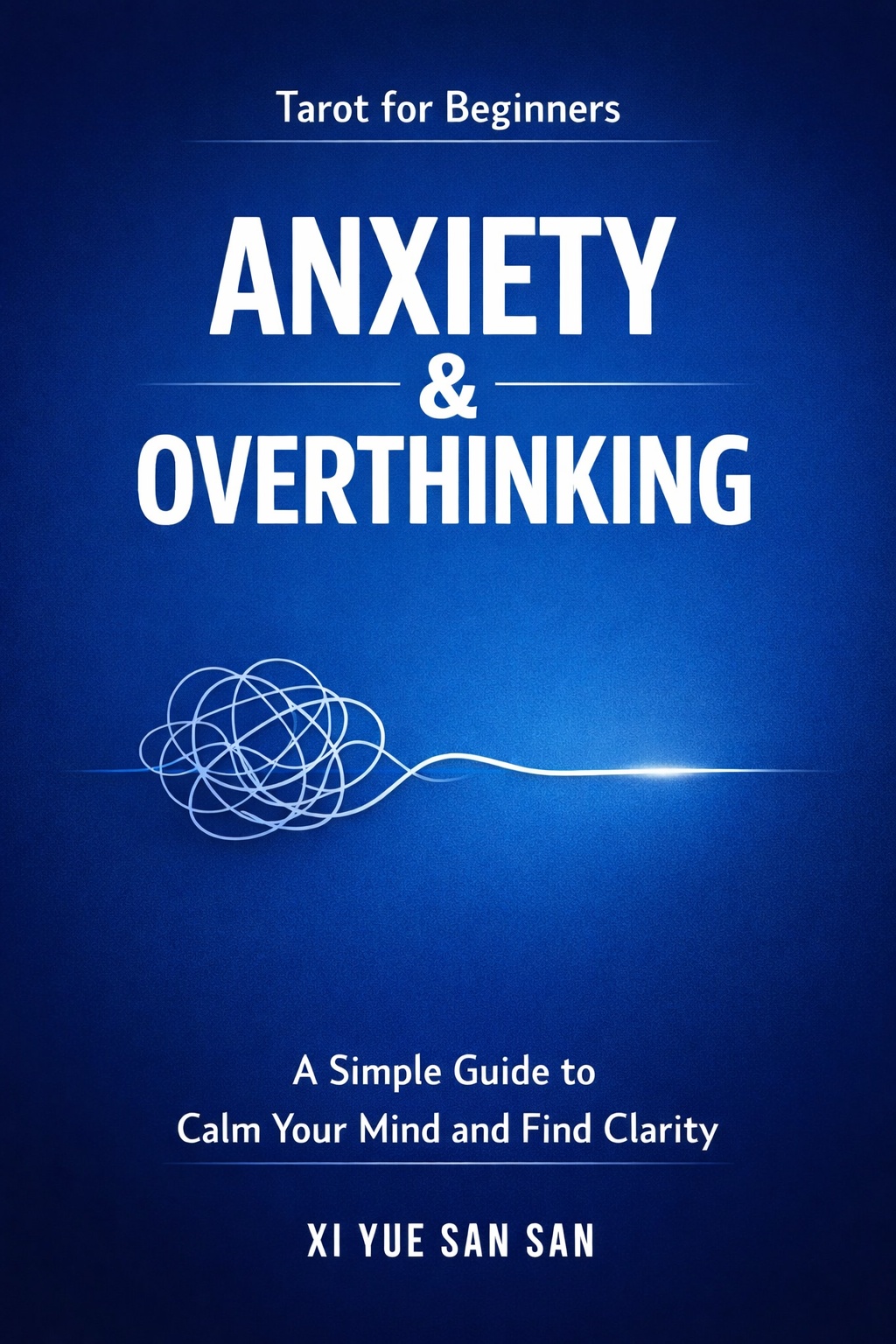
Book recommendation
Anxiety & Overthinking
Books presents Anxiety & Overthinking as a simple guide to calm and clarity. It is relevant when work uncertainty turns into repeated checking and late-night rehearsals. Read it for reflection alongside reliable workplace information and appropriate support, rather than for an economic forecast.
Open the book page