Someone asks what you do, and you give the usual answer. The title sounds respectable. They nod. You ask about their work before they can ask whether you enjoy yours. Later, on the way home, you imagine answering differently. You imagine a studio, a classroom, a small kitchen with orders coming in. You do not imagine the paperwork yet. Mostly you imagine sounding like yourself when you say what you do.
The question "Am I in the right profession?" can hold years of quiet dissatisfaction. It can also appear after one terrible week. Before deciding which it is, give the question some space. You do not have to defend your whole career because you chose it at twenty. You also do not have to abandon it because a different life looks appealing at midnight. Wanting change is information. It is not a complete plan.
Tarot can help you explore the parts of work that feel alive or unbearable. It cannot identify the single profession you were born to do, and it cannot check licensing, training, or hiring requirements for you. Read the cards as prompts for reflection while you investigate the actual work. A useful reading should leave you with more specific questions than "Am I meant for something else?" Specific questions can be taken into a conversation on Tuesday afternoon.
Which part of the job are you trying to leave?
Your profession and your present job are not identical. A nurse may dislike a particular shift pattern rather than nursing. A designer may hate endless sales presentations rather than design. A teacher may love explaining difficult ideas and struggle with a particular school's expectations. Before changing fields, separate the task, employer, team, schedule, and conditions. You may want to change several. Knowing which ones matters because different changes require different amounts of upheaval.
Take an ordinary workday and mark the moments that drain you. Be literal. "The meeting ran through lunch." "I liked working through the client's question." "I spent two hours correcting avoidable errors." "I dreaded asking for approval." Resist summarizing the whole day as good or bad. A career can contain a task you enjoy inside conditions you cannot sustain. Another can offer comfortable conditions around work you no longer want to do.
The Eight of Cups might prompt a question about what no longer satisfies you. It does not automatically say to resign. Perhaps you need to leave a particular role, a habit of overcommitting, or an old idea about what successful people do. Ask what, precisely, you would be walking away from. If the answer changes each time you describe it, there is more to understand before taking a large step.
Tiredness can make every future look wrong
After months of strain, you may struggle to imagine enjoying any work. Even your favorite subject feels like another demand. That makes career reflection difficult. You look for a calling and find only the wish to lie down. Where possible, give yourself some rest or reduce one pressure before expecting a clear verdict about your profession. You do not need to turn exhaustion into a permanent statement about your character.
Rest may not be readily available. You may have care responsibilities, difficult hours, or little control over your schedule. In that case, keep the question smaller. Which task is least draining? What part of the week provides even a little interest? What would make tomorrow more manageable? If distress is affecting daily life, appropriate human support can matter more than another spread. Tarot does not have to carry every kind of need.
The Four of Swords can invite a pause in the decision itself. You might choose not to decide your entire future during the week of a major deadline. That is different from postponing forever. Give the pause a shape: finish the urgent period, take the available time off, then return to your notes on a specific date. A temporary pause should help you hear yourself, not become another year of avoiding the question.
Read for fit rather than fate
Try five cards. Ask what you still value in your present work, what consistently costs too much, what ability you want to use more, what practical condition a change must respect, and what experiment would teach you something. These positions let contradictory answers coexist. You can value your colleagues, dislike the role, need the income, and want to explore something else at the same time. None of that makes you indecisive.
Imagine the Hermit appears for the ability you want to use. You might consider whether research, concentration, or thoughtful guidance matters to you. Do not jump directly from that image to a job title. Many professions contain those activities. The Three of Pentacles in the experiment position might suggest learning alongside someone or asking how a team actually works. The reading gives you a direction for inquiry without pretending the card contains a recruitment database.
If the World appears, you may feel ready to close a chapter. Ask what would make the chapter complete enough for you: finishing a qualification, passing on responsibilities, or simply acknowledging that you have learned what you wanted. Completion does not require a flawless ending. It also does not erase practical obligations. Let the image help you describe the transition you want, then check what the transition would require outside the reading.
Find out what the imagined profession does all day
A job can look appealing because you see its finished product. You see the published photograph, the renovated room, the workshop where everyone appears engaged. You do not see the canceled booking, the repetitive preparation, the email about payment, or the afternoon spent correcting a file. Ask someone in the field to describe a normal week. Ask what they do most often, what beginners misunderstand, and what parts they find tedious.
You are not trying to destroy the dream. You are trying to meet the work. If the ordinary tasks still interest you, your curiosity has something to stand on. If they do not, perhaps another role nearby would fit better. Someone attracted to being a therapist might discover they are most interested in research or community education. Someone drawn to owning a cafe might actually love cooking for friends and dislike managing a business.
Keep these conversations respectful of people's time. Ask for a short chat with a few specific questions rather than a complete mentoring relationship. They may decline or offer only a brief answer. Use more than one perspective when you can. One exhausted professional does not represent the entire field, and neither does the person who makes a living selling the idea that anyone can succeed in it quickly.
Try a task before buying an identity
It is easy to spend money on the feeling of becoming someone new. The course, notebook, equipment, and revised profile can be purchased before you have tried the work. Sometimes training is necessary, and some professions have formal requirements you must verify. But where a small, appropriate trial is possible, begin there. Make one sample, observe a session with permission, volunteer within clear limits, or take an introductory class that fits your resources.
Consider a fictional office worker, Rina, who imagines becoming a baker. She loves baking for birthdays. Before planning a business, she tries producing the same recipe repeatedly on a timetable. The third batch is less romantic. She discovers that she enjoys developing recipes more than repeating orders. That does not make the original interest foolish. It narrows the question. She may explore food writing or keep baking as a pleasure she does not need to sell.
Write down what you learn after each experiment, including the unflattering parts. Did you enjoy the preparation or only the praise? Did time pass quickly while doing the task? Did you avoid it until the deadline? Did you dislike being a beginner, or dislike the activity itself? Those are different experiences. You may need several attempts before you can tell which one is happening.
Let your existing skills count
Changing direction does not make your previous years disappear. You may know how to explain a complicated process, handle difficult conversations, organize a project, or notice errors others miss. These abilities can be relevant elsewhere, though their value depends on the role. Avoid both extremes: "I have to start from nothing" and "My experience should qualify me for everything." Look at the requirements and describe the overlap honestly.
The Magician can prompt you to take stock of the tools already available. Name a skill and a concrete example of using it. "Communication" is broad. "Explained a new booking process to a team with different levels of experience" says more. You can then ask someone in the field whether that experience is useful and what is missing. A gap is easier to address once it has a name.
There may be a route that changes your tasks before changing your profession. An internal move, a different employer, or a role serving another kind of client might teach you whether the dissatisfaction is with the field itself. These possibilities are not consolation prizes. Sometimes the dramatic reinvention you imagined turns out to be a need for a less dramatic but very significant change in how you spend the working day.
Give the practical questions a place
It can feel disheartening to move from a meaningful reading to a page of practical questions. How long would training take? Would you need to move? Could you keep working while you learn? Who else would be affected by different hours? These questions do not insult the dream. They describe the life into which the dream would have to fit. You deserve a plan that includes the person who needs dinner and sleep.
Do not rely on a tarot card to estimate earnings or the likelihood of finding work. Check current requirements and conditions for your location and intended role. Talk to people who entered recently as well as people who have been established for years. Their experiences may differ. Where the decision has substantial financial or legal consequences, seek suitable qualified guidance for your circumstances rather than treating a general essay as a personal answer.
You might decide on a gradual transition. You might decide the timing is wrong. You might discover that a meaningful interest belongs outside paid work for now. None of those answers proves you lack courage. A decision can respect both desire and responsibility. Write down what would need to change before you reconsider so that "not now" has an actual meaning instead of becoming a sentence you repeat whenever you feel afraid.
What if people are disappointed?
Someone may have invested pride in your profession. A parent likes telling people what you do. A partner relies on the predictability of your schedule. A friend thinks you are lucky to have the role they want. Their reactions can make your uncertainty feel like a betrayal. You can listen to the practical effects on people who share your life without giving everyone an equal vote on your identity.
You do not have to announce every early experiment. Quiet exploration can protect a fragile interest from becoming a public performance. When a decision becomes concrete, explain it with concrete details: what you have learned, what you are considering, and what remains undecided. "I am exploring this through a course and two conversations" is easier to discuss than "I think I have finally discovered my destiny."
Judgement can be read as an invitation to answer a call you have ignored. That call does not have to arrive as a thunderous certainty. It might sound like repeated interest in a task you keep making time for. It might also ask you to release an old standard of success. The person you were when you chose your profession made a decision with the information available then. You can respect that person and still choose differently now.
A decision you can return to
At the end of the reading, write three sentences. "What I know about my current work is..." "What I still need to learn about the alternative is..." "My next small test will be..." Leave space beneath them. You are allowed to discover that your first explanation was incomplete. Perhaps the task fits and the setting does not. Perhaps the setting is kind and the task no longer holds your interest.
You may never find a profession that makes every part of you feel expressed. Work can be meaningful without becoming your entire identity. You might do a solid job, enjoy some parts, tolerate others, and put your deepest enthusiasm into something that earns nothing. Or you may find that changing fields is worth the effort and uncertainty. Both lives can be chosen with care.
For now, notice the moment when your attention wakes up. Then investigate it. Talk to someone, try the task, check the requirements, and return to the cards if reflection helps. You do not need a cosmic certificate before taking your own curiosity seriously. You need enough information to make the next decision, and enough patience to let the answer become more complicated than the title on your name badge.
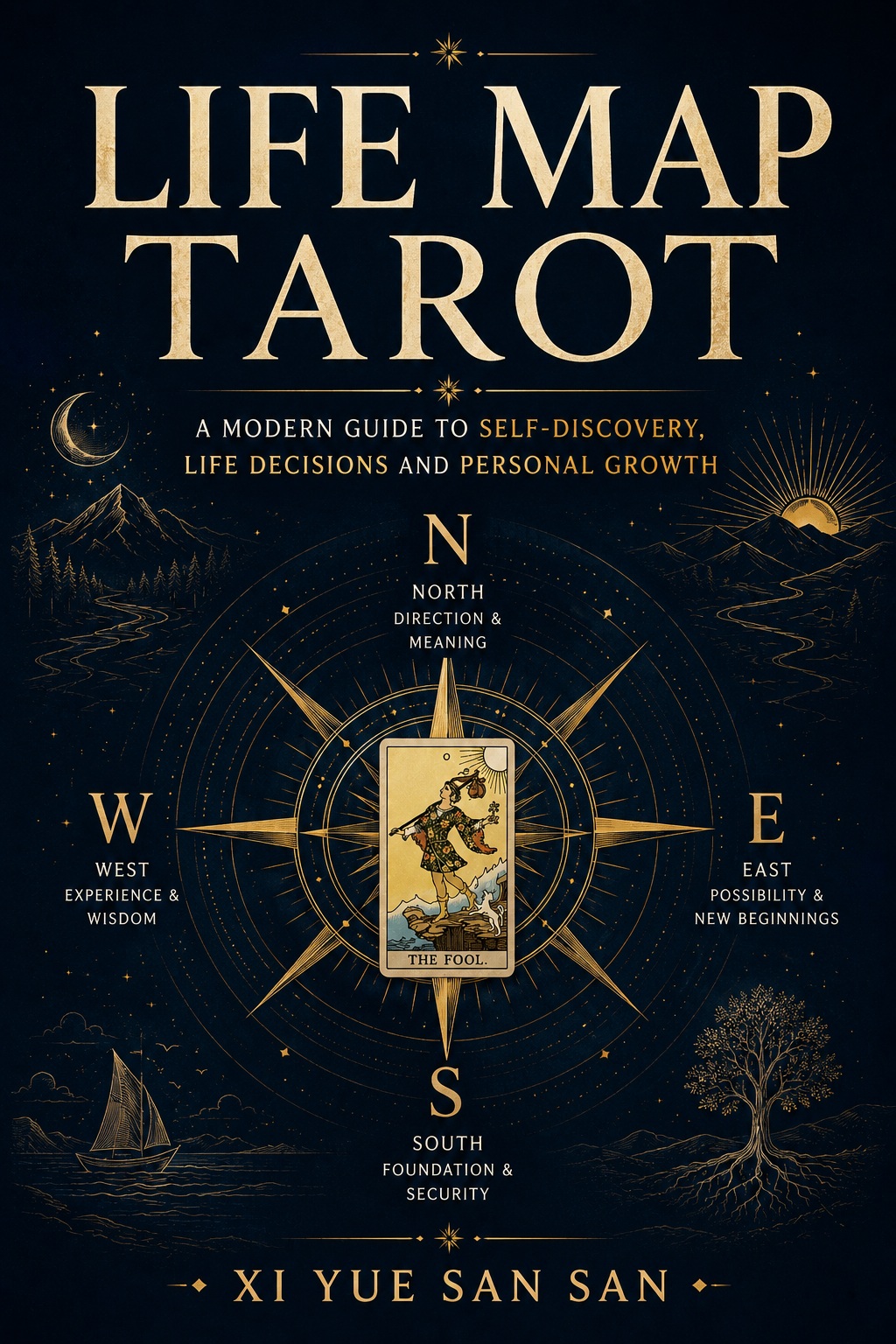
Book recommendation
Life Map Tarot
Life Map Tarot is listed in Books as a guide to making decisions through tarot and self-reflection. That makes it a fitting companion for exploring professional direction while you gather real information about tasks, training, and the life a change would involve.
Open the book page