You finish a video call and realize you have barely moved for two hours. Your tea is cold. One foot has been tucked beneath you for so long that you need a moment before standing. You have answered questions, nodded at the right times, and written a perfectly usable list. Yet the afternoon feels as though it happened somewhere slightly apart from you.
Disconnected from my body can describe several different experiences. It might mean you have been ignoring hunger and discomfort while working. It might mean you feel numb, strange, or unreal in a way that frightens you. These are not interchangeable, and a tarot card cannot tell you which explanation fits or what is causing it.
This reading is for gentle reflection on attention, ordinary needs, and available support. It is not a way to diagnose dissociation or explain physical symptoms through spiritual energy. If feeling detached is persistent, distressing, or affecting your daily life, speak with a qualified healthcare professional. You do not have to wait until you have found the right spiritual words.
Say what disconnected feels like for you
Choose words that describe rather than explain. I keep forgetting to eat until late. I feel as though I am watching myself from a distance. My surroundings feel unfamiliar even though I know where I am. I cannot tell whether I am tired or upset. These sentences describe different things, and the difference is worth keeping.
You do not need to settle on a label before asking for help. The NHS information on dissociative disorders discusses experiences of disconnection and professional assessment. Reading a description may help you communicate, but recognizing a phrase online does not establish a diagnosis. A clinician can consider your experience and possible causes more fully than a spread can.
For your notebook, record when you noticed the feeling and what was happening around it. Keep the entry brief. You are not collecting proof that a particular event caused it. You are preserving useful details without requiring yourself to solve everything while you already feel unsettled.
Begin with the room, not a difficult memory
Before shuffling, look around. Notice where you are sitting and what is in front of you. You can say the day and place aloud if that feels useful. Choose a comfortable, stable position. There is no need to close your eyes, dim the lights, or create a mood that makes the room feel further away.
If you want a structured exercise, NHS inform describes the 5-4-3-2-1 grounding method: notice five things you can see, four you can feel, three you can hear, two you can smell, and one you can taste. Adapt to the senses and surroundings available to you. You can stop if the exercise is uncomfortable.
The point is not to achieve a special state or make every unpleasant feeling disappear. A lamp, a curtain, and the hum of the fridge can be enough to name. If a detailed exercise feels like too much, leave it. You are allowed to ask someone to sit with you or help you decide what support you need.
Decide whether tarot belongs in this moment
Sometimes a picture helps you focus. Sometimes it supplies more material for worry. If you find yourself treating every shadow in a card as a warning, this may be a good time to put the deck away. You can return when you feel more settled, or choose another kind of reflection altogether.
There is no spiritual penalty for postponing a reading. You will not miss an essential message because you ate lunch first or called a friend. Tarot is an optional practice. It should fit around care for yourself, not become another reason to overlook what is happening in front of you.
If you do want a card, consider choosing it face up. Pick an image that feels neutral or familiar. A landscape, a garden, a person sitting comfortably. You do not need to test yourself by drawing something unpredictable. Looking carefully at one picture can be the whole exercise today.
The Queen of Pentacles and the chair you are sitting in
The Queen of Pentacles can invite attention to ordinary physical comfort. Before interpreting her character, describe the picture. Where is she sitting? What surrounds her? What colors do you notice? Keeping the first response visual can help you avoid rushing straight into a complicated story about what is wrong with you.
Then look at your own immediate conditions. Is your chair uncomfortable? Is the room too hot? Have you been postponing a trip to the bathroom because you wanted to finish one more task? These observations do not explain every kind of disconnection. They simply identify things you can check without needing the cards to diagnose anything.
Choose an adjustment that is appropriate for you. Move the screen. Unclench a cramped hand if that feels comfortable. Get a drink if you want one. The action may not produce a dramatic change. You are responding to a need you noticed, which is worthwhile even if a larger concern still requires attention.
The Four of Swords and the break you never take
You may say you rested because you spent twenty minutes scrolling between tasks. Yet the break contained messages, news, an argument in the comments, and a reminder that somebody has a much tidier kitchen than yours. Perhaps you need a different kind of pause. The Four of Swords can be a prompt to ask what would make this break less demanding.
It might mean putting the phone down for a few minutes. It might mean sitting somewhere quieter or telling a colleague when you will be available again. It might mean that you need practical help because the work genuinely will not fit into the day. Be careful about turning every problem into a private relaxation assignment.
If you care for someone, work shifts, or live in a crowded home, a long uninterrupted rest may not be available. Choose within the life you have. Could someone cover ten minutes? Could one nonessential task wait? The reading should acknowledge constraints instead of implying that you would feel fine if you were better at making time.
A three-card spread with no hidden-cause position
Try these questions: What have I noticed today? What ordinary need deserves attention? What support or next step is available? We are leaving out what trauma is stored in my body and what spiritual blockage caused this. Tarot cannot establish those causes, and speculation may make an already unsettling feeling more confusing.
Suppose you choose the Two of Pentacles, the Four of Swords, and the Three of Pentacles. You might associate them with switching between tasks, needing a pause, and asking for help. Write down the actual evidence beside each interpretation. I answered messages during lunch. I have not stopped since nine. My colleague offered to share the afternoon work.
Now choose one response: ask the colleague which task they can take. That is a practical decision based on your circumstances. It does not prove that overwork explains every sensation you have been experiencing. You can address the workload and still seek medical advice if the disconnection continues or worries you.
A body does not have to look a certain way to deserve care
Some people feel distant from their bodies because paying attention seems to turn immediately into criticism. A mirror becomes a list of faults. A photograph becomes an argument with the person holding the camera. Even advice to love your body can sound like another feeling you are failing to produce.
For this reading, you can leave appearance out. Ask about comfort, access, energy, and what helps you move through the day. You do not have to admire every part of yourself before choosing clothes that fit comfortably or taking a break. Care can be a practical decision on a day when affection for your body is unavailable.
If the Empress appears, resist translating her into a demand to feel beautiful, fertile, or effortlessly at ease. You can use the image to ask what would make your surroundings more accommodating. A cushion. A reachable shelf. A quieter place to eat. The relevant answer is the one that fits your body and your life.
Keep movement optional and accessible
Grounding advice often assumes everyone can stand barefoot on grass or go for a walk. That may be inconvenient, inaccessible, unsafe, or simply unpleasant where you are. You do not need to leave your home or perform a particular movement to be entitled to a moment of attention.
If movement is comfortable for you, you might change position or stretch in a familiar way. If it is not, you can look around, listen to a sound, or notice an object you are holding. Follow any guidance you have for a medical condition or disability. A tarot card does not override it.
Avoid treating pain as something to push through so you can become grounded. You can stop an exercise that feels wrong for you. The useful question is what is available and tolerable today, not whether you can complete somebody else's ideal routine. A practice that requires you to ignore your own limits misses the point of listening.
Bring another person into the ordinary details
When you feel strange or distant, explaining it can be difficult. You may worry that the words will sound dramatic. Start with a concrete request. Could you stay on the phone for a few minutes? Could we sit in the kitchen? I feel unsettled and would appreciate some company while I decide what to do next.
Choose someone who can respond calmly and respect what you are asking. You do not need them to interpret your energy or identify a spiritual cause. They can remind you where you are, listen, or help arrange appropriate support. If you need professional help, a trusted person may be able to assist with making the appointment.
You can also explain what you do not want. I don't need a reading right now. Please don't tell me what you think this means. That request may feel awkward if tarot is part of your shared language. It is still reasonable to ask for ordinary company instead of another interpretation.
Notice the schedule that keeps removing you from the day
There is a less dramatic form of disconnection that can grow around habits of constant availability. You wake to messages, work through meals, watch something while eating, and scroll until you cannot keep your eyes open. You may know everyone's requests better than your own preferences. A reading can help you look at the schedule without making claims about a diagnosis.
Pick one point where you could notice yourself before responding to another demand. Before opening the inbox, ask whether you need breakfast. After a meeting, notice whether you want a brief pause. Before agreeing to an evening call, check whether you have enough time and energy. Keep the question small enough that it does not become a new monitoring job.
Write down what you discover, including inconvenient answers. Perhaps the problem is not that you forgot to notice your needs; you noticed and could not meet them because the workload was too high. That deserves a practical conversation about responsibilities. A spiritual routine should not make an unreasonable arrangement seem like your personal failure to stay present.
If the exercise does not help
You may name the objects, draw a gentle card, adjust the chair, and still feel disconnected. That outcome does not mean you did the exercise incorrectly. It means this particular attempt has not resolved the feeling. You can stop repeating it and consider a different kind of support rather than escalating the ritual.
When seeking advice, describe the experience in ordinary terms and mention how often it happens, how long it lasts, and how it affects your day. A brief note can help you remember details. You do not need to present a theory about chakras, trauma, or hidden energy for your concern to deserve attention.
If you feel in immediate danger or unable to keep yourself safe, use local urgent or emergency services. For ongoing concerns, arrange appropriate healthcare support. Tarot can remain a personal interest alongside that care if it feels helpful. It does not need to carry the responsibility for explaining or treating what is happening.
Finish with something you can locate
At the end of the reading, write one sentence about the present: I am at my desk, it is Tuesday afternoon, and I am going to stop for lunch. Or: I still feel unsettled, and I will call someone. The sentence can include uncertainty. You do not have to claim you feel completely present if you do not.
Put the deck away somewhere ordinary. Notice whether there is a practical task to finish before you leave the room, such as saving your work or moving a cup away from the keyboard. These details belong to the day you are in. There is no need to turn them into symbols.
You may feel a little more settled. You may simply have a clearer next step. Either way, you have permission to let the reading end without pulling one last card to guarantee that everything is okay. The next useful thing may happen away from the table, in conversation, at an appointment, or while eating the lunch you finally made time for.
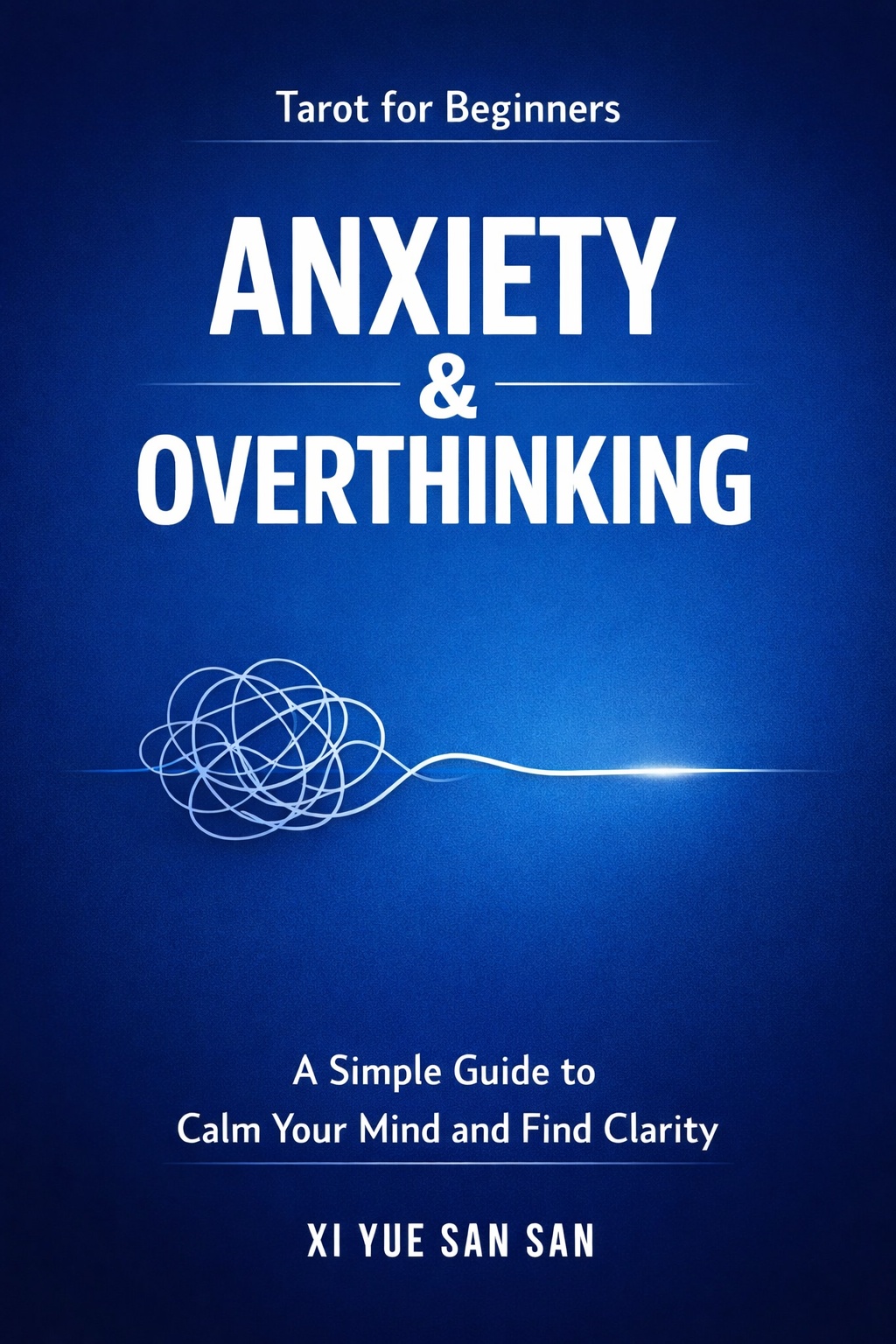
Book recommendation
Anxiety & Overthinking by Xi Yue San San. Anxiety & Overthinking is the catalog’s book focused on calm and clarity. It may suit a quiet follow-up to this essay when you want reflective reading. Persistent or distressing disconnection deserves appropriate healthcare support; a book or tarot practice cannot establish its cause.
Open the book page