The message is harmless. Someone wants to move tomorrow's meeting by half an hour. You read it while standing in the supermarket and suddenly cannot remember what you came to buy. It is not really the meeting. It is the meeting, the rent reminder, the appointment you still need to arrange, and the way every small change seems to require a version of you who has more room.
When stress has been hanging around for a while, even a quiet evening may not feel quiet inside. You sit down and begin remembering things. A person tells you to relax, which is an excellent way of making you feel responsible for one more task. You may turn to tarot because a card is at least something you can put on the table and look at.
That can be a useful beginning. A reading can help you describe your day and consider a manageable response. It cannot diagnose anxiety, identify the medical cause of symptoms, or promise a cure. Keep that distinction clear without making the reading cold. You are allowed to want comfort and practical help at the same time.
Describe a day before trying to explain your life
Instead of asking why you are always like this, choose yesterday. What happened between waking and sleeping? Include the unremarkable things: the long queue, the changed shift, the child who needed a form signed, the lunch you ate while replying to someone. A day can be crowded with demands that look small when written separately. Their size on the page does not tell you how it felt to carry all of them.
Draw a card beside this account and ask what deserves a closer look. With the Ten of Wands, you might notice how often you accepted another task before checking what was already promised. With the Eight of Pentacles, you might see a job that required more concentration than the interruptions allowed. These are ways of considering the day, not a hidden explanation that overrides your circumstances.
Try to keep the first description free of insults. I spent forty minutes worrying about the email is an observation. I am ridiculous is a judgement that gives you very little to work with. If the judgement comes first, write the observation underneath it. There is no prize for achieving a perfectly gentle tone; you are simply trying to make the account useful.
Give persistent anxiety another place to be heard
Stress and anxiety overlap in everyday conversation, but a tarot spread cannot tell you which condition you have or whether something else is contributing. The National Institute of Mental Health's stress and anxiety guide explains that ongoing symptoms, difficulty coping, and interference with daily life are reasons to consider professional help. You do not have to wait until everything has fallen apart before making an appointment.
It can help to bring a short, ordinary description: I am worrying most evenings; I keep avoiding routine calls; this has been happening for several weeks; I am having trouble managing my day. You do not need the right clinical vocabulary. Mention symptoms and changes as you have experienced them, including when they began. Let a qualified healthcare professional help you consider what they mean and what care is appropriate.
You can keep your tarot practice if it feels useful. It does not need to compete with an appointment. Perhaps the cards help you find words for what to discuss. Perhaps you leave them alone for a while because you are tired of interpreting things. Either choice is allowed. Getting support is not evidence that you failed to think positively or understand a spiritual lesson.
Separate the demand from the dread around it
There is an overdue form on your desk. Filling it in may take twenty minutes, although you are not sure because you have not opened it. Around the form is a much larger collection of thoughts: they will think I am careless; I have probably missed something irreversible; I should have done this last week. The task and the worry are related, but they are not identical.
The Page of Swords can prompt one factual question. What is the actual deadline? Which document is missing? Who could answer the confusing part? Look at the form itself before drawing another card. Information does not always remove worry, and some tasks really are difficult. It does give you something more specific than the feeling that the whole envelope is a judgement on your character.
You might choose to open it and stop there. Or write the question you need to ask during office hours. Be honest about the size of that step. If it still feels too much, a trusted person may be able to sit with you or help you work out who to contact. The goal is an available next action, not a demonstration that you should have found it easy.
Rest may need a practical agreement
Sometimes advice about rest assumes that an empty evening is waiting somewhere for you to claim it. Your evening may contain a second shift, unpaid care, study, or a household where tasks drift toward whoever notices them first. A card about rest does not erase those conditions. It may help you name where another person's participation, a changed expectation, or outside support is needed.
Consider the Four of Swords beside a real question: what would have to happen for me to have half an hour without responsibility? Someone might need to handle dinner. A deadline might need discussion. A chore might remain unfinished. If none of those changes is immediately available, acknowledge the limit. Being unable to create quiet on demand does not make you bad at caring for yourself.
A request can be concrete: could you do the school pickup on Thursday? Could we agree which two things take priority this week? I cannot finish both by tomorrow; which one should come first? These conversations may involve disappointment or negotiation. A reading can help you prepare the words, but the answer will come from the people and circumstances involved.
Make the reading small enough to finish
Try a three-card spread with a stopping point chosen in advance. What pressure can I name? What support could I ask about? What is one reasonable action for today? Set aside the wish to explain every anxious feeling. You are making a brief space to think, and it helps to know when that space will end.
Imagine drawing the Two of Pentacles, the Three of Pentacles, and the Knight of Pentacles. One possible reading is that several demands are competing, a conversation with a colleague may clarify responsibility, and a careful email is more useful than a dramatic decision. Check that interpretation against your day. If you work alone or the colleague is not safe to approach, choose another response that fits the facts.
Write down the action, then close the reading. Avoid turning the final card into a test of whether tomorrow will feel better. You may complete the email and still feel anxious. That does not make the action worthless. A practical task can be done while a feeling remains unfinished, and the feeling may need support that the task alone cannot provide.
Watch for the extra question
You ask whether the meeting will go well. The answer feels unclear, so you ask whether your manager is upset. Then whether the difficult card applies to this week or next week. Soon the original question is buried under a row of cards, and you are looking for one that will finally allow you to stop. A reading can become another thing to check when you badly want certainty.
If you recognise that pattern, pause the session. You do not need a final reassuring card to give you permission. Put the deck somewhere out of reach for the evening if that helps. Write what is known about the meeting: the time, the purpose, anything you need to bring. The unknown parts are still unknown. Another spread cannot turn them into reliable information.
You might decide to read only about your own choices for a while. How can I prepare? What question would I like answered? What can wait until I hear from the person involved? If tarot keeps leaving you more distressed or repeatedly checking, taking a break is a reasonable response. A spiritual practice is something you can adjust, not a promise you must keep regardless of its effect on you.
Leave room for a less impressive evening
There is a particular disappointment in trying to recover properly after a hard day. You imagine cooking, stretching, writing in a journal, and going to bed with a clean kitchen. Then you arrive home and sit in the same clothes for an hour. Now the evening contains both the original strain and the accusation that you used your recovery time badly.
Consider what an adequate evening would involve under today's conditions. It may be very plain. Something to eat, one necessary message, the preparation tomorrow genuinely requires. You can try a familiar activity you usually enjoy without requiring it to change your mood. Watch the programme. Fold a few towels if the quiet task appeals. Leave them if it does not. There is no ideal sequence the cards need to approve.
The Temperance card can be a prompt for making the plan less demanding. Which part could be reduced? What are you adding because you think a person taking care of themselves should do it? Keep the things that are useful or meaningful to you. A shorter plan need not become another rule about how everyone ought to live.
Tell someone what help would actually look like
A friend says to let them know if you need anything. You nod because answering feels like work. Later, when you are struggling, the offer seems too vague to use. It may help to turn it into a small request while you have a little room to think. Could you check in after my appointment? Could we talk about something ordinary for a while? Would you sit with me while I open this letter?
The Three of Cups might invite you to remember who has responded kindly to a modest request before. Choose based on experience rather than the title someone holds in your life. A relative may be loving but quick to lecture. A friend may be better at quiet company. You can ask different people for different kinds of help without explaining every part of the situation to all of them.
They may not be available at the time you ask. That can sting, especially if asking took effort. Where possible, try another time or another person. One unavailable afternoon does not establish that your needs are unreasonable. It is also all right to say that you want listening rather than advice, even if you have accepted advice from that person in the past.
Review what helped without giving yourself a mark
At the end of a week, look for particulars. Was there a conversation that clarified a deadline? Did an appointment give you a next step? Did reading fewer cards leave the evenings less crowded? You are collecting information about your experience. Avoid turning the review into a score for how calm you managed to appear or how faithfully you followed a routine.
You may discover that something usually helpful was irritating this week. The walk felt like another errand. The journal invited more circling. The person you called kept changing the subject. Adjusting your approach is allowed. So is admitting that you do not yet know what helps, especially if the pressure comes from circumstances that have not changed.
Keep one note that might be useful later: I need clearer instructions before I start this task; I prefer company after difficult appointments; reading late at night is not helping right now. Those observations are modest, but they belong to your life. They can travel with you into a conversation with a professional, a friend, or someone who shares your responsibilities.
Tonight does not have to answer everything
You may want a card that says the worst is over. That wish makes sense. When a difficult stretch has gone on for a long time, uncertainty itself becomes tiring. Tarot cannot give you a reliable date for relief, and you deserve more than a promise made to make the reading feel complete. What it can offer is a place to name the question without pretending the answer is already known.
Choose the next concrete thing that needs attention, or choose to stop for the night if nothing needs doing now. Write the appointment request. Put the form where you will find it tomorrow. Tell someone this has been harder than you have let on. The action can be small and the need for further help can remain real.
There may still be a meeting to rearrange and groceries you forgot. You are not required to turn that ordinary unfinished day into a lesson about becoming stronger. Let the cards go back into their box. Keep the useful sentence, the request, or the name of someone to call. That is enough material for the next conversation.
Book recommendation
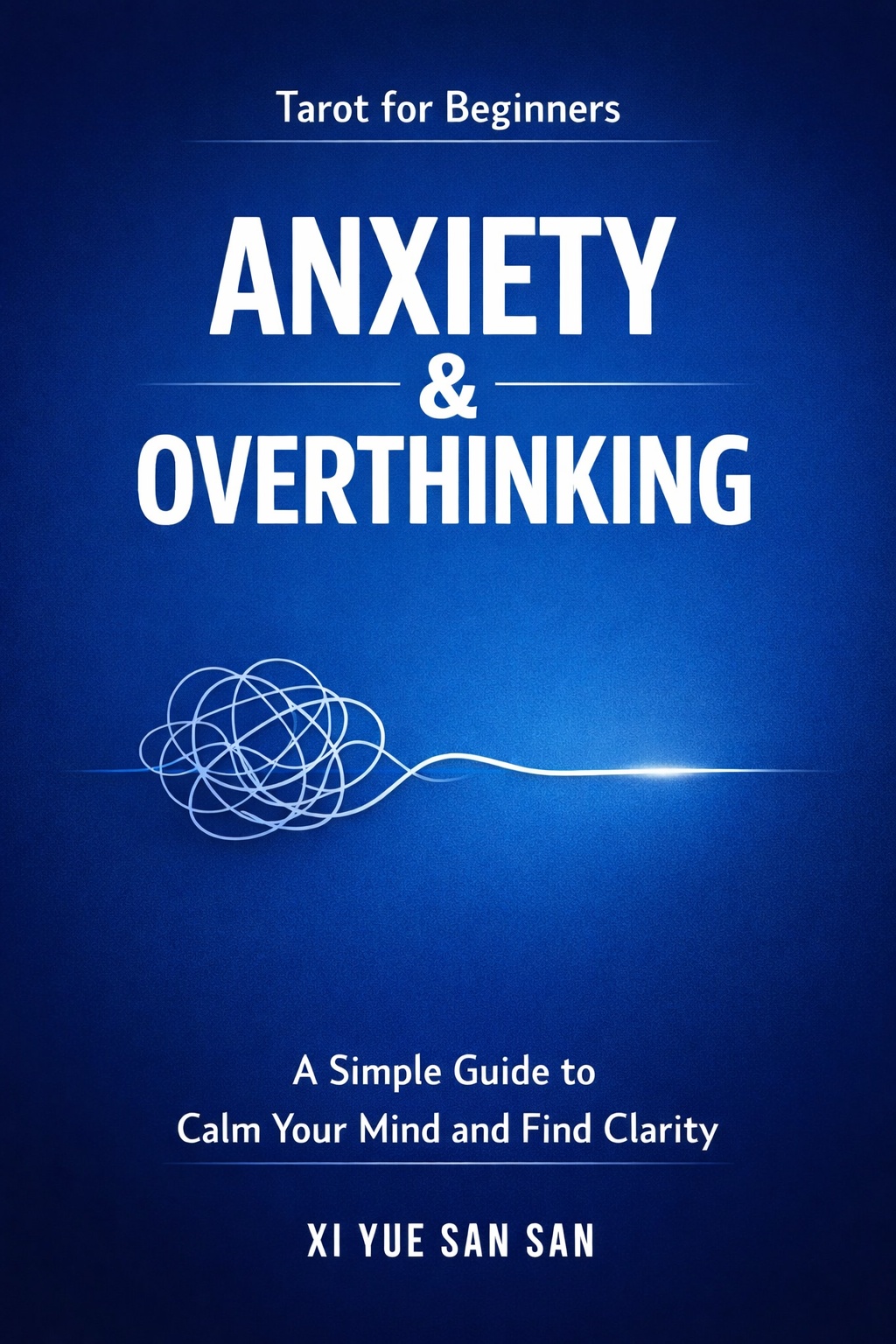
Anxiety & Overthinking by Xi Yue San San. Anxiety & Overthinking offers a tarot companion for readers interested in reflection and clarity. Use it for that personal practice alongside appropriate support; a book or card reading cannot diagnose anxiety or replace professional care.
Open the book page