You turn over the Star and want to feel relieved. It is the sort of card people call hopeful. The picture is gentle, the guidebook sounds reassuring, and for a moment you would like someone to say that this is the answer: this is where healing begins. Then the kettle clicks off and you are still sitting in the same kitchen with the same difficult week behind you.
Which card points to your greatest source of emotional healing? The question is understandable, especially when several possible kinds of help feel out of reach or hard to choose between. You may want rest, a conversation, a change in circumstances, professional support, or simply a way to stop explaining yourself for an afternoon. One answer would be easier to carry than all of those possibilities.
Tarot cannot identify a guaranteed source of healing or decide what care you need. A card can, however, help you notice a form of support you want to explore. Treat the picture as a prompt, then look for the corresponding thing in ordinary life. Who, what, or where does it remind you of? What would actually be available this week?
Begin with a moment that was a little easier
Look back over the last few days for a moment when you felt less alone, less pressured, or more able to be yourself. It need not have been a happy moment. Perhaps someone sat with you while you cried and did not rush to change the subject. Perhaps you completed a practical task with help. Perhaps you were absorbed in making soup and did not check your phone for a while.
Write what happened rather than assigning a lesson immediately. My neighbour carried the heavy bag upstairs. My friend asked a second question after I said I was fine. I enjoyed repairing the loose button. These details can point toward different needs: practical help, patient attention, an absorbing activity, or the satisfaction of finishing one manageable thing. They do not need to compete for the title of greatest source.
Draw a card beside the memory if you want. Ask what you might like more of, and what made that moment possible. If the Six of Pentacles appears, the useful reflection may be about accepting a specific offer. If the Magician appears, it may be about using materials already at hand. Let your actual experience remain the evidence for what felt helpful.
The Star may lead to something small and credible
Hope can sound unconvincing when it arrives as a promise that everything happens for a reason. You may not want a reason. You may want one thing to look forward to that does not require pretending the difficulty was necessary. If the Star catches your attention, consider a modest future event you would willingly put on the calendar.
Perhaps it is lunch with someone who knows you well, a visit to a familiar place, or an hour working on something you enjoy. Choose something that fits your circumstances rather than an elaborate reward you must earn by becoming better first. The event cannot guarantee a change in mood. It can give your week a point of interest that is not organised entirely around what has gone wrong.
You may find that planning anything feels difficult today. Then the Star might remain only an image you like looking at. That is allowed too. Do not force yourself to produce optimism because a hopeful card appeared. A symbol can stay beside a question for a while without requiring you to agree with the most cheerful interpretation of it.
The Three of Cups may mean being known without performing
Company is not always the same as support. You can spend a whole evening with people and come home tired from presenting a manageable version of yourself. If the Three of Cups appears, ask which kinds of company feel different. Who can hear that you are having a rough week without asking you to turn it into an entertaining story?
A useful invitation may be quieter than a night out. Could we take a short walk? Would you like to eat something simple at home? Can I call for ten minutes without needing to explain the whole situation? Consider what you actually want from the exchange. You might want to talk about the difficulty, or you might want familiar conversation about things that have nothing to do with it.
The other person can have limits and still care about you. Ask, listen to the answer, and see what is possible. The card does not certify that a particular friendship will be healing or that everyone in a group is safe to confide in. Use what you know about how people behave, including whether they respect privacy and respond kindly when you disagree.
The Four of Swords may ask for fewer demands
You may be trying very hard to recover. There are books on the bedside table, saved exercises on your phone, and a notebook in which you keep setting intentions. Each item began as an offer of help. Together they can start to feel like a course you are failing to complete. Sometimes the card that points toward support prompts you to do less of the interpreting for a while.
With the Four of Swords, ask what could be reduced or postponed today. You might choose not to read another chapter, not to discuss the same problem again tonight, or not to turn every feeling into journal material. If actual rest requires help with responsibilities, name that. A quiet card does not create free time on its own, especially in a home where others depend on you.
You can also notice whether solitude feels welcome or lonely. The answer may change from day to day. Rest does not always mean being alone, and company does not always mean conversation. You might prefer sitting beside someone while each of you does your own thing. The card gives you a question about conditions, not a universal instruction to withdraw.
The Queen of Pentacles may point to practical care
There are days when a difficult feeling sits beside very ordinary neglect. The fridge is nearly empty. Your clothes are uncomfortable. You have been meaning to repair the lamp beside the chair where you usually read. None of those things explains every part of emotional pain. They may still be worth attending to because they shape the day in which the pain is being lived.
The Queen of Pentacles can invite a look at what would make your immediate surroundings more workable. Choose one thing within reach. Ask someone to bring groceries if that is an available offer. Move the chair toward better light. Put a needed item where you can find it. These are practical acts of care, not evidence that an organised home or a particular meal will cure distress.
If money, housing, disability, or shared space limits what you can change, keep those realities visible. You do not have to buy a version of comfort that suits somebody else's room. The relevant question may be what support or accommodation you can ask about. Sometimes the most caring interpretation is the one that recognises how much you have already been managing with limited options.
Justice may point toward a conversation or a limit
Not every source of relief looks soft. Perhaps the thing that keeps hurting is an arrangement that needs to be discussed. You are always expected to cover the shift, carry the family messages, or accept a joke that leaves you quiet afterward. A soothing reading may feel incomplete because you also want something in the situation to change.
Justice can prompt you to describe the arrangement and your part in it. What was agreed? What has changed? What request would be clear enough for another person to answer? I can cover this Friday, but I cannot become the default cover. Please speak to them directly; I do not want to carry the message. Those sentences do not guarantee agreement, but they make the issue visible.
Choose timing and support according to the situation. If a direct conversation could be unsafe, seek help with planning rather than using the card as pressure to confront someone. Tarot cannot determine how another person will respond. Practical knowledge about the relationship matters more than an interpretation that says you must speak boldly today to prove that you are ready to heal.
The Five of Cups may allow sadness to stay in the room
You may be disappointed when a sad-looking card appears in a reading about healing. Surely the answer should be the Sun, or something that looks like forward movement. But you might use the Five of Cups to consider whether you have had room to acknowledge a loss. The question is not whether sadness is secretly good for you. It is whether you have been required to hide what is already there.
Someone may have rushed you toward gratitude. You may have done it to yourself: other people have it worse; at least this part is fine; I should be over it. Those statements can sit beside an unspoken sentence about what you miss. Try writing that sentence without immediately correcting it. I miss the plan we had. I miss how easy that friendship used to feel. I wanted a different answer.
If you want company with that sadness, choose someone or a suitable source of support you trust. You are not obliged to disclose everything, and you do not need to remain with an exercise that leaves you overwhelmed. A card can help name a feeling; it cannot decide the pace or form of care that will suit you.
Make a map of support instead of choosing one winner
Take a page and write four headings in your own words: people, practical help, meaningful activities, and professional or community support. Add only things that are relevant to you. The page can be mostly empty. This is not a test of whether you have a sufficiently rich life. It is a way to see what is available, what you might ask about, and where a gap feels important.
You could place a card beside each heading and ask a specific question. Who has listened well before? What task could someone help with? What activity would I like to try again? What service or professional could I contact for information? Avoid letting an encouraging card stand in for checking availability, cost, qualifications, or whether a service meets your needs. The next step is usually an ordinary enquiry.
Different sources can serve different purposes. A friend may offer warmth but not know how to help with persistent anxiety. A professional may offer appropriate care while a neighbour helps with transport. A familiar hobby may provide pleasure without addressing the underlying difficulty. You do not need one person, card, or practice to do every job before you allow it to have value.
An example where the answer changes
Suppose you draw the Hermit and decide that solitude is what you need. You arrange a quiet evening, cancel nothing essential, and spend some time reading. At first it feels good. Later, the room feels too quiet and you realise you would like a brief conversation with someone familiar. This does not mean you misread the card or cannot understand your own needs.
Perhaps you needed solitude for an hour and company afterward. Perhaps you were tired of demanding conversation, which is different from wanting no contact. Write what you learned and make the call if it suits the circumstances. The reading was a starting point for paying attention. You can revise your response as the evening gives you more information.
The same is true over longer periods. A weekly activity may feel useful for a while and later become another obligation. A relationship may have room for certain conversations and not others. Keep checking your experience without assuming every change must carry a spiritual message. Sometimes a different day simply asks for a different kind of help.
Know when the question needs more than a reading
If distress persists, becomes difficult to cope with, or interferes with daily life, consider speaking with a qualified healthcare professional. The National Institute of Mental Health's stress and anxiety guide explains signs that more help may be needed. A card cannot tell you whether symptoms require treatment, and a positive reading should not be used as a reason to delay appropriate care.
You do not need to abandon the personal meaning of tarot to make that appointment. You can bring the ordinary observations the reading helped you put into words. I have been withdrawing from people. I am finding routine tasks hard. I keep trying things and still feel distressed. Those statements deserve attention without needing a dramatic explanation or a card that confirms you have struggled enough.
Nor does seeking help mean that a friend, ritual, or book has failed. Different kinds of support do different things. A warm conversation can matter while further care is still needed. You are allowed to keep what is helpful and add what is missing, without forcing the whole story into one answer about where healing comes from.
Choose one form of care you can name
At the end of the reading, complete this sentence: because this card brought this need to my attention, I will ask about or try this particular thing. Keep it proportionate. Send an invitation. Check appointment availability. Request help with one task. Spend a little time with an activity you miss. Or decide that tonight you need to stop asking questions and have an ordinary evening.
Later, notice whether the choice fitted. You may feel some relief, no obvious change, or a clearer sense of what you need instead. Try not to make the result a judgement on your capacity to heal. An experiment with support can be useful even when it tells you to look elsewhere.
The Star can stay on the table if you like the picture. It does not need to carry your entire future. Perhaps its value tonight is that it helped you remember one person you could call, or one wish you had stopped admitting. The kettle has boiled. There is time for a cup of something, and perhaps a message written in your own plain words.
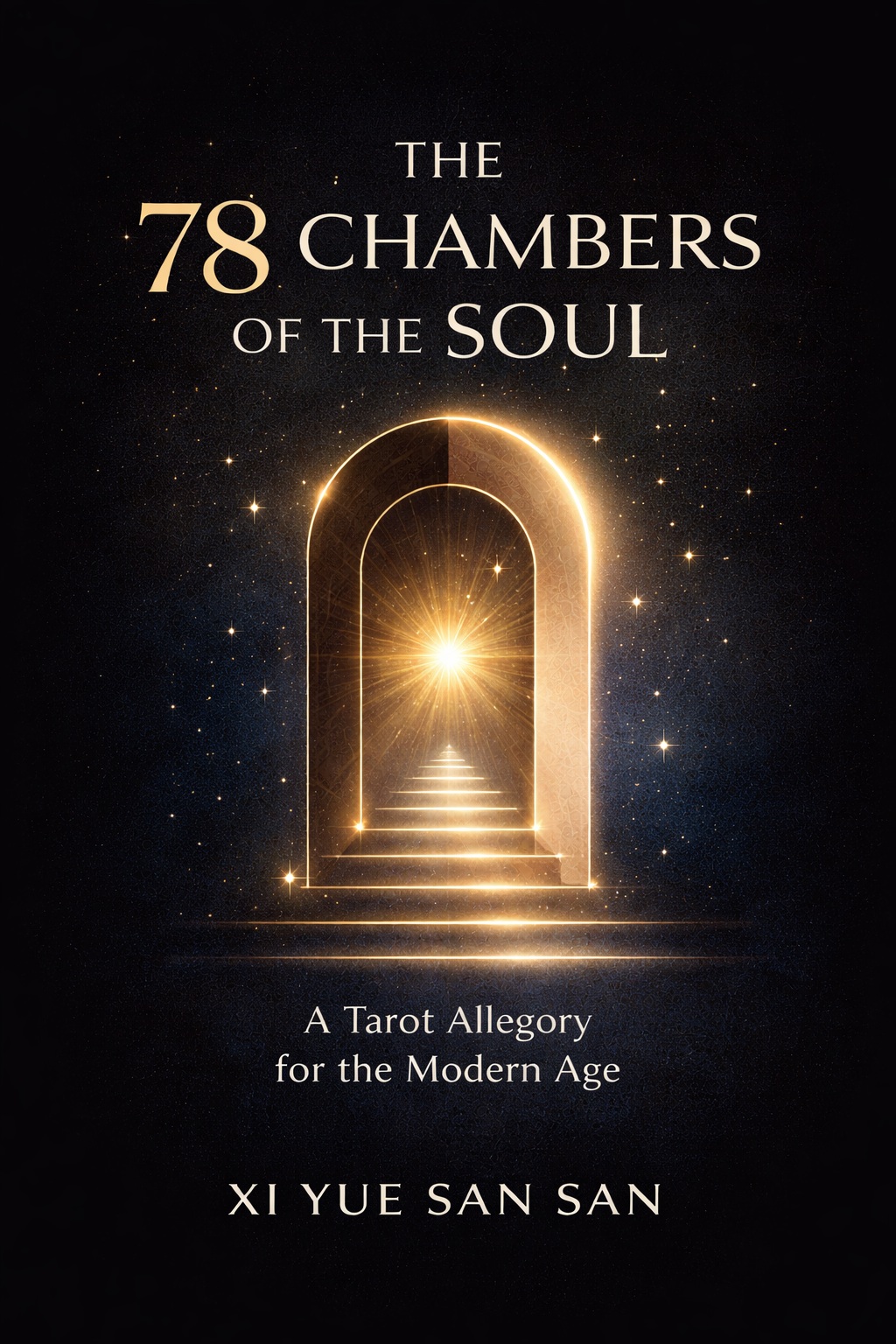
Book recommendation
78 Chambers of the Soul by Xi Yue San San. 78 Chambers of the Soul uses archetypal storytelling to explore inner life. It is a relevant next read if a story or card image helps you name a need, while leaving the choice of real-world support in your hands.
Open the book page