The kettle is on. Your phone already has three messages you do not want to answer. There is a sock on the kitchen floor, though you cannot remember bringing laundry into the kitchen. This is the morning you have, and somewhere in it you would like a moment that belongs to you before the day starts asking for things.
A daily one-card tarot pull can fit there. You draw one card, notice something in the image, and choose a small intention for the day. It does not need candles, silence, or a notebook with beautiful handwriting. It also does not need to predict the mood of every hour ahead. One card can give you a question to carry without becoming a verdict you have to live under.
The useful part is what you do with the prompt. If you draw Strength, you might decide to pause before answering a difficult message. If you draw the Four of Swords, you might make room for an actual break. The card has not issued an order. You are using its image to choose how you would like to meet a particular part of your ordinary day.
Pick a question that leaves you room to act
“What will happen today?” can make you watch every small event for a sign. A delayed bus becomes a prediction coming true. A friendly cashier becomes proof that the card knew. If you want an intention practice, try “What could I pay attention to today?” or “What quality would I like to bring to the task in front of me?” These questions keep your own participation visible.
Choose the question before you draw. Write it at the top of the page if you tend to forget what you asked. You can use the same question all week. Familiar wording can be restful, particularly when the rest of your morning contains too many choices. You do not need to invent a fresh, profound question while waiting for the toast to pop.
Some days need a smaller frame. If you are preparing for a meeting, ask what could help you participate. If the evening contains a conversation you have avoided, ask what you want to remember before speaking. You are allowed to read about the afternoon rather than your whole existence. An intention becomes easier to use when you can picture where it belongs.
Make a five-minute version first
Set the deck on a dry surface. Shuffle in a way that is comfortable, then draw one card. Read upright if you are beginning; use reversals if you already have a method you understand. The shuffling and drawing guide offers a simple routine. You do not have to spend most of your available time preparing to begin.
For the first minute, just look. Notice a face, an object, a direction, or a patch of color. Write one literal observation. “The person is holding a lamp” is enough. It gives you a place to start before you reach for the card's grander associations. If you know nothing about the image, your observation still counts as attention.
Then check one source for a basic meaning if you need it. Your deck's guidebook is fine. Read a short passage and close it. Opening six interpretations before breakfast can turn a small practice into a search for the version you prefer. You can study the card more deeply later. This morning, you need enough understanding to form one useful question.
Finally, choose one action or reminder and write it in plain words. “I will ask for the missing detail before agreeing” is usable. “I will embody expansive alignment” probably will not help when someone interrupts you in the corridor. Your intention should sound like something you might actually say to yourself on a busy day, including a day when you are tired.
Turn a card meaning into a modest intention
Suppose you draw the Magician. A basic theme might be making use of your skills and available tools. You could translate that into “I will begin the draft with what I already know.” That is different from deciding the card promises a brilliant result. It points you toward participation. You still need time, effort, and perhaps a second attempt after the first one looks rough.
For the Queen of Cups, you might choose “I will listen without immediately offering advice.” For the Eight of Pentacles, perhaps “I will practice the difficult passage slowly.” For the Two of Swords, “I will name the choice I have been avoiding.” These are examples, not compulsory meanings. A good intention fits the card, the question, and something that is actually happening in your life.
Keep the scale small. “Be confident all day” asks too much and is hard to observe. “Ask my question in the meeting” gives confidence somewhere to show up, even if your voice shakes. “Be open to love” may be meaningful but vague. “Tell my friend I appreciated the call” is something you can do before dinner. Small does not mean trivial when it reaches a real person.
Give a difficult card a useful job
The Tower at seven in the morning can feel rude. You may want to put it back and draw something sunnier. Before doing that, remember the question you chose. If you asked what to pay attention to, you did not ask for a forecast of disaster. The card can prompt you to look at an assumption, make a plan less rigid, or allow an unexpected change without treating it as a personal failure.
With the Five of Wands, you might decide to distinguish a useful disagreement from an argument nobody needs. With the Ten of Wands, you could look at the extra task you are about to accept. With the Three of Swords, you might leave room to admit that something still hurts. None requires you to arrange a bad day so that the image can be declared accurate.
Do not force cheerfulness either. A difficult image does not need to become a hidden gift by breakfast. You may write, “This brings up discomfort, and I am not sure why.” That is a valid note. The Three of Swords essay offers a careful way to separate hurt, assumptions, and the wish to make pain immediately meaningful.
If a card leaves you too unsettled to use it, end the exercise. You can choose an ordinary intention without the deck: finish one task before opening another, ask for clarification, or take the break already on your schedule. Tarot is optional. A morning practice should not require you to earn permission to feel safe enough to leave the house.
A pleasant card does not require a pleasant mood
The Sun can appear when you are grumpy. The Ten of Cups can appear before a tense family visit. This does not mean you have failed to receive the day's joy correctly. A card is an image you are interpreting, and your mood is your actual experience. You do not have to erase one to make the other seem consistent.
With The Sun, you might choose a moment of clarity: say directly what time you can arrive, open the curtains while you eat, or acknowledge a piece of work you finished. With the Ten of Cups, you might ask what belonging would look like in one conversation. The intention can be gentle and specific. It does not demand a cheerful performance for everyone around you.
Sometimes your response to a pleasant card is resentment. Everyone in the picture looks content, and your own morning has been a mess. Write that if it is what you notice. You may discover that you need less pressure to enjoy things. You may discover nothing beyond the fact that you slept badly. The practice does not have to produce an uplifting paragraph every day.
Try a morning with an awkward, ordinary task
Imagine a fictional reader, Ben, who has been putting off an email about a missed deadline. He draws Justice and sees the seated figure, the scales, and the sword. His first thought is that he is going to be judged. That thought makes him want to check a different meaning. Instead, he returns to his question: “What could help me handle the email honestly?”
He reads the card as an invitation to be clear about what happened and what he can now offer. His intention becomes, “I will state the delay and give a realistic new date.” He removes the long paragraph explaining how busy the week has been. He keeps one brief explanation, apologizes, and writes the date he can actually meet. He still feels embarrassed when he presses send.
That evening, Ben notes that the reply was short and businesslike. He cannot tell whether the other person is annoyed. The intention did not control their reaction. It helped him do his part more clearly. He records that distinction instead of deciding Justice predicted the tone of the reply. The day's useful evidence is his completed action, not a claim that the card knew what was coming.
Keep a journal that can survive a busy week
You need four pieces of information: the date, the card, the intention, and a short evening note. Add the question if it changes. A few lines in an ordinary notebook are enough. If you prefer a phone note, use that. The best format is one you can open without feeling that you owe it beautiful handwriting, a photograph, and a page of spiritual insight.
A morning entry might read: “Tuesday. Six of Pentacles. Ask what help is actually wanted before offering it.” The evening note might say: “Asked before rewriting the shared document. Colleague wanted a quick proofread, not a new draft.” That tells you what you tried and what happened. It is more informative than “The energy was very Six of Pentacles today,” even if that sentence feels satisfying.
Keep the first interpretation visible. If you revise it, add the revision rather than replacing the original. Otherwise it becomes easy to make every card fit the day after the fact. You are learning how you read images and how intentions affect your choices. Honest notes can include a wrong guess, an ignored reminder, or a card that seemed unrelated to anything you noticed.
Review the day without hunting for proof
At night, ask whether you remembered the intention and whether it helped. Those are modest questions. You do not need to search the entire day for an event that matches the card's title. Drawing the Chariot does not require a remarkable journey; drawing the Hermit does not require canceling plans. A card can remain a prompt even when nothing dramatic happens.
Notice alternatives. If you drew the Four of Swords and felt tired, you may also have gone to bed late. If you drew the Page of Cups and received a kind message, the sender may simply be a kind friend who messages often. Acknowledging ordinary explanations does not spoil reflection. It keeps you from making a stronger claim than the experience supports.
Some evening notes will be disappointingly brief. “Forgot entirely.” “The intention was too big.” “Needed lunch, not another insight.” Keep them. They show you where the practice fits and where it becomes a demand. You can make tomorrow's intention smaller or skip tomorrow's pull. The notebook is a record of learning, not a report card on your ability to have meaningful mornings.
If the same card keeps appearing
Repeated cards can catch your attention, especially when you have attached a strong feeling to one. First check the ordinary handling. Are you returning the card to the top and barely mixing? Is a bent edge making it easy to choose? You do not have to dismiss the repetition to consider these possibilities. A familiar image can still invite reflection without proving that an outside force is insisting on something.
If you keep drawing the same card, return to the intention you wrote the first time. Did you try it? Was it too vague? Does it still fit? You might use the repetition as a study opportunity, looking at a different detail rather than demanding a new message. The card-combination guide can wait until another practice session; a daily pull can remain one card.
Resist drawing extra cards solely to explain why the first card appeared again. Soon the five-minute habit can spread across the whole table. If you genuinely want a larger reading, plan one for another time with a defined question and a stopping point. Give the small practice permission to stay small, even when you feel curious or mildly dissatisfied with it.
Missing a morning is allowed
You may work nights, share a crowded home, or wake with just enough time to get dressed. Morning can mean the start of your waking day rather than a particular hour. You can pull a card after breakfast, before a shift, or when you first have a quiet moment. No special window closes because the clock passes a number you saw in someone else's routine.
If you miss several days, resume without making up readings for them. There is no debt to the deck. You could also keep one card for a week and let it accompany several attempts at the same intention. That may teach you more than constantly collecting new images. Repetition in practice and repetition in card selection are different things; both can be handled without turning them into an obligation.
Tomorrow's card may be easy to read or strangely blank to you. Either way, look at the day that is actually waiting. Choose one manageable thing if an intention helps. Then put the deck away and make the tea, answer the message, find the missing sock. The point of a morning pull is to accompany your life closely enough to be useful in it.
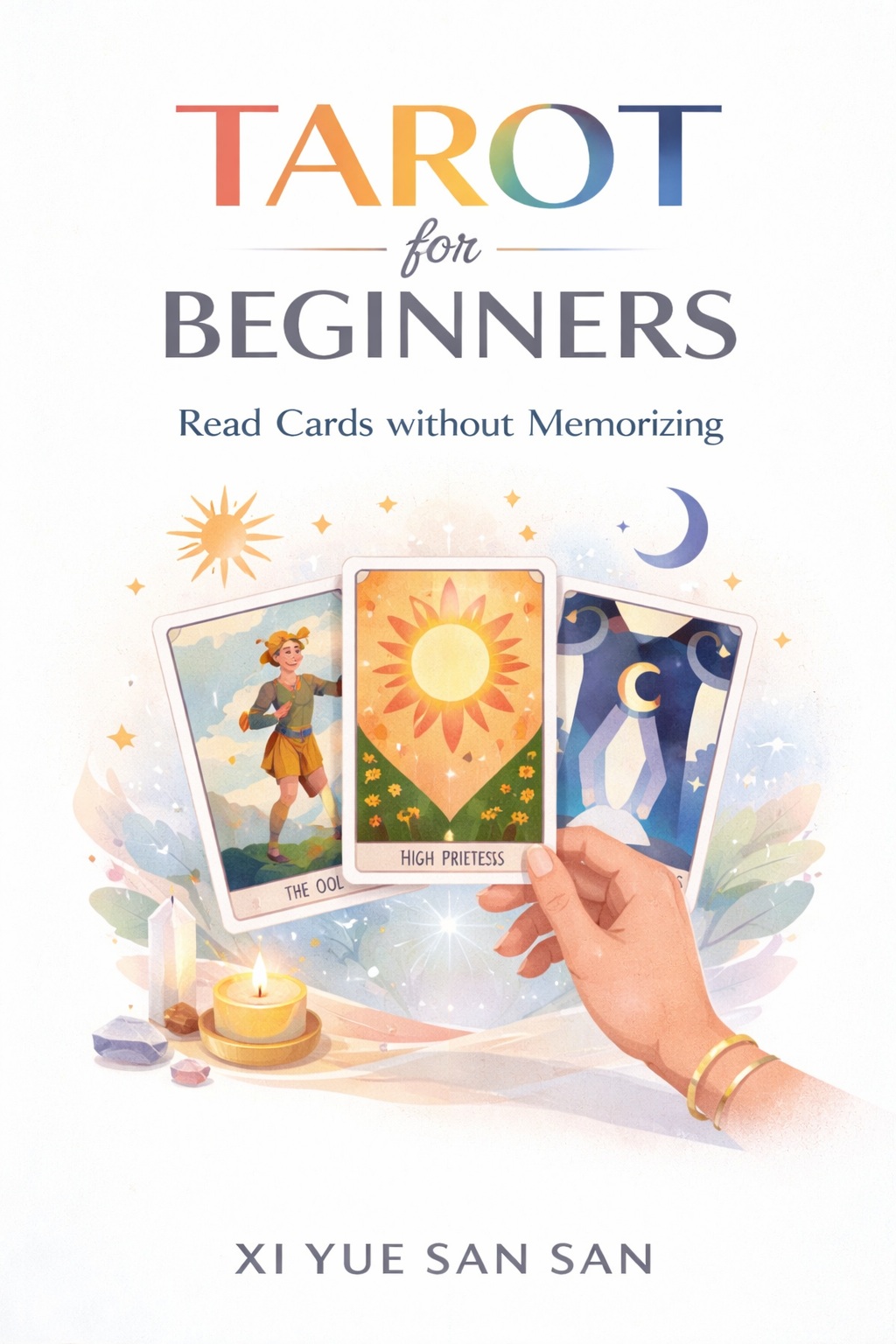
Book recommendation
Tarot for Beginners. The catalog presents this as an introduction to reading through intuition rather than memorization. A daily card gives you a small, repeatable place to practice that approach and record what you notice.
Open the book page