The card lands upside down. You had just begun to feel comfortable with the deck, and now even the picture seems to be arguing with you. Do you turn it around? Does a good card become bad? Have you shuffled wrong? If you are reading at the kitchen table before work, you probably do not want another seventy-eight meanings to learn before breakfast.
You do not need them. A reversed tarot card is a card whose top points toward you when you reveal it in your chosen reading position. What that orientation means depends on the method you use. Some readers use reversals. Others read every card upright and explore difficulty through the question, the image, and the surrounding cards. Both are workable choices for a reflective practice.
This guide offers three distinct ways to use reversals: something is blocked, something is happening inwardly, or something is out of balance. They are interpretive tools, not three secret facts hiding inside every upside-down card. Choose one approach before a reading. Let it help you ask a better question. You can leave the others for another day.
Start with the upright card you already know
Before interpreting a reversal, name the card's ordinary theme. For the Magician, that might be using available skills. For Strength, it might be patient courage. For the Four of Swords, it might be rest. Use a short sentence you understand, even if it sounds plain beside the guidebook. You need something clear to work with before you change how that theme appears.
Look at the picture too. A person holding a tool, sitting apart, or carrying a heavy bundle gives you more to discuss than a floating word such as energy. Describe one visible detail without interpreting it. Then connect it to the question. In a reading about a difficult email, a raised sword may bring your attention to words, decisions, or the wish to be very precise.
The reversal changes your angle on that theme. It does not erase it. A reversed Cups card still gives you a way to think about feelings or connection; you do not have to convert it into a money card because the picture is upside down. The guide to reading card combinations can help you keep the card's theme connected to its position and neighbors.
Method one: ask what is getting in the way
In the blocked-expression method, a reversal prompts the question, “What makes this quality difficult to use here?” The card's upright theme remains available, but something interrupts it. That interruption might be practical, emotional, or simply unknown. You are looking for a difficulty you can describe, not announcing that an invisible force has closed a door in your life.
Take the Magician reversed in a reading about starting a small project. You might own the materials and still avoid opening the document. What is getting in the way? Perhaps you do not know the first step. Perhaps you are embarrassed by beginner work. Perhaps the only free hour falls after a long shift. Those are different problems. The card cannot tell you which is true without your attention to the actual circumstances.
Try finishing this sentence: “I could use this quality more easily if…” You might need a demonstration, a quieter place, permission to make a rough first attempt, or fewer commitments this week. Sometimes the honest answer is that you cannot change the obstacle immediately. Naming a real limit is still more useful than accusing yourself of having blocked your own abundance because you are tired.
With the Three of Cups reversed, this method might invite a look at what interrupts friendship. Two people keep canceling. The group meets when you work. You feel awkward being the first to suggest something. None of that proves your friends dislike you. The reversal gives you a topic to examine. The actual conversation and behavior give you information about the relationship.
Practice the blocked method with a small problem
Imagine a fictional reader, Leah, who wants to speak once during her team's weekly meeting. She draws the Queen of Wands reversed. Reading upright, she associates this Queen with visible confidence and participation. Using the blocked method, she asks what makes participation hard. Her first answer is harsh: “I am just not a confident person.” That sounds final, and it offers her nothing to try.
Leah looks again. The meeting moves quickly. She waits for a perfect opening, then loses her place in her notes. Now she has a specific obstacle. She writes her point in one sentence before the next meeting and asks the chair for a moment early in the discussion. This may help. It may still feel uncomfortable. The reading has suggested an experiment, not changed her personality overnight.
If you use this method for every reversal in a small spread, keep returning to the named obstacle. Avoid using blocked as a decorative word. “Blocked communication” is vague. “I keep deleting the direct question because I am worried it sounds needy” gives you something you can recognize. You may decide to ask it. You may need time. At least you know what you are hesitating over.
Method two: ask what is happening privately
The inward-expression method reads a reversal as a theme being experienced internally, quietly, or before it has become visible. Here the question is, “How am I living this on the inside?” This is especially useful for journaling about your own experience. It does not give you permission to describe another person's unspoken thoughts as though they have confided in you.
The Sun reversed could invite you to notice private enjoyment you have not shared. Maybe you like the pottery class but feel silly telling anyone how much. The Chariot reversed could lead you to consider an inward struggle about direction before you make a public choice. These are possible readings within this method. They are not promises that a happy event or a dramatic change is secretly approaching.
With the Queen of Cups reversed, you might ask about feelings you hold carefully but rarely name. You are polite all evening, help with the washing up, and then feel resentful on the bus home. The inward reading gives that private response a little space. It need not mean you are emotionally immature or that you should share everything immediately. First, can you admit to yourself that you wanted help?
This method also allows for quiet strengths. A reversal need not uncover a flaw. Strength reversed might become a prompt to recognize restraint nobody noticed: the reply you did not send, the pause before you snapped, the time you stayed kind while still saying no. The Strength card guide offers more ways to think about courage that does not look dramatic from the outside.
Keep inward readings on your side of the table
Suppose you ask why someone has not replied and draw the Ace of Cups reversed. It is tempting to say they have strong feelings but keep them hidden. Under this method, you can instead examine your own unspoken hope. You wanted that message to begin something. You may be embarrassed by how much you wanted it. That is material you can actually speak about without inventing their inner life.
If the other person joins the reading willingly, they can describe what an image brings up for them. Listen to the words they choose. Do not correct their account because your interpretation sounds more romantic. A quiet feeling can be affection, uncertainty, annoyance, fatigue, or nothing connected to your question. The card does not settle that. A person gets to tell you what their experience is.
For a journal exercise, write two lines under one reversed card: “What someone could see” and “What I have not said.” You may discover a gap. Perhaps your cheerful agreement concealed reluctance. Perhaps your silence concealed genuine satisfaction, and there is no problem to fix. The inward method becomes useful when it helps you notice the difference without assuming every private feeling needs to become an announcement.
Method three: ask whether there is too much or too little
The imbalance method considers the amount or intensity of a card's theme. Is it being overused? Is it scarcely available? For the Emperor, you might explore too much control or too little organization. For the Hermit, you might examine too much withdrawal or too little time alone. These are opposite possibilities, so you need ordinary evidence to decide which, if either, fits.
Picture the Four of Pentacles reversed in a reading about shared household tasks. Too much holding could look like refusing to let anyone do a job differently. Too little holding could look like agreeing to everything and losing track of your own needs. Ask what happened this week. Who did the washing? Who chose the plan? Which account fits those moments? Do not choose the kinder answer simply because you prefer it.
Then ask what a small adjustment would look like. If you have organized every minute of a weekend, the answer might be leaving one afternoon open. If you have avoided planning altogether, it might be agreeing on a departure time. Balance does not require meeting exactly in the middle. It means finding an amount that suits the actual situation, including the people who have to live with your decision.
Be careful with difficult cards here. Too little heartbreak is not a useful target. With the Three of Swords, you could explore how much room a painful experience occupies in today's conversation, or whether you have given yourself any room to acknowledge it. Keep the focus human and specific. You do not need to make every card fit a clever formula at the cost of kindness or sense.
See how one card changes across the three methods
Use the same question for a practice comparison: “What would help me finish the letter I keep putting off?” Imagine drawing the Eight of Pentacles reversed. Its upright theme of practice and careful work gives you a starting point. Under the blocked method, you might ask what prevents steady effort. Under the inward method, you might ask what private standard you are trying to meet.
Under the imbalance method, you might examine whether you are polishing every sentence long before you have written the whole thing. Or perhaps you are rushing and avoiding the one sentence that matters. The question stays the same, but each method draws attention to something different. None automatically outranks the others. You are learning how a chosen approach changes the questions you ask.
For this comparison exercise, write all three possibilities. In an actual reading, choose your main method beforehand and stay with it long enough to finish. Otherwise you can keep moving from one interpretation to another until the reading agrees with you. Flexibility is useful. Quietly changing the rules whenever the answer feels uncomfortable makes it hard to tell what you learned.
What to do when most of the spread is reversed
First consider how you shuffled and turned the cards over. You may have rotated one half of the deck, or turned the whole pile around when you moved it. Orientation has a physical cause as well as a meaning you choose to assign. A table full of reversals does not establish that you are cursed, failing spiritually, or surrounded by people who wish you harm.
Read the positions one at a time. If you chose the blocked method, several reversals might prompt several questions about difficulty. They do not necessarily describe one enormous hidden problem. The obstacle to getting enough rest may be a noisy room. The obstacle to replying to a friend may be embarrassment. Keep each interpretation proportionate. You can also record that the spread feels repetitive and stop there.
If you become confused, reduce the exercise. Put the extra cards aside and work with one card and one clear question in your notes. The three-card spread guide can help when you are ready to return to positions. Complexity is optional. Learning reversals does not require making every reading so difficult that you need another reading to explain it.
Choose a method you can explain in one sentence
For your next three practice sessions, choose one method and record it at the top of the page. Note the question, the card, the upright theme, your reversed interpretation, and one thing you could check or try. Keep your first wording when you review the entry later. If it did not fit, say so. A page with corrections teaches you more than a notebook where every reading becomes impressive after the event.
You can also decide that reversals do not help you yet. Turn the cards upright before shuffling and read that way for a while. Difficulties, private feelings, and excess can still appear in an upright reading. The picture is not the only source of nuance. Your question, the spread position, and your willingness to notice inconvenient details all matter.
Eventually a reversed card may stop feeling like an exam you did not study for. It becomes a familiar pause: what is interrupted, what is private, or what needs adjusting? Choose the question you agreed to use. Write an ordinary answer. If nothing fits tonight, close the notebook with the uncertainty still there. You can learn a method without forcing every card to say something.
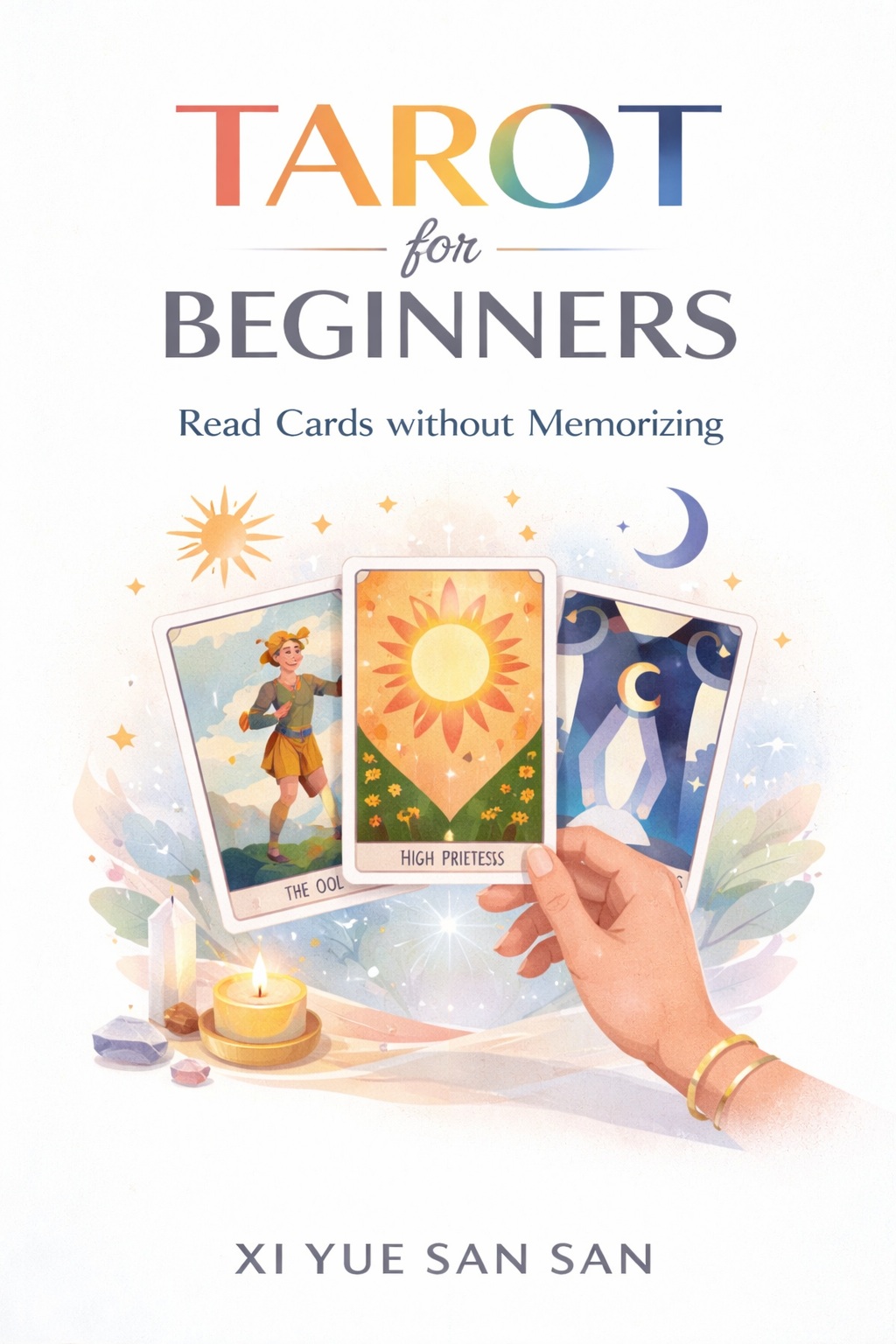
Book recommendation
Tarot for Beginners. The Books catalog describes a way to read cards without memorizing. That makes it a useful companion for practicing one reversal method at a time rather than trying to learn a second dictionary of meanings.
Open the book page