You have stopped messaging your ex, but your thumb has not quite accepted the decision. It still opens the conversation. Sometimes there is a practical excuse: an old address, the name of a restaurant, a photograph you meant to save. Sometimes there is no excuse. You look at the last exchange and try to hear a different ending in the same words.
The question arrives quickly: will they reach out, or should I move on? A no-contact tarot spread can help you explore what the silence is doing to your day and what you want to do next. It cannot reliably predict a message, supply a date, or tell you what your ex is privately feeling. Silence leaves a gap. A reading can give that gap a story, but the story is not new information from them.
The spread in this guide keeps those two things apart. It looks at your current experience, the meaning you have attached to silence, what waiting costs, and what would help you take care of the life still happening around the unanswered question. If a message eventually arrives, it also gives you a way to think before replying. Contact and reconciliation are different events.
First name what no contact means here
No contact can begin in several ways. You may have asked for space. They may have asked you not to message. Both of you may have agreed to stop talking. Or the conversation may simply have faded, leaving you unsure whether there is an agreement at all. Write which of these is true before drawing. The same phrase can hide very different circumstances.
If someone has asked not to be contacted or has blocked you, respect that boundary. A card does not create permission to reach them through another account, a friend, or an unannounced visit. You can explore your own feelings about the boundary without trying to get around it. Wanting an explanation does not make an unwanted approach less unwanted.
Some former partners still need limited communication about shared responsibilities. In that situation, define the permitted subject and channel. A practical exchange about collecting belongings is not necessarily a romantic opening. You can read about how to handle that exchange clearly, while keeping the agreed purpose in view. The deck does not expand a practical arrangement into consent for a relationship conversation.
Ask what the waiting is asking of you
Before a spread, describe one recent moment. You checked your phone during dinner with a friend. You delayed making a weekend plan in case a message arrived. You composed a casual reply to a message nobody had sent. These details show where the uncertainty is taking up space. They are more useful starting points than announcing that you are completely stuck forever.
Add what you hope contact would give you. An apology? Proof that you mattered? A chance to resume the relationship? A final answer? These hopes overlap, but they are not identical. A short “How are you?” might satisfy the wish for contact while leaving every larger question untouched. Knowing what you want makes it easier to recognize what a real message actually offers.
Try a question such as, “How can I care for myself while I do not know whether we will speak again?” If you need something more direct, use “What do I need to consider before I keep waiting?” The yes-or-no tarot guide explains why a forced verdict can conceal the conditions and choices that matter more than the single word you wanted.
A six-card spread for the period of silence
Lay six cards in a row, or in two rows of three if your table is small. Read them in this order: What I Am Feeling; What I Am Assuming; What Waiting Costs Me; What Supports Me Now; My Next Step; and What I Would Need if Contact Resumed. The final position is conditional. It does not predict that a message will arrive.
Write the labels before shuffling. Use your usual reversal method or read upright only, and decide that you will draw these six cards once. You can look up a meaning. You can leave a card unresolved. You do not need a clarifier every time the spread refuses to tell you the ex is miserable without you. That wish deserves honesty rather than another layer of cards.
Set aside a little time afterward. A reading about an ex can stir up an evening you thought was manageable. Plan an ordinary next activity: prepare food, take a shower, finish a household task, or call someone who is available to talk. You are giving the reading an ending in your day, even if the relationship's ending still feels unfinished.
Card one: describe the feeling without turning it into a forecast
With Five of Cups, you might acknowledge disappointment. With Six of Cups, you might notice how often your mind returns to familiar affection. With Nine of Swords, the image may bring your attention to the late-night conversations you rehearse alone. These are possible ways to describe your experience. None proves that your ex is having the same experience at the same time.
Use “I” in the sentence. “I miss being known by this person.” “I am angry that the practical ending was left to me.” “I feel relieved, and then guilty about feeling relieved.” A reading becomes more useful when there is room for a feeling that does not fit your preferred version of the relationship. You may miss them without wanting the old arrangement back.
If a card seems cheerful, do not treat it as an instruction to stop grieving. The Sun might help you notice one part of life that still feels enjoyable. The World might prompt reflection on something that has ended. You can have a good afternoon and still feel sad at night. The Three of Swords guide offers more room for pain that does not move in a neat sequence.
Card two: catch the story attached to silence
Silence often invites confident explanations. They are testing you. They have forgotten you. They are afraid of their feelings. They are waiting for you to break first. The second position asks which explanation you have been treating as fact. With The Moon, you might notice uncertainty. With Seven of Cups, several imagined futures may be competing for your attention.
Write your explanation, then write what supports it. A statement they made before the separation is information, though it may not tell you what they think now. A song they posted is open to many interpretations. A romantic card in your spread is not a statement from them. These distinctions can feel painfully dry when you want a sign, but they keep you from building a decision on an invented conversation.
Also consider the story that makes you feel worst. You may be treating silence as proof that the entire relationship was meaningless. The card cannot disprove that story, but neither does the absence of a new message prove it. You can acknowledge what happened in the relationship without requiring present contact to certify that your past experience was real.
Card three: notice the actual cost of waiting
This position asks what waiting is doing now. Four of Cups might prompt you to notice opportunities you are scarcely considering. Two of Wands could bring attention to a plan you have postponed. Eight of Swords might invite a look at a rule you have made for yourself, such as “I cannot move on until they explain.” Treat these as questions and look for concrete examples.
Perhaps waiting costs only a little attention this week. Perhaps it has begun to shape your evenings, friendships, and willingness to make plans. Do not exaggerate either way to make the reading dramatic. You can write, “I canceled a visit because I wanted to be available,” or “I checked the conversation twice, then got on with the day.” Those accounts suggest different needs.
This card is not a punishment for still caring. You do not have to stop missing someone on a schedule. The practical question is whether you can make room for other things while the feeling remains. You might book the trip, accept the invitation, or return to a class without announcing that you are finally healed. Life can resume in pieces before your emotions agree on an ending.
Card four: identify support you can actually reach
Three of Cups might bring friendship into view. The Empress could prompt attention to ordinary care and comfort. Eight of Pentacles might suggest the steadiness of an absorbing task. Translate the card into something available: ask a friend to walk with you, cook the food already in the fridge, spend twenty minutes on a project you put aside. Avoid turning support into a shopping list of things you must buy.
Be honest about what people can offer. A friend may be willing to listen but tired of interpreting every social-media post. You could ask, “Can I talk about the breakup for ten minutes, and then can we discuss something else?” That gives both of you a clearer request. Support does not have to consist of endlessly revisiting the same theory about your ex.
Sometimes the card does not suggest anything you can use. Leave it open and name support without the card. The spread is a prompt, not the only source of a sensible idea. If you need company, you can ask for company. You do not have to wait for Three of Cups to grant permission to tell someone that tonight feels lonely.
Card five: choose a next step, not a grand declaration
Moving on can sound like a demand to stop loving someone immediately. For this position, make it smaller. You might stop leaving Saturday unplanned. You might put the old conversation out of immediate view. You might finish arranging the return of belongings through the agreed channel. The step should fit your circumstances and respect any boundary already in place.
If The Hanged Man appears, avoid reading it as an instruction to wait indefinitely for your ex. Ask what pause would help you see more clearly. Perhaps you need one evening without making a decision. Perhaps you need to stop trying to make their silence mean something specific. The Hanged Man essay distinguishes a useful pause from surrendering every choice to an unknown future.
Choose a personal review point based on your needs, not a prediction. You might check in with yourself next Sunday about whether the current arrangement is helping. This is not a deadline the other person has secretly agreed to meet. It is a time for you to consider your own participation. You remain free to change your plan before then if something real changes.
Card six: decide what contact would need to contain
The last position asks what you would need if a message arrived. Justice might prompt clarity and accountability. Temperance might invite a slower pace. Queen of Swords could suggest a direct question before you agree to meet. The card does not forecast a message; it helps you prepare so the relief of hearing from them does not make every decision at once.
Think about the difference between contact, an apology, and a proposal to rebuild. A meme is contact. “I miss you” expresses something but may not address the problem that ended the relationship. An apology can matter without requiring reconciliation. You can ask what the person is hoping for and take time to consider whether you want the same thing.
Write one sentence you could use if needed: “It is good to hear from you; what are you hoping we can discuss?” Or, “I am not ready for a personal conversation.” Choose words that fit your actual preference. You do not owe an immediate response because you once wished intensely for a message. Your wishes can change while you are waiting.
A worked reading about the phone on the table
Imagine a fictional reader, Daniel, three weeks after a mutual decision to stop talking for a while. He draws Six of Cups, The Moon, Four of Cups, Three of Pentacles, Eight of Pentacles, and Justice. He has been keeping his phone beside him during meals and delaying a weekend visit to his sister. His question is about living with uncertainty, not predicting a date.
The first two cards help him separate missing the familiar relationship from imagining that his ex must be missing it in the same way. Four of Cups brings attention to the postponed visit. Three of Pentacles prompts him to ask his sister whether he can help with a project she mentioned. Eight of Pentacles becomes a small commitment to finish his own unfinished work before checking the phone again.
Justice in the last position helps Daniel identify what a future conversation would need: an honest discussion of why they separated and what each person wants now. He writes that a friendly message alone would not answer those questions. No message arrives during the invented weekend. The reading still has a use because he visits his sister and stops treating availability as the only thing he can offer the uncertain relationship.
When you want to do the same spread again tonight
Ask what has changed since the first reading. New contact, a practical development, or a clearer personal preference might justify a new question. Feeling less reassured is a change in feeling, but it is not new evidence about your ex. A second spread may provide another story without answering the original uncertainty. That can keep you at the table long after the reading stopped helping.
Read your original notes instead. Choose the one action you named and decide whether you want to take it. If you do not, be curious about why. Perhaps the action was too big. Perhaps you wanted reassurance more than an action, and admitting that is the honest work tonight. You can close the deck without proving you have become perfectly detached.
There may never be a message that explains the silence to your satisfaction. There may be one tomorrow that creates several new questions. You do not have to solve either future before you make a plan for this evening. Put the phone somewhere you have chosen, finish the thing in front of you, and let your next decision rest on what you know when you reach it.
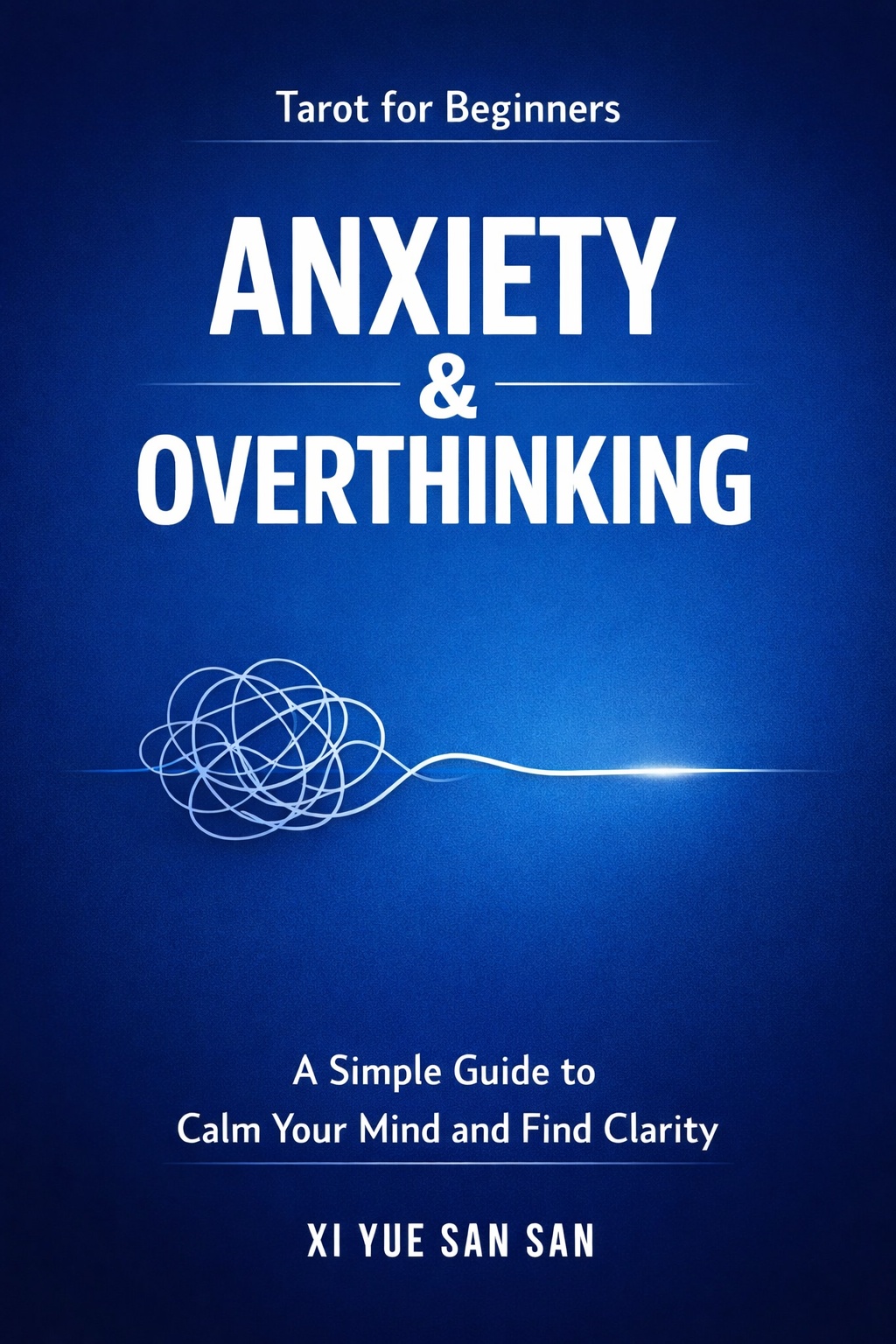
Book recommendation
Anxiety & Overthinking. The Books catalog presents Anxiety & Overthinking as a guide to calm and clarity. It is a relevant companion to this essay's discussion of repeated checking and the stories that can grow around an unanswered message.
Open the book page